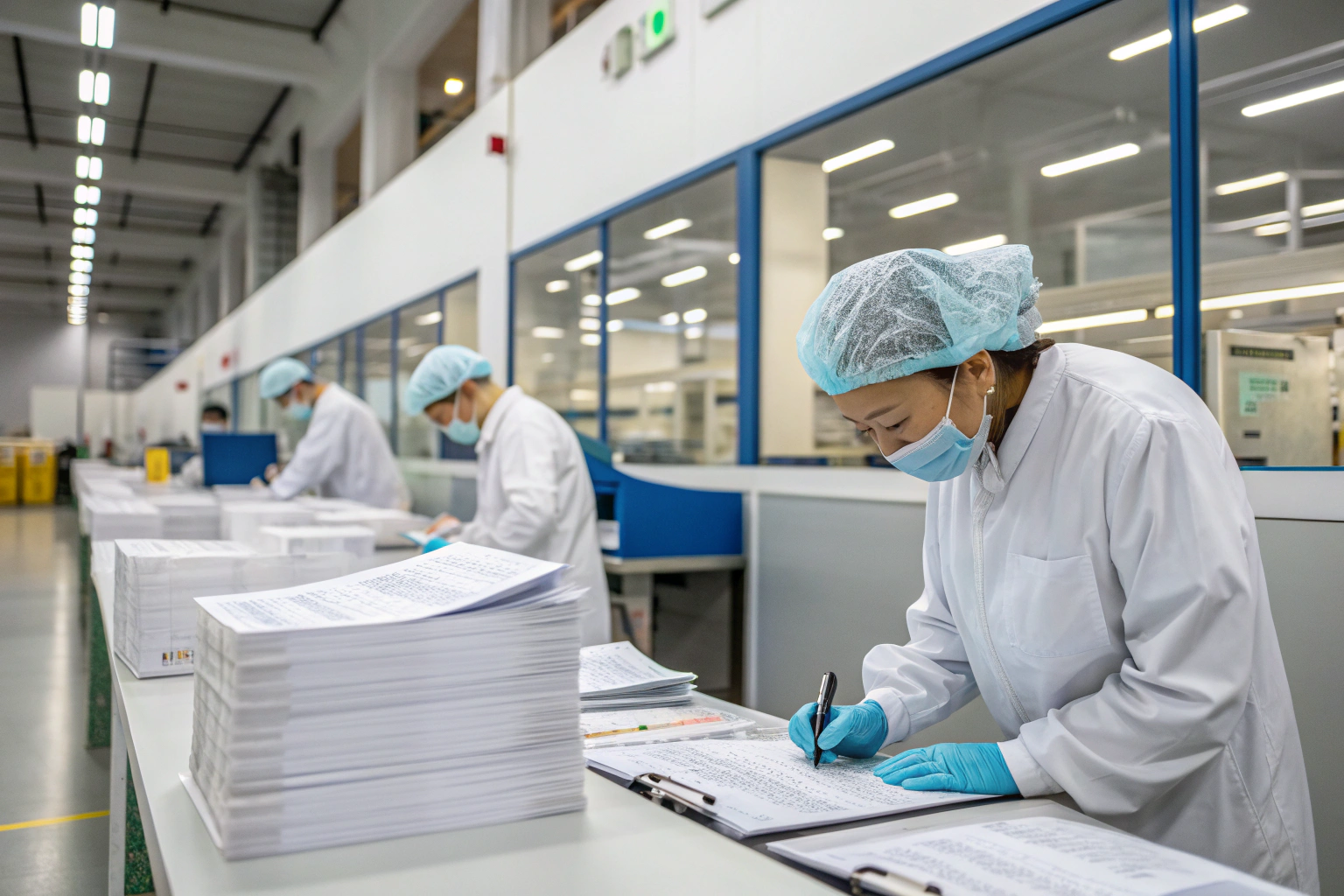
The demand for sustainable fashion is surging, and "ocean plastic" has become a powerful marketing claim for eco-conscious belts and accessories. For buyers, retailers, and brands, this presents both an opportunity and a minefield. How can you be sure the "recycled ocean plastic" in the belt strap or buckle is genuine, and not just a blend with virgin plastic or post-industrial waste? Without verification, you risk greenwashing accusations, damaged brand reputation, and lost trust from your customers.
To verify ocean plastic content in eco belts, you must implement a multi-layered due diligence process that combines demanding third-party material certifications, auditing the supplier's documented chain of custody, and performing or commissioning independent laboratory testing. Reliable verification moves beyond supplier claims to establish objective, evidence-based proof of the material's origin and composition.
As a manufacturer committed to transparency, we understand that trust is the new currency in sustainable sourcing. Let's navigate the complex path to credible verification, ensuring your eco belt line stands up to scrutiny.
What Certifications Truly Validate Ocean-Bound Plastic?
The first line of defense against greenwashing is a reputable, independent certification. However, not all recycled content certifications are created equal. Many certify "recycled material" but are silent on whether it's post-consumer, post-industrial, or specifically ocean-bound. You need certifications that are granular and specific.
The most credible certifications for ocean plastic focus on the material's origin (collected from within a certain distance of shorelines), additionality (it was at high risk of entering the ocean), and the social impact of its collection. Key standards include the Ocean Bound Plastic Certification (OBP) by Zero Plastic Oceans and Control Union, and the Global Recycled Standard (GRS) when paired with a detailed Transaction Certificate specifying OBP content.
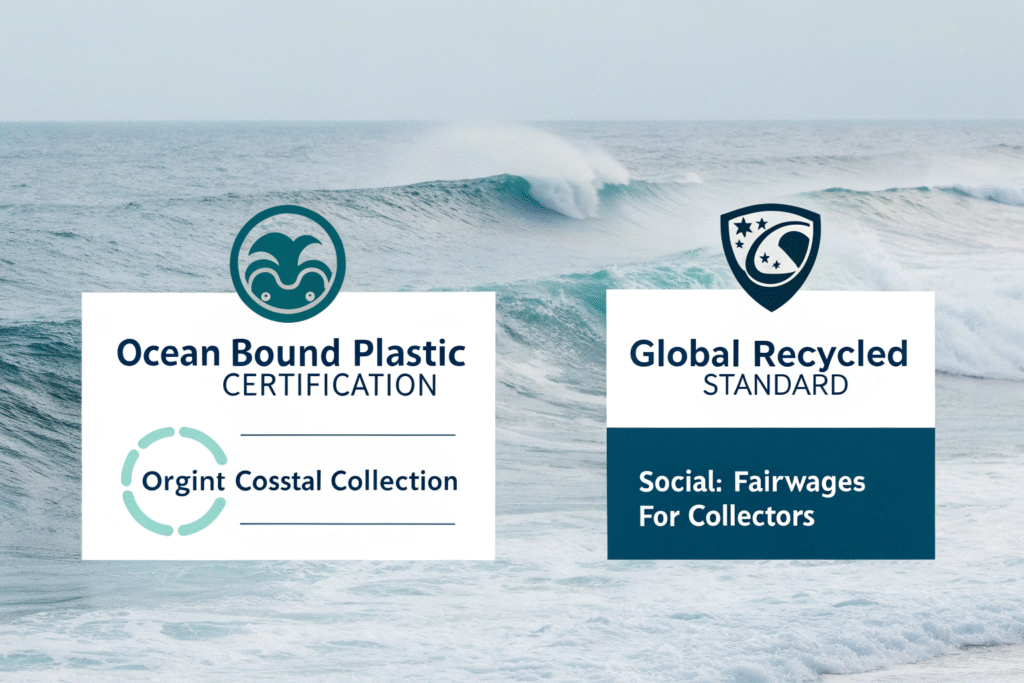
What Does the Ocean Bound Plastic (OBP) Certification Standard Entail?
The OBP Certification Program is currently the gold standard for verifying ocean-bound plastic. It defines OBP as "plastic waste located within 50km of a coastline in a country or region with poor waste management." The certification has two sub-types:
- OBP Recyclable: For plastics that will be commercially recycled.
- OBP Neutralized: For non-recyclable plastics that are processed in an environmentally sound way (like waste-to-energy).
The certification audits the entire chain: from the collection organizations (ensuring ethical working conditions) to the recycling processor and finally to the end-user (like your belt factory). A certified supplier can provide an OBP Transaction Certificate for your specific material batch, detailing the percentage of certified OBP content. This is the document you must request.
How Does the Global Recycled Standard (GRS) Complement This?
The Global Recycled Standard is broader, verifying recycled content and responsible social, environmental, and chemical practices. Crucially, its Content Claim Standard (CCS) requires a chain of custody. For ocean plastic, the GRS is effective when the recycler's scope certificate and the transaction certificate explicitly state the recycled content is "Post-Consumer" and, ideally, note its origin as "ocean-bound" or "coastal collected." Never accept a generic GRS certificate that just says "100% Recycled." Demand the supporting transaction documents that trace the material back to the certified recycler of ocean-bound plastic.
How to Audit the Chain of Custody and Supplier Documentation?
A certificate is a promise; the documented chain of custody is the proof that the promise was kept for your specific order. This paper trail is essential to ensure the certified material you paid for is the material actually used in your belts. It's the difference between buying a "certified organic" apple and having the receipt from the certified organic farm.
A verifiable chain of custody is a series of unbroken, documented transfers—from the collector to the aggregator, to the recycler, to the yarn/spinning mill, to the fabric/webbing manufacturer, and finally to your belt factory. Each step must be backed by a transaction certificate or commercial invoice that specifies the quantity and certification reference of the OBP material being transferred.
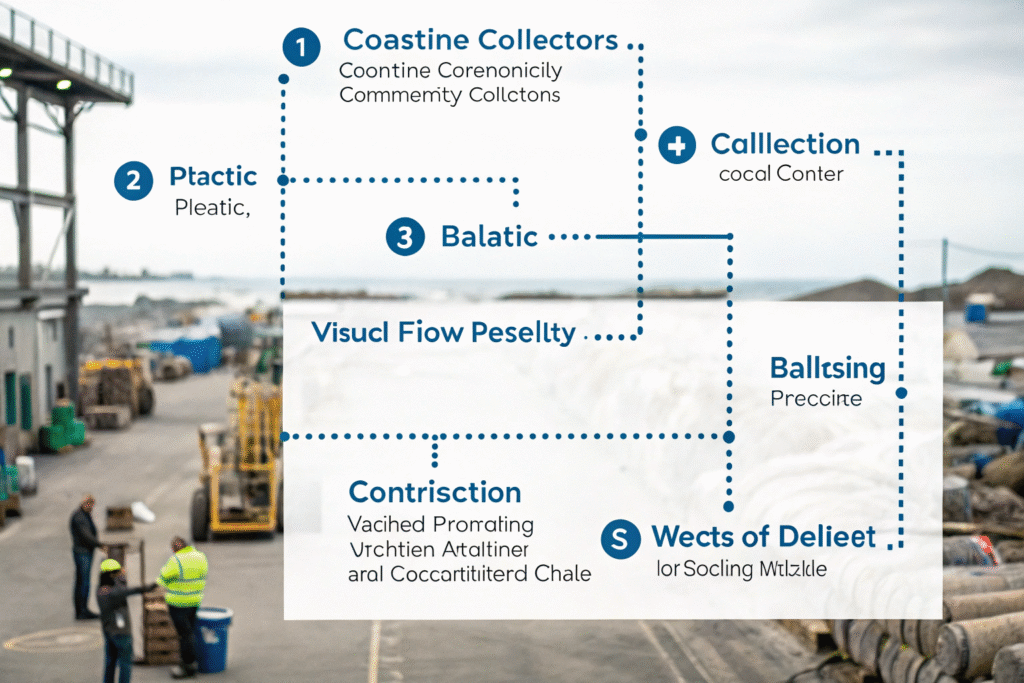
What Documents Should You Demand from Your Supplier?
Your belt manufacturer should provide you with a dossier that includes:
- Supplier's OBP or GRS Scope Certificate: Proving their facility is certified to handle and trade the certified material.
- Transaction Certificates (TCs) for Each Link: A TC from the recycler to the yarn maker, from the yarn maker to the webbing mill, and from the webbing mill to your factory. Each TC should have a unique number, date, and reference the previous TC in the chain.
- Batch Specificity: The documents should reference batch numbers that can be linked to the production lot of your belts. Ask: "Can you show me the documentation linking the OBP pellet batch #XYZ to the webbing roll #ABC used in my order PO-123?"
- Collection Origin Details: The most transparent suppliers will provide details on the collection region (e.g., collected from coastal communities in Southeast Asia). This adds narrative depth to your product's story and is a sign of a robust system.
Why is a Factory Audit Focused on Material Handling Crucial?
During a factory audit (virtual or in-person), go beyond general quality control. Specifically assess their material segregation practices.
- Do they have separate storage areas for certified OBP materials and conventional materials?
- How do they label and track these different material rolls?
- What is their production process to prevent mixing? (e.g., running OBP webbing on dedicated looms or having clear cleaning protocols between runs).
A factory that handles certified materials seriously will have systematic procedures in place. This operational diligence is what makes the paper chain of custody a physical reality, ensuring supply chain integrity.
What Laboratory Testing Can Provide Scientific Verification?
While documentation traces the process, scientific testing analyzes the material itself. For high-stakes orders or when sourcing from a new, uncertified supplier claiming ocean plastic content, independent lab testing is the ultimate verification tool. It can detect inconsistencies between claims and reality.
Laboratory testing can verify recycled content and provide clues about material origin through Fourier-Transform Infrared Spectroscopy (FTIR) to identify polymer types, Differential Scanning Calorimetry (DSC) to analyze thermal properties altered by UV degradation (a sign of ocean exposure), and Tracer-Based Sorting if the recycler has added specific molecular markers to the OBP stream. However, no test can definitively say "this came from the ocean"; it can only support or contradict the claim based on material degradation and composition.
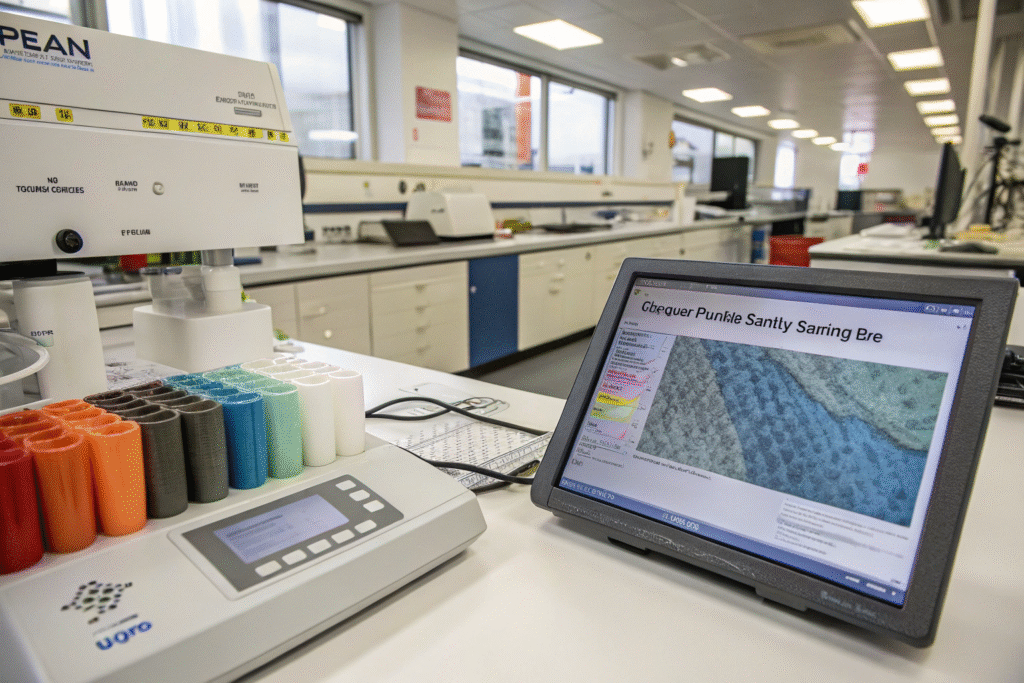
How Can Degradation Analysis Support the Ocean Origin Claim?
Plastics that have been floating in the ocean or baking on a beach undergo environmental stress. This causes:
- UV Degradation: Breaks down polymer chains. A DSC test can show a lower melting point and broader melting range compared to virgin plastic.
- Oxidation: FTIR spectroscopy can detect increased carbonyl groups, indicating oxidation from sun and saltwater exposure.
- Physical Contaminants: Microscopic analysis can reveal embedded salts, sand, or biofilm residues unlikely in post-industrial waste.
While these signs are consistent with ocean exposure, they are not unique to it (landfill plastic can also degrade). Therefore, lab tests are most powerful when used in conjunction with a strong chain of custody. They can, however, easily disprove a claim—for example, if FTIR shows a plastic type different from what was claimed, or if no signs of degradation are found in a material supposedly from ocean waste.
What is Tracer-Based Sorting and Is it Feasible?
This is an emerging gold standard. Some advanced recyclers add a minuscule amount of a unique chemical tracer to the OBP stream during collection or initial processing. This tracer is detectable at extremely low levels later in the supply chain via specialized equipment. If your supplier uses a recycler with this system, they can provide a test report proving the presence of the specific tracer in your belt material, offering near-irrefutable proof of origin. While not yet widespread due to cost, it represents the future of material traceability and is something forward-thinking brands should inquire about.
How to Communicate Verified Claims Without Greenwashing?
Verification is internal; communication is external. How you present your verified claims to consumers and retailers is critical. Overstating or vague phrasing can lead to accusations of greenwashing, even with good intentions. The rule is: be specific, be accurate, and be ready to show your evidence.
Transparent communication means using precise language ("Ocean Bound Plastic" not just "Ocean Plastic"), stating the exact percentage of OBP content (e.g., "Strap contains 85% OBP"), prominently displaying the relevant certification logos, and providing a clear path to more information (e.g., a QR code linking to a page with your supplier's chain of custody summaries). This builds trust and educates the consumer.
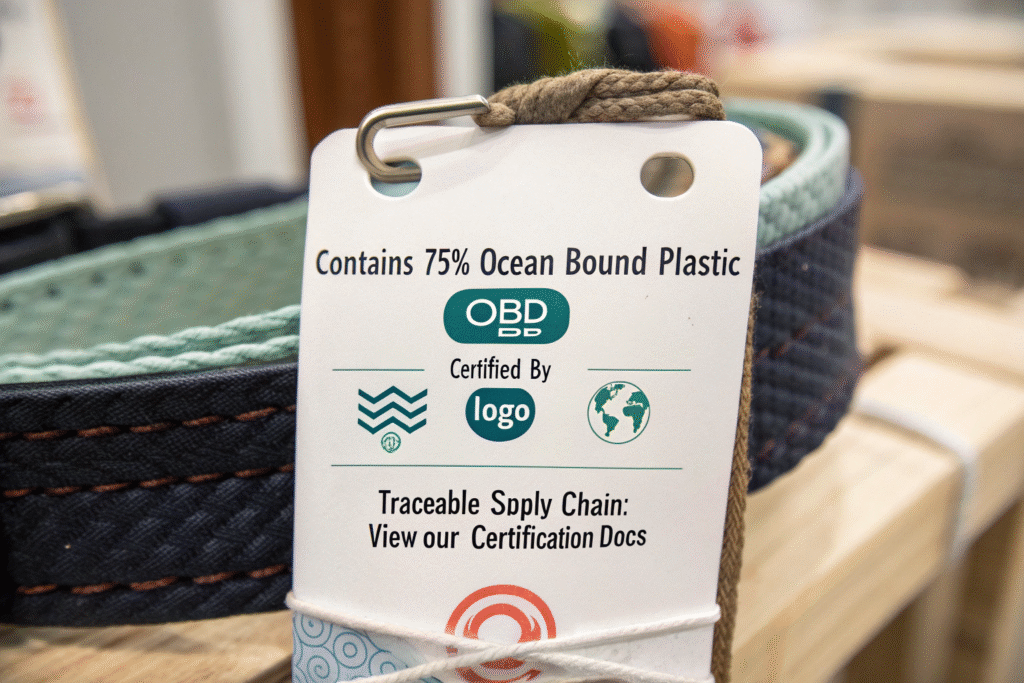
What is the Correct Terminology to Use?
Precision matters. Follow the lead of certification bodies:
- Use "Ocean Bound Plastic (OBP)": This is the technically accurate term for plastic collected from coastal areas before it reaches the ocean.
- Avoid "Ocean Plastic": This is ambiguous—it could imply plastic fished directly from the open ocean (a much rarer and more expensive feedstock). If your material is indeed from open-ocean clean-ups (like The Ocean Cleanup project), state that specifically and name the source.
- Clarify the Component: Specify which part contains the recycled content. E.g., "The woven webbing of this belt is made from 100% GRS-certified recycled polyester, of which 70% is Ocean Bound Plastic."
- Never Use "100% Recycled Ocean Plastic" unless every component (webbing, buckle, dye, thread) meets that claim, which is virtually impossible. Stick to accurate percentages for specific parts.
How to Build a Transparency Page for Your Product?
The most credible brands host a dedicated online "transparency" or "sustainability" page for major product lines. For your OBP belt, this page should include:
- High-level summary of the claim and impact (e.g., "Diverted XX kg of plastic from coastlines").
- Scans or PDFs of the key certificates (with confidential business data redacted).
- A simplified diagram of the supply chain.
- Information about the collection partners and their social impact.
This aligns with the growing practice of radical transparency in fashion. It turns your verification effort into a powerful marketing asset that demonstrates leadership and builds unshakeable consumer loyalty.
Conclusion
Verifying ocean plastic content in eco belts is a rigorous but essential process that moves sustainability from a marketing slogan to a demonstrable commitment. It requires a three-pillar approach: leveraging specific, credible certifications; meticulously auditing the documented chain of custody; and utilizing scientific testing for high-assurance validation.
For brands and buyers, this diligence protects against reputational risk, ensures you get what you pay for, and ultimately allows you to communicate your environmental impact with confidence and integrity. In a market saturated with green claims, verified transparency is the ultimate competitive advantage.
If you are looking to develop a truly credible eco belt line with verifiable ocean-bound plastic content, partner with a manufacturer that prioritizes traceability and has established systems for certified materials. We have direct partnerships with certified OBP recyclers and maintain full chain-of-custody documentation for our sustainable material lines. Contact our Business Director, Elaine, to explore verified sustainable sourcing for your next collection: elaine@fumaoclothing.com. Let's build products that are good for business and the planet, without compromise.