For millions of people with disabilities, limited mobility, or dexterity challenges, getting dressed can be a daily struggle filled with frustration and a loss of independence. Adaptive clothing aims to change that, but too often, the finishing touch—the belt—remains an afterthought, designed with only traditional users in mind. What belt styles truly empower users of adaptive clothing, combining dignity with function? The answer lies not in a single design, but in a philosophy of universal design that prioritizes ease of use, safety, and independence over conventional aesthetics.
The best belt styles for adaptive clothing lines are those that eliminate traditional fine-motor challenges: magnetic closure belts, adjustable hook-and-loop (Velcro) belts, and elasticated pull-on belts with non-slip internal grips. These styles offer one-handed operation, provide adjustable fit without precise hole alignment, and are designed to be secure, comfortable, and easy to manage for individuals with a wide range of physical abilities.
For brands entering the adaptive fashion space, the belt is a critical touchpoint where thoughtful design can make a profound difference in daily life. Let's explore the specific styles, features, and design principles that define excellence in this essential category.
Why Are Magnetic Closure Belts a Leading Solution?
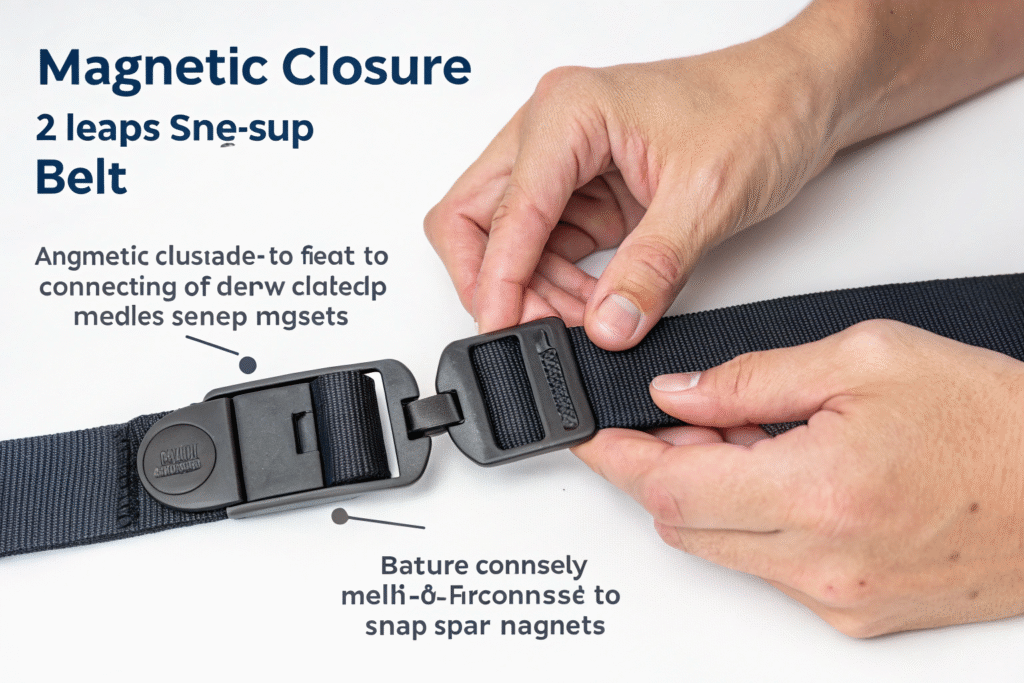
Magnetic closures represent a quantum leap in accessibility for belts. They transform the complex, two-handed task of threading a prong through a small hole into a simple, forgiving, one-handed "snap." This technology directly addresses challenges faced by individuals with arthritis, limited hand strength, tremors, or the use of only one hand.
Magnetic closure belts are leading solutions because they offer instant, intuitive fastening with audio/tactile feedback, require zero precision or fine motor skill, and can be designed to be low-profile and discreet under clothing. Advanced designs use rare-earth magnets for a secure hold that only releases with intentional lateral slide, preventing accidental opening.
How Do Secure Magnetic Mechanisms Work?
The key is in the engineering. Cheap magnetic snaps are insufficient. The best adaptive belts use neodymium rare-earth magnets embedded within the belt ends. These are incredibly strong for their size. The clasp mechanism is often designed as a "slide-to-release" system: the magnets hold the ends firmly together, but to open, the user slides one end laterally, breaking the magnetic alignment. This prevents the belt from popping open during movement or if brushed against a surface. The closure should be tested to withstand a significant pull force (e.g., over 15 lbs) to ensure security. For the user, the satisfying "click" provides confidence that the belt is fastened.
What Design Variations Maximize Usability?
- The "Two-Part Magnetic Buckle": A small, flat magnetic plate acts as the "buckle," and the belt end has a corresponding magnetic plate. The user simply brings the end within proximity for it to snap on.
- The "Magnetic Fidlock Buckle": A more technical solution using a patented Fidlock magnetic buckle system. This involves a magnetic male plug that twists into a female receiver, creating an exceptionally secure, vibration-proof connection that is still easy to operate by feel.
- Integrated into Elastic Belts: Magnets are sewn into the ends of a wide elastic belt, creating a comfortable, stretchy waistband that is easy to put on over the head or step into and then fasten with a simple magnetic connection. This is ideal for users who sit for long periods.
How Do Hook-and-Loop and Elastic Pull-On Belts Function?
While magnetic closures are high-tech, hook-and-loop (commonly known as Velcro) is a proven, low-tech champion of adaptive design. Its primary advantage is infinite, micro-adjustability. Similarly, well-designed elastic pull-on belts offer a "set-and-forget" solution for users seeking ultimate simplicity and comfort.
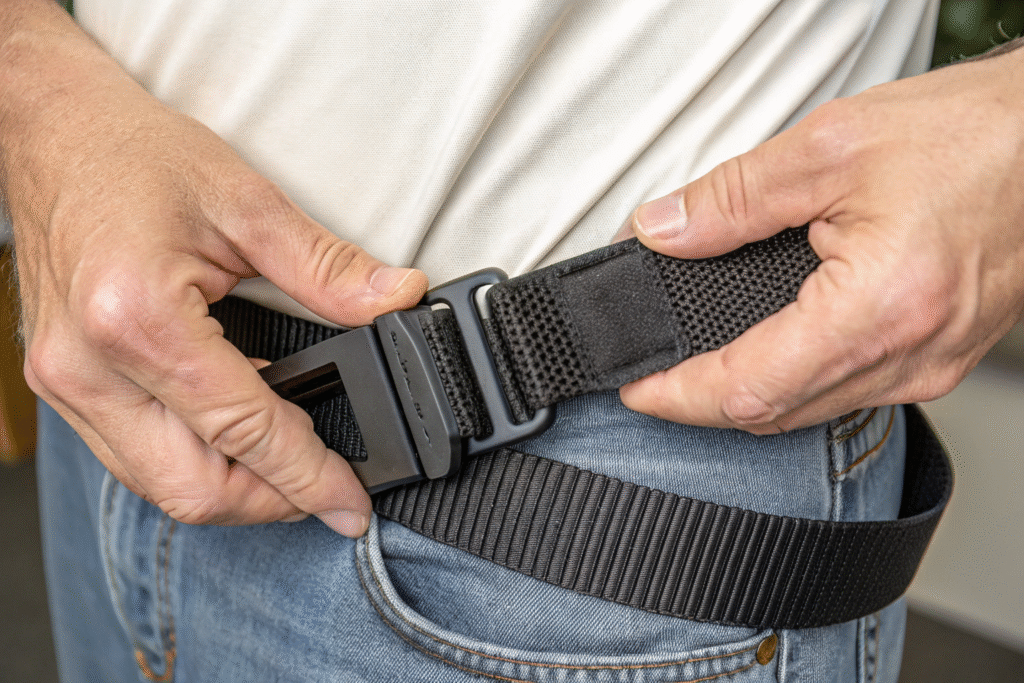
Hook-and-loop belts provide continuous, customizable fit without holes, are easy to fasten and unfasten with palm pressure, and are highly durable and washable. Elastic pull-on belts with internal grips offer ultimate ease (pull on like a waistband), constant, gentle pressure that accommodates bloating or position changes, and security that prevents the belt from rolling or sliding down.
What Makes Hook-and-Loop Design Truly Adaptive?
Standard Velcro belts can be frustrating if they are stiff or if the hook side is exposed and snags clothing. Adaptive designs refine this:
- Soft-loop Exterior: The entire outer surface of the belt is made of the soft "loop" material. This creates a smooth, snag-free face against clothing.
- Strategic Hook Patches: The "hook" material is only on the underside of the belt end. To fasten, the user wraps the belt and presses the hooked end anywhere along the soft-loop length of the belt. This allows for perfect, millimeter-level adjustment.
- Stiffener Removal: The belt should be made from soft, flexible webbing (like nylon or felted wool) without a rigid internal stiffener, allowing it to conform comfortably to the body. This is especially important for seated users to avoid pressure points.
Why are Internal Grips Critical for Elastic Pull-On Belts?
A common problem with simple elastic belts is that they roll over at the top or slide down, especially on smooth fabrics. The adaptive solution is an internal silicone grip strip. A thin line of food-grade silicone is printed or laminated onto the inner (skin-side) of the elastic band. This creates a high-friction surface that gently grips the clothing or skin beneath, holding the belt securely in place without needing to be overtightened. This design is perfect for individuals with sensory processing disorders who may find buckles or clasps uncomfortable, or for those who need a quick, reliable solution for securing pants. It functions like a high-tech version of traditional suspenders but is less conspicuous.
What Are the Key Safety and Comfort Considerations?
In adaptive design, safety and comfort are inextricably linked to dignity. A belt that is difficult to remove in an emergency, that causes skin irritation, or that creates pressure sores is not just poorly designed—it's potentially harmful. Considerations must go far beyond simple closure mechanisms.
Key safety and comfort considerations include: break-away or quick-release mechanisms for emergency scenarios and medical access, the use of hypoallergenic, breathable materials against the skin, wide, even pressure distribution to prevent digging or sores, and the complete elimination of external hardware that can cause injury during transfers or while using a wheelchair.

How Do You Implement Safe, Quick-Release Features?
For users who may need rapid access for medical reasons (e.g., catheter, ostomy bag) or in case of a fall, a traditional belt can be a hazard. Adaptive solutions include:
- Magnetic Break-Away: Using magnets with a calibrated strength—strong enough for daily security but weak enough to separate under intentional, firm pull.
- Hook-and-Loop Rip-Away: The inherent design allows it to be ripped open instantly.
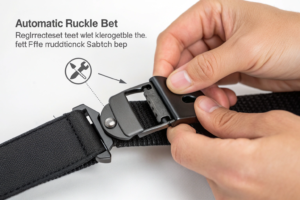
- Integrated Quick-Release Buckle: Using a side-release buckle that can be pinched with one hand. However, this requires more dexterity than magnetic or hook-and-loop options.
The design should be tested and clearly communicated: "Emergency Quick-Release" can be a vital selling point for caregivers and users alike.
Why is Material Choice and Construction Paramount?
The belt will be in constant contact with the skin, often for individuals with sensitive skin or reduced sensation.
- Skin Contact Layer: Must be a soft, wicking fabric like bamboo jersey, organic cotton, or a moisture-wicking performance knit. Avoid latex in elastic components to prevent allergies.
- Seamlessness: Internal seams should be flat-locked or bonded, not stitched, to prevent rubbing. Externally, there should be no scratchy tags or labels.
- Pressure Management: For users in wheelchairs, a belt should be wide (at least 1.5 inches) to distribute pressure across the pelvic area, preventing pressure ulcers. It should also be flexible enough not to cut in when seated.
These considerations reflect a deep understanding of universal design principles and empathetic ergonomics.
How to Source and Develop Truly Inclusive Adaptive Belts?
Sourcing or developing adaptive belts requires a fundamental shift in the design process. It cannot be a standard belt with a minor tweak. It must be co-created with the end-users—people with disabilities—from the very first sketch. This ensures the product solves real problems, not perceived ones.
Inclusive development involves co-design with disability communities, rigorous user testing across a spectrum of abilities, partnering with manufacturers experienced in medical or assistive device-grade construction, and ensuring packaging is also accessible (easy-open, no plastic clamshells). The goal is to build dignity into every step of the product lifecycle.

What Does a Co-Design and Testing Protocol Look Like?
- Form an Advisory Panel: Recruit individuals with varied mobility, dexterity, and sensory needs to consult throughout the process.
- Prototype with Purpose: Create multiple low-fidelity prototypes (using foam, fabric, magnets) early on for tactile feedback, not just CAD renders.
- Contextual Testing: Have testers use the prototypes in real-life scenarios—getting dressed, transferring to/from a wheelchair, using the toilet. Observe struggles and successes.
- Iterate Based on Pain Points: If a magnetic connection is too hard to align for someone with tremors, redesign the guide shape. If a material is too hot, source an alternative.
This human-centered design process, similar to methodologies used in assistive technology development, is the only path to genuine innovation and market fit.
How to Vet a Manufacturer for Adaptive Product Quality?
The factory must understand they are not making a fashion accessory, but a durable medical equipment-adjacent product. Key vetting questions:
- "What is your experience with sewing or molding hypoallergenic materials?"
- "Can you source and provide MSDS (Material Safety Data Sheets) for all components?"
- "What is your process for ensuring consistent magnet strength or hook-and-loop adhesion across thousands of units?"
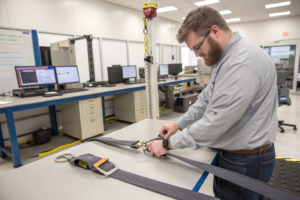
- "How do you conduct functional testing on every unit?" (e.g., every magnetic buckle must pass a pull-force test).
- "Are your facilities accessible for audits by team members with disabilities?"
Look for manufacturers with ISO 13485 (medical devices) experience or a proven track record with reputable adaptive clothing brands. The quality standards must be exceptionally high, as product failure is not an option for the end-user.
Conclusion
The best belt styles for adaptive clothing lines—magnetic, hook-and-loop, and elastic pull-on with grips—succeed because they are born from a philosophy of empowerment, not just adaptation. They replace complexity with simplicity, replace frustration with independence, and prioritize safety and comfort as foundational requirements.
For brands, this category represents a meaningful opportunity to serve a vast, underserved market with integrity and innovation. The development process demands empathy, co-creation, and a partnership with manufacturers capable of precision and care. The result, however, is more than a product; it's a tool for greater autonomy and dignity in everyday life.
If you are committed to developing a truly inclusive adaptive clothing line, the belt is a critical component that deserves dedicated, thoughtful design. Our factory specializes in small-batch, high-integrity manufacturing and is experienced in working with consultants to bring empathetic designs to life. Contact our Business Director, Elaine, to begin a conversation about co-creating adaptive solutions that make a real difference: elaine@fumaoclothing.com. Let's design for everyone.