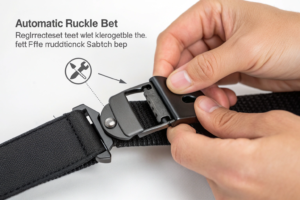
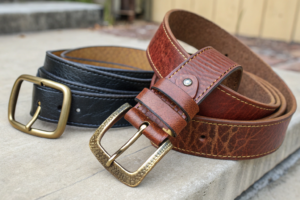
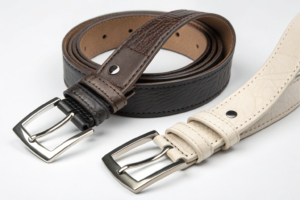
Belt buckle security might seem like a small detail, but a failing buckle can ruin an outfit, cause embarrassment, or even create safety hazards in certain professions. For years, the basic pin-and-hole mechanism has dominated, but it has clear limitations in security and adjustability. Today, innovative security features are becoming a key differentiator for brands looking to offer superior products.
Emerging innovations in belt buckle security focus on mechanisms that prevent accidental opening while providing superior adjustability and user convenience. These include magnetic locking systems, ratcheting designs with secure release buttons, and dual-point locking mechanisms. Advanced materials like reinforced polymers and aerospace-grade alloys are being used to create these more complex yet reliable fastening systems that outperform traditional buckles in both security and functionality.
The evolution of belt buckle security is being driven by consumer demand for reliability and new manufacturing capabilities. From professional uniforms that require absolute security to fashion applications where a loose belt is unacceptable, these innovations address real-world problems. Let's examine the specific technologies changing how belts fasten and stay fastened.
Are Magnetic Locking Systems Secure Enough?
Magnetic buckles offer a sleek, modern look and easy operation, but many question their security. Early magnetic closures were indeed prone to accidental opening, but recent advancements have made magnetic systems surprisingly reliable for everyday use and even some demanding applications.
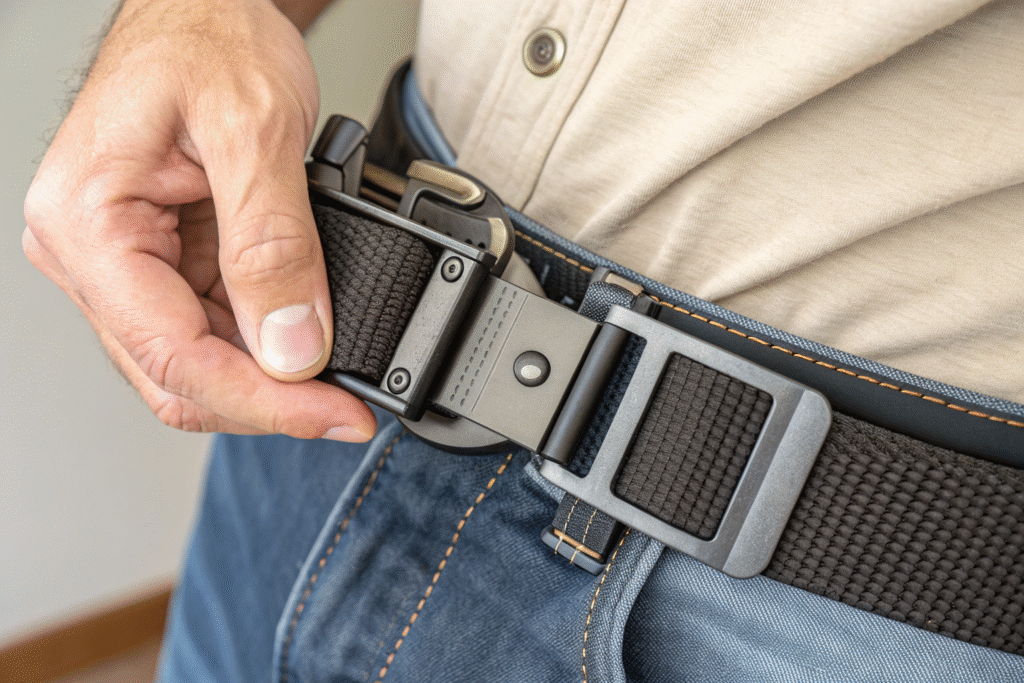
Modern magnetic locking systems are significantly more secure than earlier versions, utilizing powerful neodymium magnets combined with mechanical locking elements. These systems typically require a specific twisting or sliding motion to disengage, preventing accidental opening from casual bumps or tugs. The latest designs achieve a holding strength of over 40 pounds, making them a viable and convenient security solution for most casual and fashion belts.
How Do Modern Magnetic Locking Mechanisms Work?
The key to security in modern magnetic buckles is the combination of magnetism with a physical lock. It's not just two magnets sticking together. Most secure designs use a system where powerful neodymium magnets pull a metal pin into a locked position. To open it, you must slide or twist a part of the buckle to overcome the magnetic force and retract the pin. This "positive lock" mechanism is what prevents accidental release, offering a level of security that rivals traditional tang buckles while providing a seamless, minimalist aesthetic that is very popular in current minimalist fashion trends.
What Are the Strength and Application Limits?
While improved, magnetic buckles do have their limits. Their holding strength, though substantial, may not be suitable for heavy-duty applications like tactical belts or weightlifting belts that must withstand extreme forces. The magnetic force can also potentially be interfered with by very strong external magnetic fields, though this is a rare occurrence in daily life. Therefore, they are best suited for dress belts, casual wear, and fashion applications where their convenience and style are major advantages, and the risk of extreme lateral force is low.
How Do Ratchet Belt Systems Enhance Security?
Ratcheting systems represent a fundamental shift from the traditional hole-and-pin design. By replacing holes with a track of teeth, these buckles offer a new paradigm in security and precision adjustability, addressing the most common failure points of standard belts.
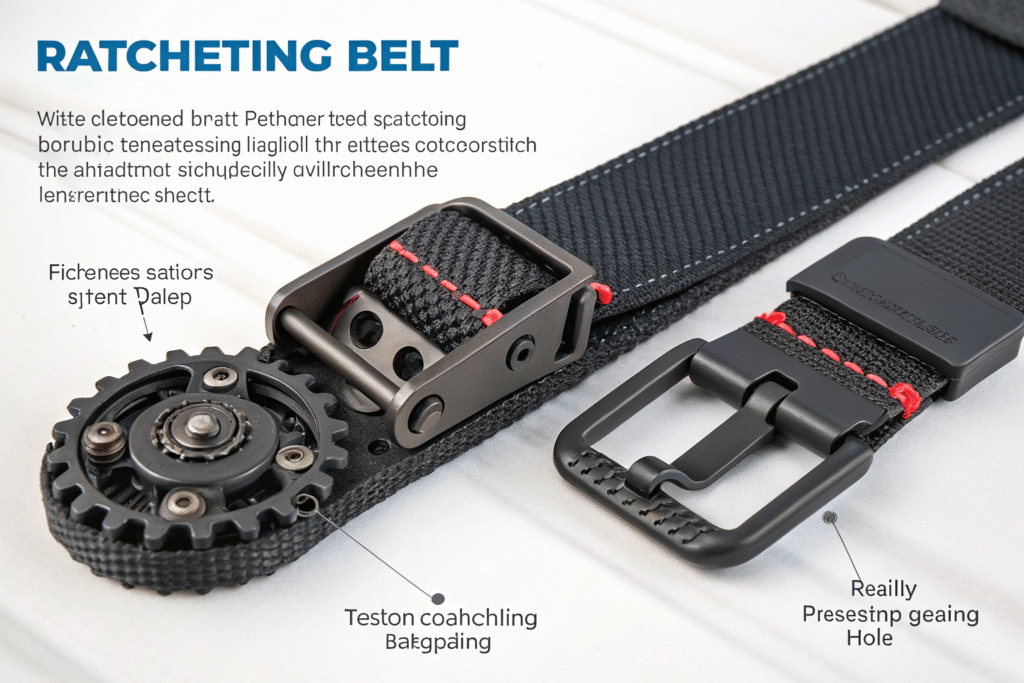
Ratcheting belt systems enhance security by distributing tension evenly across a wide, durable polymer strap and a precision gear mechanism. Unlike a pin that concentrates stress on a single hole, the ratchet system engages dozens of teeth simultaneously. This creates a far more reliable hold that cannot slip or loosen accidentally. The release mechanism is typically a button that must be fully depressed to disengage, making unintentional opening virtually impossible.
What Makes the Ratchet Mechanism So Reliable?
The core of the reliability is the pawl-and-gear principle. A spring-loaded pawl inside the buckle locks into the teeth on the belt strap. The angle of the teeth allows the strap to be pulled tighter freely, but locks completely against reverse movement. To release, the user must lift the pawl completely away from the teeth by pressing a button. This direct, mechanical engagement is extremely positive and fails only if the component itself breaks—a rare occurrence with high-quality engineering polymers and metals used. This eliminates the "middle hole" problem of traditional belts, where a pin is either too tight or too loose.
What Are the Long-Term Durability Concerns?
The primary durability question for ratchet belts lies in the plastic track and the spring in the release mechanism. Lower-quality systems can suffer from worn teeth or a weakened spring over many years of use. However, premium manufacturers counter this by using glass-reinforced nylon or other high-strength composites for the strap, and stainless steel for the internal components. For the end-user, this means the system maintains its security and function far longer than a traditional leather belt, which can stretch and deform around the holes.
Is Dual-Point Locking the Future for Heavy-Duty Belts?
For applications where failure is not an option—such as in tactical, industrial, or construction settings—single-point failure is a major risk. Dual-point locking systems are emerging as the gold standard for these demanding environments, providing redundant security.
Dual-point locking is indeed becoming the standard for heavy-duty belts, as it eliminates the single point of failure inherent in most buckle designs. These systems use two separate, often interdependent, locking mechanisms that must both be disengaged to open the belt. This redundancy ensures that if one mechanism were to fail, the second would still hold, providing a critical safety margin for users in high-risk professions.
How Do Cobra Buckles and Similar Designs Work?
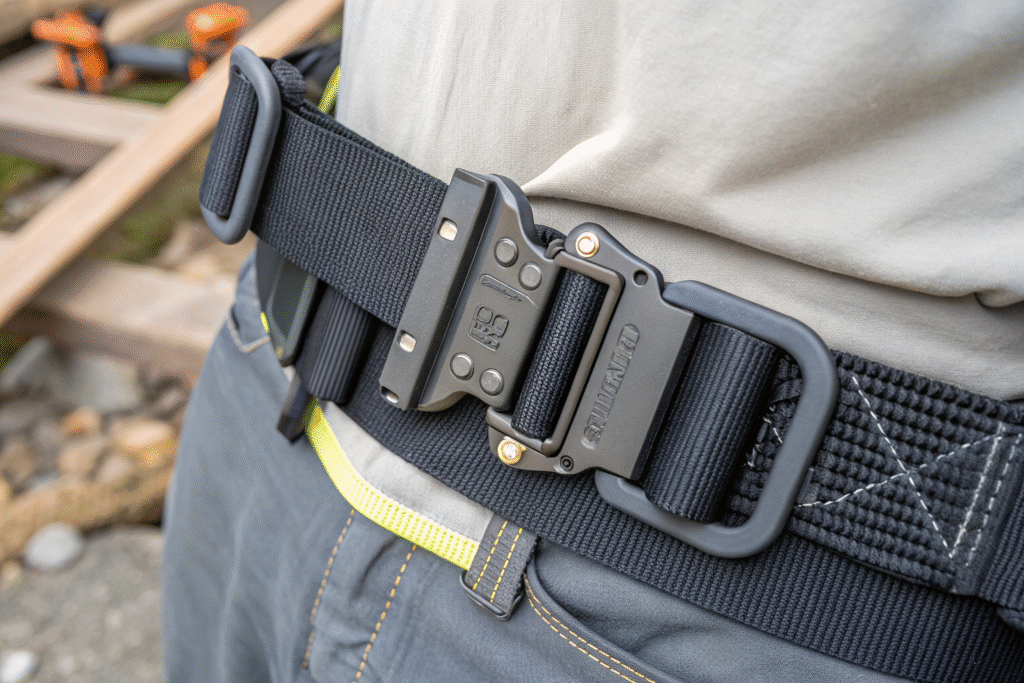
The most famous example of dual-point locking is the Cobra Buckle and its variants. This type of buckle features a two-stage release: the user must first lift a primary lever to disengage the central lock, and then squeeze the sides of the buckle to release the strap. These two actions are mechanically linked in a way that makes it extremely difficult to open accidentally. The design is so secure that it is used not just for belts, but also in climbing gear and safety equipment. The robust construction, often from aluminum or stainless steel, can withstand immense force without deforming.
What Industries Benefit Most from This Technology?
The primary beneficiaries are professions where gear retention is a matter of safety or operational effectiveness. This includes:
- Military and Law Enforcement: For duty belts that hold heavy equipment like holsters and magazine pouches.
- Industrial and Construction Workers: For tool belts, ensuring heavy tools remain secure even when climbing or bending.
- Search and Rescue/Outdoor Guides: For situations where losing a belt could mean losing vital survival gear.
The adoption of this redundant security technology in these fields demonstrates its proven reliability under the most strenuous conditions.
Can Smart Technology Integrate with Buckle Security?
The integration of electronics into everyday objects is a major trend, and belt buckles are no exception. While still an emerging area, "smart" buckles are beginning to appear, adding new layers of functionality that go beyond mere physical security.
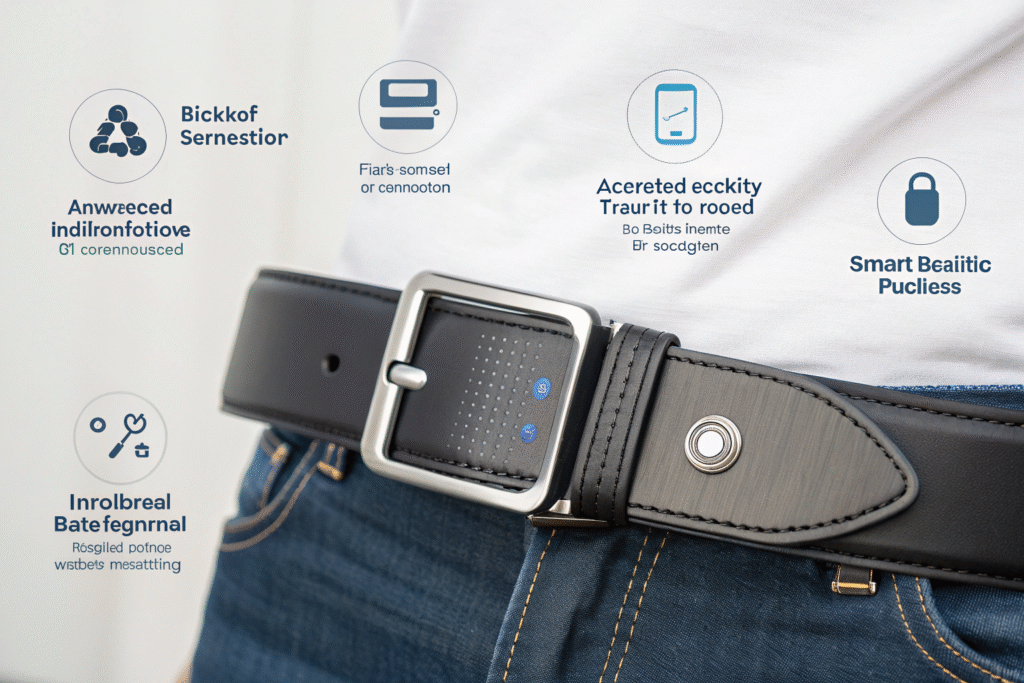
Smart technology is beginning to integrate with buckle security in innovative ways, primarily through embedded sensors and connectivity. Current applications include bio-metric authentication for secure access, activity tracking for health monitoring, and even proximity-based unlocking. While not yet mainstream, these technologies point to a future where a belt buckle could serve as a secure personal identifier and a hub for personal data.
What Are the Current Applications of Smart Buckles?
The most developed application is in the niche of integrated tools and personal safety. Some companies are producing buckles that incorporate a Bluetooth tracker (like Apple's AirTag), allowing you to locate your belt or the items attached to it via a smartphone. Others are experimenting with small health monitoring sensors that can track basic metrics. In high-security fields, prototypes exist for buckles that use RFID or fingerprint scanners to control access to firearms or secure areas, making the belt part of a personalized security system.
What Are the Practical Challenges and Future Potential?
The main challenges for smart buckles are power, durability, and cost. Batteries need to be small yet long-lasting, and the entire electronic assembly must withstand the same physical stress and environmental exposure as a traditional buckle. This makes them expensive and complex for now. However, the potential is significant. Future iterations could seamlessly integrate with other wearable technology, provide haptic feedback for notifications, or act as a secondary authentication method for your devices, all while performing its primary function of keeping your pants securely fastened.
Conclusion
The world of belt buckle security is evolving rapidly, moving far beyond the simple pin. From the convenient yet powerful hold of advanced magnetic locks, to the precision of ratcheting systems, and the absolute redundancy of dual-point designs, there is an innovation for every need. While smart technology hints at a connected future, the immediate progress in mechanical security offers tangible benefits for consumers and professionals today.
If your brand is looking to integrate these cutting-edge security features into your next belt line, partnering with a manufacturer that understands both design and engineering is crucial. Contact our Business Director, Elaine, at elaine@fumaoclothing.com to explore how we can bring secure, innovative buckle technology to your products.