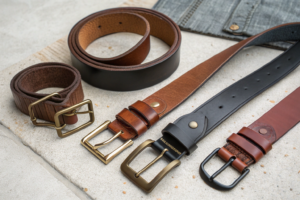
You've designed the perfect belt. The leather is premium, the buckle is stunning, and the craftsmanship is impeccable. But then you get a review: "Beautiful belt, but it doesn't fit through my jeans loops." This single oversight can turn a five-star product into a returned item, damaging your brand's reputation for attention to detail.
Belt loop compatibility is the critical, often overlooked, factor that determines whether a belt is functional and comfortable. It involves matching the belt's width, thickness, and buckle design to the loops on the pants it's intended for. Getting it right ensures your product works seamlessly with your customer's wardrobe, preventing returns and building trust.
This guide will walk you through the essential considerations. We will cover how to measure belt width accurately, why buckle design is just as important as the strap, how to account for material thickness, and why understanding your target market's clothing is the final key to success.
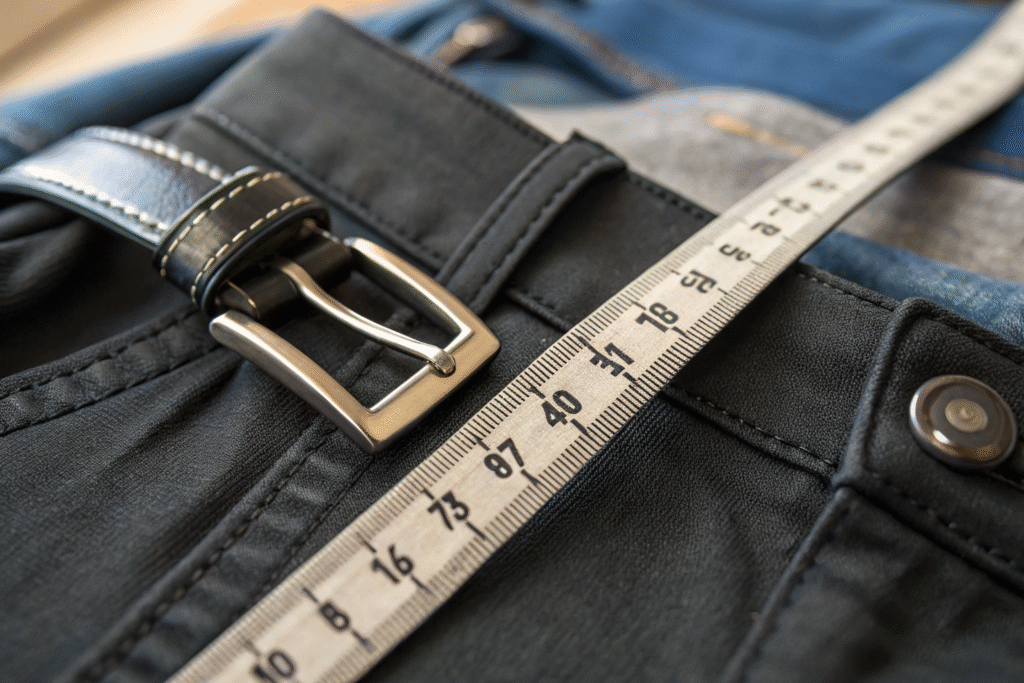
How Do You Accurately Measure Belt Width for Loops?
The most common compatibility failure is a simple size mismatch. A belt that is too wide simply won't thread through the loops, while a belt that is too narrow will slide around and look sloppy. Guessing the size is not an option; you need precise, standardized measurements.
The belt width must be slightly narrower than the internal height of the belt loop to allow for smooth threading and comfortable wear. The industry standard is to design the belt to be about 1/8 inch (or 3 mm) narrower than the typical loop size for that style of pants. This small gap is the key to a perfect functional fit.
What Are the Standard Belt Widths for Different Pants?
Different types of pants are designed with different loop sizes to match their formality and style. There is no single "one-size-fits-all" width. As a manufacturer, we produce belts in specific widths to target these standard categories, ensuring reliable compatibility for our clients.
Here is a quick reference table for the most common pairings:
| Pant Style | Typical Loop Size | Recommended Belt Width |
|---|---|---|
| Dress Trousers / Suits | 1.5 inches (38 mm) | 1.25 - 1.375 inches (32-35 mm) |
| Jeans / Casual Pants | 1.75 - 2 inches (44-50 mm) | 1.5 - 1.75 inches (38-44 mm) |
| Formal / Tuxedo Trousers | 1.25 inches (32 mm) | 1 - 1.125 inches (25-29 mm) |
| Women's Fashion Pants | Varies widely (1" - 1.5") | 0.75 - 1.25 inches (19-32 mm) |
Following these standard belt widths prevents the vast majority of fit issues. For example, a sleek 1.25-inch dress belt is designed to glide through the loops of suit pants, while a sturdy 1.5-inch casual belt is built for the thicker loops on denim jeans.
Why is Consistent Width Throughout the Belt Crucial?
A belt can have the correct width at the tip but might widen or narrow inconsistently along its length, especially near the buckle. This is a common production flaw that causes the belt to get stuck. Consistency is non-negotiable.
This is where your manufacturer's quality control proves its value. During production, samples are checked at multiple points to ensure the width is uniform from the buckle to the tip. This level of detail is what separates a professional-grade accessory from a subpar one. It ensures a smooth customer experience from the first use.
How Does Buckle Design Affect Loop Compatibility?
You can have the perfectly sized belt strap, but if the buckle is too large or awkwardly shaped, it will never fit through the loops. The customer will be forced to remove the buckle every time they want to change pants, a major inconvenience that leads to frustration and returns.
The buckle design is equally critical for compatibility. The buckle's profile, including its width, height, and the shape of its attachment to the strap, must be designed to pass through a standard belt loop without snagging. A well-designed buckle complements the strap for a seamless user experience.
What Buckle Styles Are Most Universally Compatible?
Some buckle styles are inherently more compatible than others. When designing for a broad market, prioritizing these styles minimizes fit problems. The goal is to offer a secure fastening mechanism without a bulky profile.
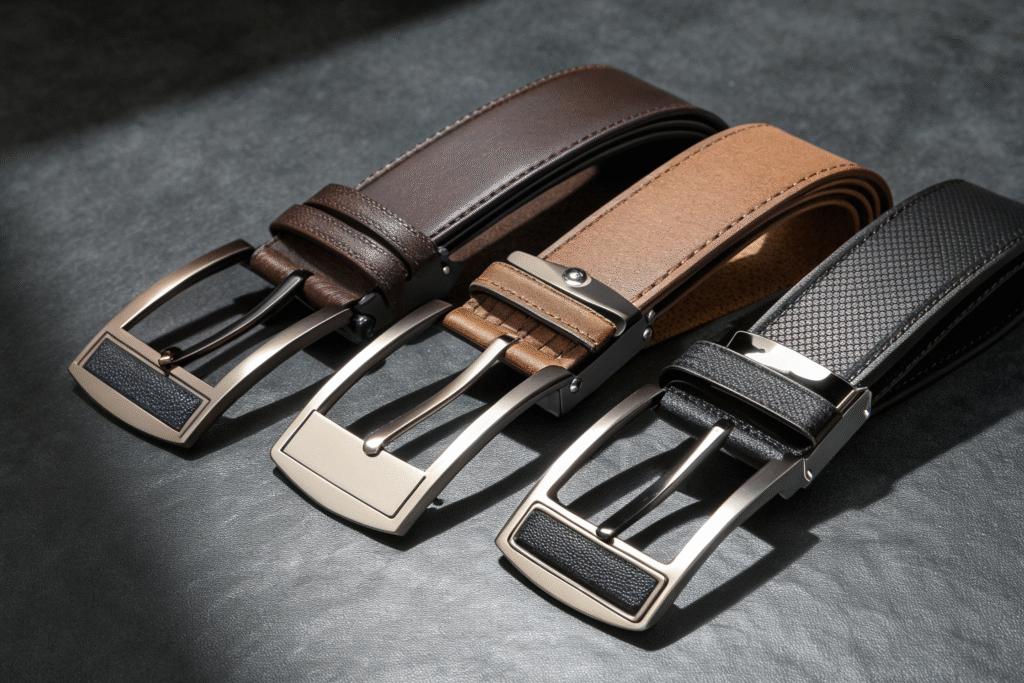
The most universally compatible buckles are typically:
- Pin Buckles: A classic, simple, and low-profile design.
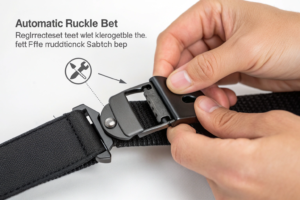
- Automatic/Plate Buckles: Modern and sleek, often designed to be very thin.
- D-Ring Buckles: Minimalist and flexible, with no rigid parts to get stuck.
These styles are safe bets for men's dress belts and everyday casual belts. In contrast, large Western buckles, certain ornate fashion buckles, and very wide clasps are often designed as statement pieces where the user expects to thread the strap and then attach the buckle separately.
How Can You Test a Buckle's Functional Fit?
The best way to test compatibility is through physical prototyping. A responsible manufacturer will not only send a sample of the belt but also specifically instruct you to test the process of threading it through the loops on several pairs of pants.
This hands-on testing reveals real-world issues. Does the buckle catch on the denim? Is it too thick for formal trouser loops? Does the attachment mechanism (the "pin" on a plate buckle) slide through easily? This practical step in the product development phase is crucial for catching problems before mass production begins.
Why Does Belt Thickness and Material Matter?
A belt might have the correct width and a slim buckle, but if the material is too thick and stiff, it will be difficult to thread and uncomfortable to wear. The belt will feel rigid against the body and may not conform to the user's waist, putting stress on the loops and the belt itself.
The thickness and flexibility of the belt material are vital for both comfort and compatibility. A belt needs to be rigid enough to hold its shape but pliable enough to bend smoothly through the loops and around the waist. The material choice directly dictates this balance.
How Do Different Materials Behave?
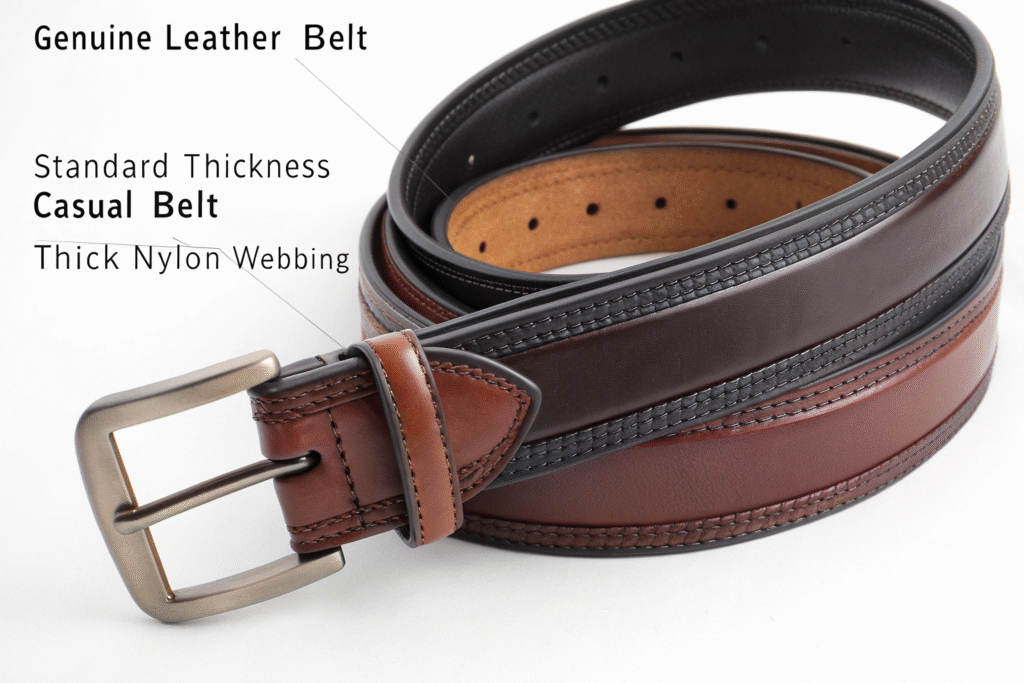
The behavior of a belt through a loop changes dramatically based on what it's made from. Understanding these properties helps in selecting the right material for the product's intended use.
- Full-Grain Leather: Dense and durable, but can be stiff initially. It requires a break-in period to achieve optimal flexibility.
- Calfskin / Lambskin: Softer and more pliable from the start, making it an excellent choice for dress belts that need to be thin and flexible.
- Woven Fabric (Nylon, Canvas): These materials are inherently flexible and thin, making them very easy to thread. However, they can lack the structure of leather.
- Reinforced/Padded Belts: Some fashion belts have extra padding or internal stiffeners. While creating a specific look, this significantly increases thickness and can limit compatibility.
How is Flexibility Engineered During Production?
A good manufacturer doesn't just cut leather; they engineer the product. Techniques like skiving (thinning the leather at the tip), using specific tanning methods for softer leathers, and selecting the right lining materials all contribute to the final product's flexibility.
For our custom belt projects, we advise clients on the best material combinations to achieve their desired look without sacrificing function. This expertise ensures that a wide, sturdy casual belt for jeans is still pliable enough for comfortable daily use.
How Does Your Target Market Influence Compatibility?
A belt designed for a corporate executive will face different loop challenges than one designed for a construction worker or a fashion-forward teenager. Assuming one standard fits all demographics is a recipe for poor product-market fit.
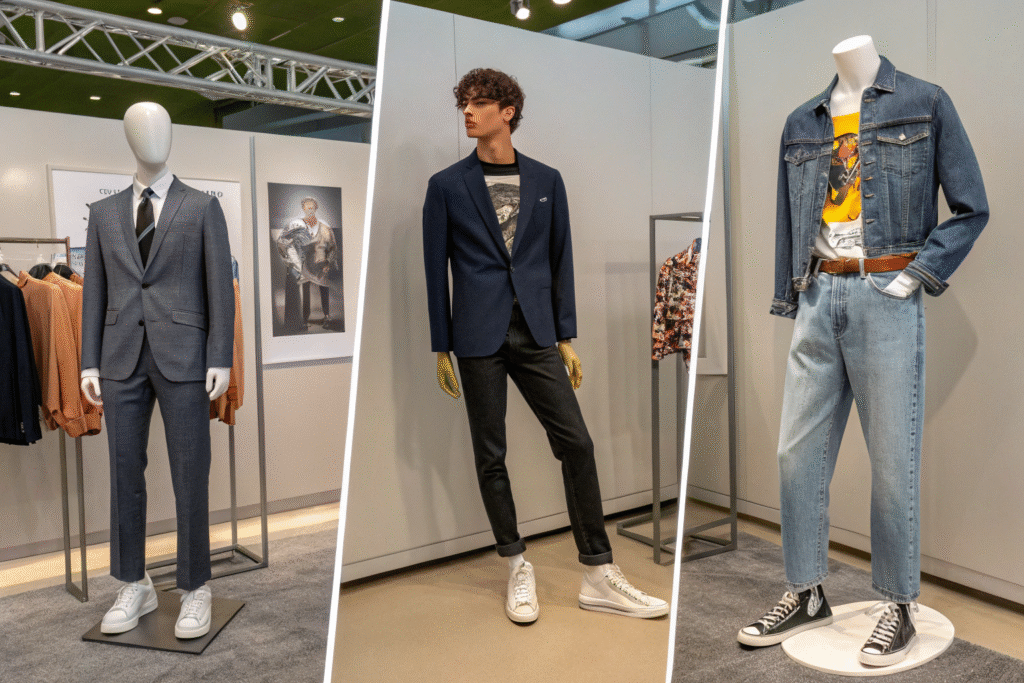
The final key consideration is your target customer's wardrobe. The pants they wear most often will dictate the ideal belt specifications. A deep understanding of your market allows you to tailor width, buckle, and material for perfect, hassle-free compatibility.
What Are the Specific Needs of Key Market Segments?
Tailoring your product to specific segments increases its perceived value and functionality. Here are some examples:
- The Corporate Client: This customer needs belts that work with suit trousers and dress chinos. Prioritize slim widths (1.25"), low-profile pin or plate buckles, and flexible, high-quality leather.
- The Casual & Denim Wearer: This market requires belts compatible with the larger loops on jeans and casual pants. Standard widths of 1.5" to 1.75" and more robust buckles are appropriate here.
- The Fashion & Youth Market: This segment often experiments with non-traditional loop sizes, from very wide to very skinny. Offering a range of fashion belt widths and innovative buckle designs is key to capturing this audience.
Why is Market Research Non-Negotiable?
Before finalizing a design, you must understand your customer. This means looking at the brands of pants they buy, the styles they follow, and the retailers they shop from. This research informs every technical decision discussed previously.
For instance, launching a line of western belts requires the understanding that the large, decorative buckles are often meant to be worn over the belt loop, not through it. This fundamental insight changes the entire design and marketing approach. Knowing your customer is the ultimate key to ensuring belt loop compatibility.
Conclusion
Belt loop compatibility is a fundamental aspect of product design that directly impacts customer satisfaction and return rates. It requires a holistic approach, carefully balancing precise width measurements, thoughtful buckle design, appropriate material selection, and a deep understanding of your target market's wardrobe. By mastering these four considerations, you can ensure your belts are not just beautiful, but also perfectly functional.
Are you looking for a manufacturing partner who pays this level of attention to detail? Our team specializes in creating compatible, high-quality belts for brands worldwide. For a consultation on your next order, please contact our Business Director, Elaine, at elaine@fumaoclothing.com. Let's create belts that fit perfectly, every time.