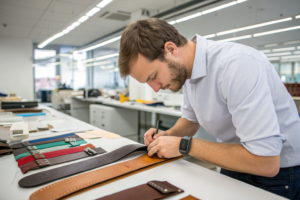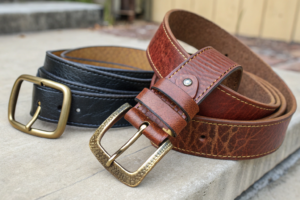
In the competitive world of fashion accessories, a casual belt must do more than just look good—it must endure. For a brand, a single belt failing in the hands of a customer can damage reputation more than ten successful sales can build it. For the end-user, a durable belt is an expectation, not a luxury. Whether it's a canvas belt for weekend adventures, a woven leather belt for the office, or a braided belt for summer outings, its longevity is defined by how it withstands the rigors of daily life: bending, pulling, sweating, and exposure. So, how do you, as a brand or buyer, move beyond subjective "feel" to objective assurance? The answer lies in a structured regimen of key quality tests that simulate years of wear in a controlled environment.
The key quality tests for a durable casual belt are standardized physical and chemical assessments that verify the strength of materials, the integrity of construction, and resistance to environmental factors. These include tensile strength tests on the strap, buckle pull-off tests, flex endurance tests (like the Martindale or manual fold tests), colorfastness to rubbing (crocking) and perspiration, and checks for harmful substances. For leather belts, additional tests for finish adhesion and grain crack resistance are critical.
Implementing this battery of tests transforms quality control from a visual inspection into a science-based guarantee. It allows you to confidently promise durability and build a brand known for reliability. Let's break down the essential tests that separate a lasting accessory from a disposable one.
How is the strength of the belt strap tested?
The strap is the backbone of the belt. Its failure—whether tearing, stretching, or delaminating—is the most common catastrophic failure. Testing its strength involves measuring its resistance to the primary forces it will encounter: tension and puncture.
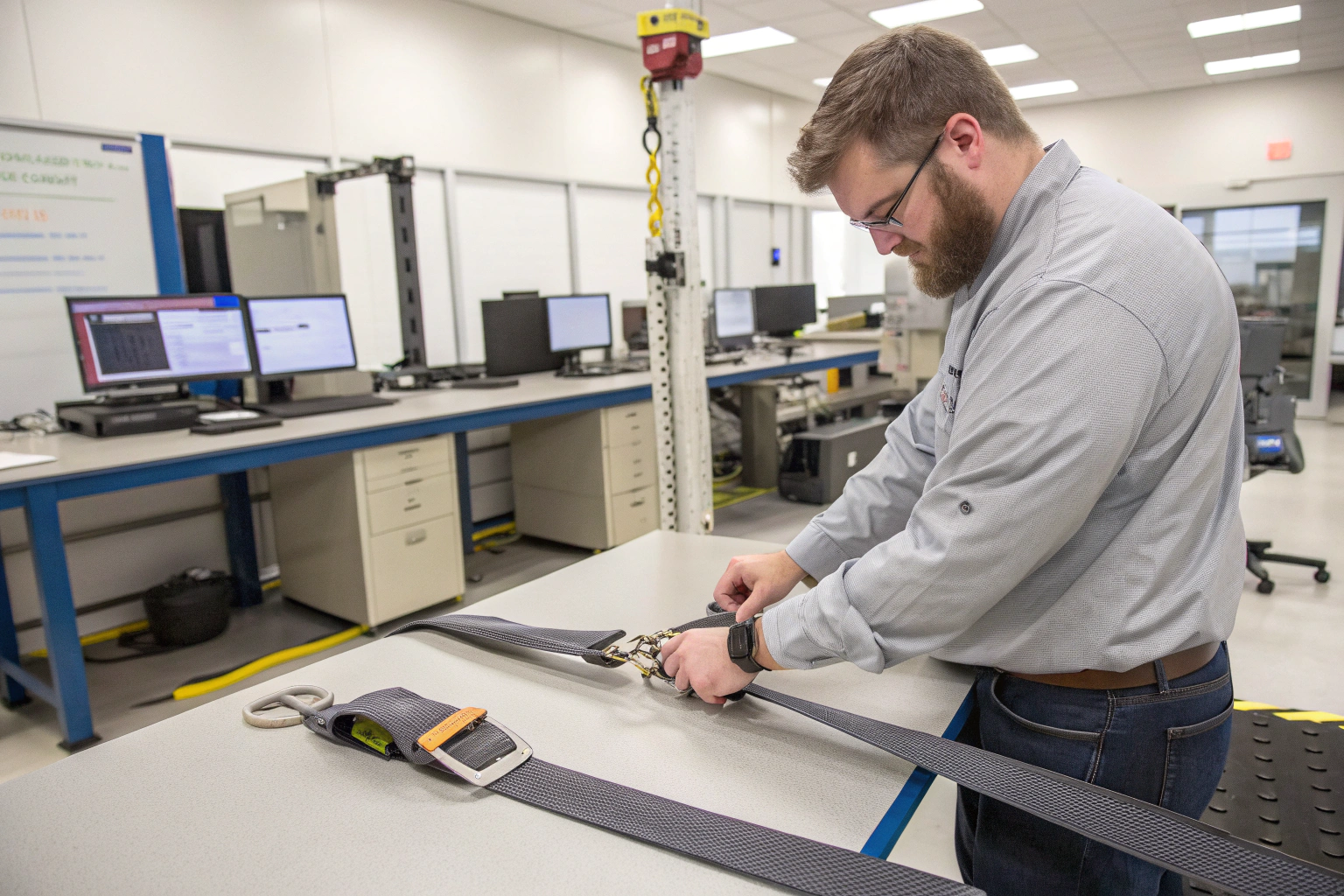
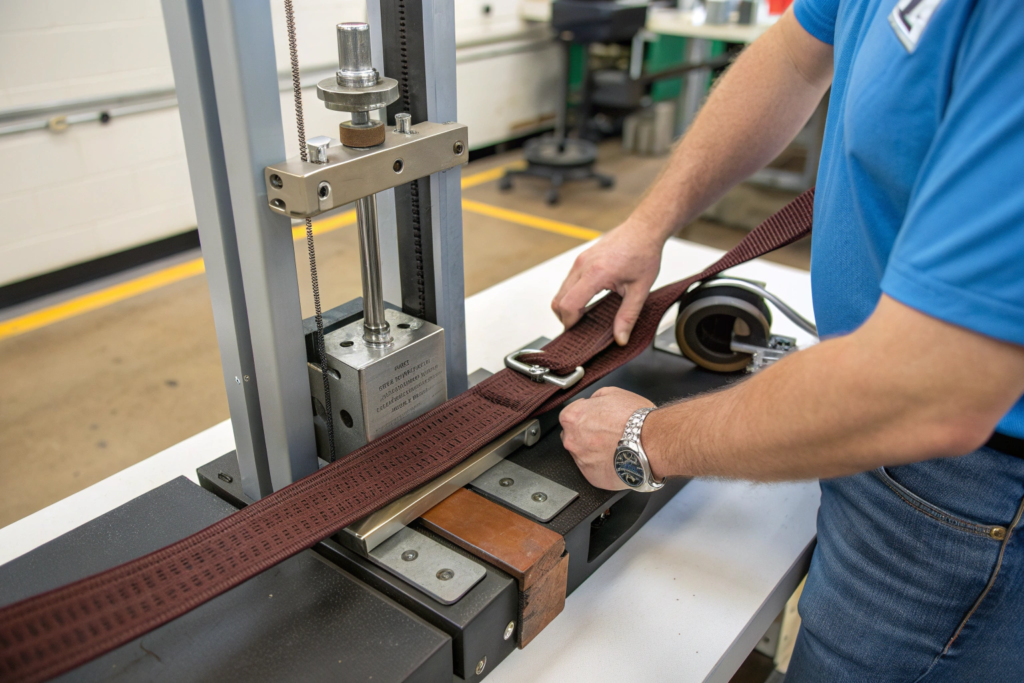
The strength of the belt strap is tested through a Tensile Strength Test and a Tear Strength Test. In the tensile test, a standardized piece of the strap material is clamped in a machine that pulls it apart until it breaks, measuring the force required (in Newtons or pounds-force) and the elongation at break. This confirms the material can withstand pulling stress. The tear test, often using an Elmendorf Tear Tester, measures the force needed to propagate a pre-cut slit, simulating resistance to snagging or puncture.
For a casual belt expected to carry light loads (like a phone holster or tool pouch) or simply endure rough handling, high tensile and tear strength are non-negotiable benchmarks. A weak result here predicts a short product life.
What does the tensile strength result actually tell you?
A tensile strength result provides two crucial data points:
- Breaking Force: The maximum load the material can bear before snapping. For a robust canvas webbing belt or full-grain leather belt, this should be significantly high (e.g., over 1000 N for a quality webbing). A low number indicates the use of inferior, thinly woven fabric or low-grade, splitting leather.
- Elongation at Break: How much the material stretched before failure. Some elongation is good (indicating flexibility), but excessive stretch (common in poor-quality PU belts or loosely woven fabrics) means the belt will permanently deform and lose its shape with use.
By setting minimum thresholds for these values based on your material specifications, you can reject subpar batches before they ever reach production. This is a cornerstone of preventive quality control.
How is laminate or layered construction tested for delamination?
Many belts, especially faux leather belts or those with fabric backings, are made by laminating layers together. The peel or delamination test is critical here.
- Method: A section of the belt is cut, and the layers are partially separated. They are then clamped into a machine that measures the force required to continue peeling them apart at a 180-degree or 90-degree angle.
- Standard: Adherence to standards like ASTM D903 (Peel Strength) is ideal. A high peel strength indicates strong adhesive bonding and a low risk of the belt's surface peeling away from its core during flexing or exposure to moisture.
Failing this test leads to the unsightly and irreparable "bubbling" or peeling of the belt's surface—a common complaint with cheap synthetic belts.
How is the buckle and hardware attachment verified?
The buckle is the point of highest mechanical stress. A failure here isn't just an inconvenience; it's a complete functional failure. Testing must ensure the attachment can withstand both sudden shock and long-term fatigue.
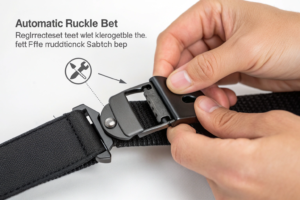
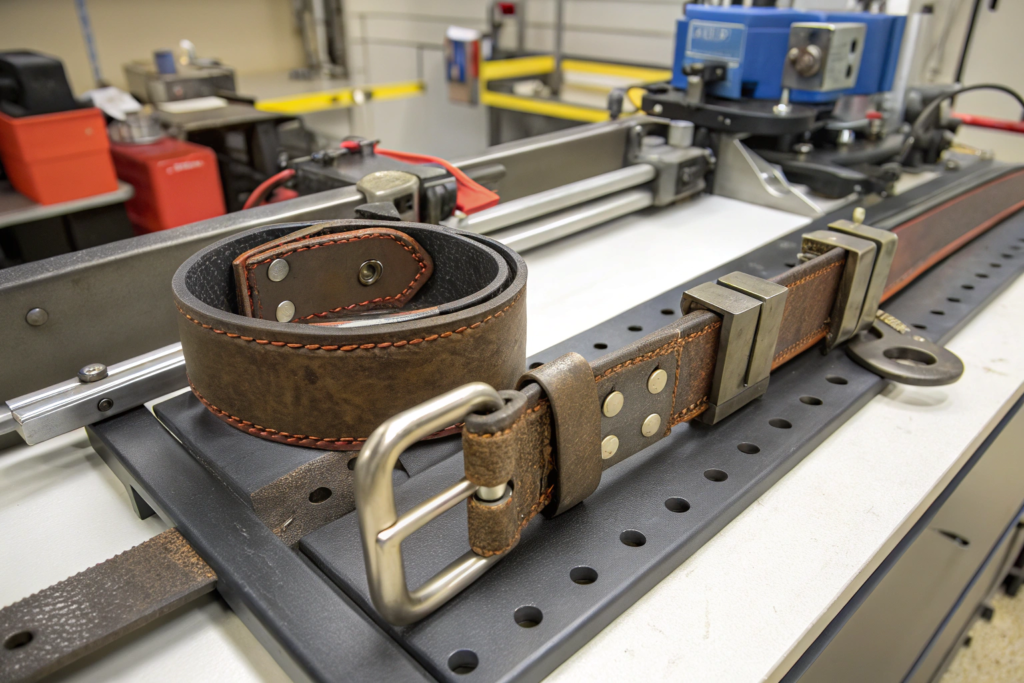
Buckle and hardware attachment is verified through a Dynamic Buckle Fatigue Test and a Static Pull-Off Test. The fatigue test involves a machine that repeatedly opens and closes the buckle (e.g., 10,000 cycles) to simulate years of use, checking for metal fatigue, spring failure, or deformation. The pull-off test involves securing the buckle in a jig and applying a steadily increasing pulling force to the strap until separation occurs, ensuring the stitching, riveting, or loop attachment exceeds a safe threshold.
For a rugged casual belt or outdoor belt, these tests are paramount. They ensure the buckle won't pop open during activity and that the attachment won't tear free under strain.
What are the standard cycles and force thresholds for buckle testing?
While standards can vary, industry-accepted benchmarks provide a reliable framework:
- Buckle Fatigue Test: A quality buckle should withstand 5,000 to 10,000 open-close cycles without functional failure, significant loss of spring tension, or visible cracking. For automatic buckles or complex clasps, this test is even more critical.
- Buckle Pull-Off Test: The point of attachment (stitching, rivets, or loop) should not fail below a force of 200-300 Newtons (approx. 45-67 lbs-force) for a standard casual belt. For tactical or load-bearing belts, this threshold would be much higher.
Your manufacturer should be able to provide test reports from their hardware suppliers or in-house testing that certifies compliance with these thresholds. This is part of sourcing reliable components.
How is stitching quality and thread durability assessed?
Stitching is the most common attachment method. Its failure is often gradual. Assessment goes beyond counting stitches per inch (SPI).
- Thread Strength Test: The thread itself is tested for tensile strength and abrasion resistance. Nylon or polyester thread is standard for its durability; cotton thread should be avoided for casual belts.
- Stitch Lock Inspection: The end of a stitch line should be properly back-tacked or locked to prevent unraveling.
- Seam Slippage Test: For fabric belts, this test measures the force required to cause the stitches to tear through the fabric material itself. A high result indicates the fabric is robust and the stitch tension is correct.
Poor stitching is a visual and functional defect that signals overall poor craftsmanship. It's one of the first things a discerning customer examines.
How is colorfastness and finish durability ensured?
A belt can be structurally sound but fail aesthetically. Color transfer onto clothing or fading from sweat and sun are common complaints that lead to product dissatisfaction. These are tested through colorfastness protocols.
Colorfastness and finish durability are ensured through standardized rub tests and perspiration tests. The Crockmeter Test (like AATCC 8 or ISO 105-X12) uses a white cotton cloth rubbed against the belt under controlled pressure for a set number of cycles; the cloth is then graded for color transfer. The Perspiration Fastness Test (like ISO 105-E04) involves soaking the belt in artificial acidic and alkaline perspiration and assessing color change.
Passing these tests means your customer can wear a dark braided leather belt with light chinos or a vibrant canvas belt on a hot day without worry. It's a key component of customer satisfaction.

What is the difference between dry and wet crocking tests?
Both simulate common wear scenarios:
- Dry Crocking Test: Simulates color transfer from dry friction, like the belt rubbing against a cotton shirt or denim throughout the day. This is the most basic and essential test.
- Wet Crocking Test: Simulates color transfer when the belt is damp from rain or perspiration—a more challenging condition where dyes are more likely to leach.
A high-quality belt will pass both tests with a rating of 4 or 5 (on a 1-5 scale, with 5 being no transfer). A failing score, especially on wet crocking, is a major red flag and a predictor of customer complaints about ruined clothing.
How is resistance to cracking and peeling tested for leather finishes?
For genuine leather belts, the finish (the top coating) must bond with the leather. The Finish Adhesion Test and Crack Resistance Test are vital.
- Adhesion: A cross-hatch pattern is cut into the finish, adhesive tape is applied and ripped off. The amount of finish removed is rated. Good adhesion shows minimal removal.
- Crack Resistance (Lastometer): A dome-shaped plunger is pushed against the grain side of the leather until cracks appear. This measures the leather's flexibility and the finish's ability to stretch without cracking—critical for belts that are constantly flexed at the waist.
Leather that cracks or peels quickly looks aged and worn in an unattractive way, not in the desirable "patina" manner. These tests ensure the leather has been properly tanned and finished.
How are safety and regulatory compliance verified?
Beyond durability, a product must be safe for human contact and compliant with the regulations of its target market. This involves chemical testing.
Safety and regulatory compliance are verified through chemical tests that screen for restricted substances. Key tests include: Phthalates Content (especially for PVC/PU belts), Formaldehyde Content, AZO Dye Detection (which can release carcinogenic amines), and Nickel Release from metal buckles (per EN 1811 for EU markets). Compliance with REACH (EU) and CPSIA (USA) regulations is mandatory.
Failing these tests can lead to product recalls, legal liability, and severe brand damage. They are non-negotiable for any responsible brand selling in North America or Europe.
What is the nickel release test, and why is it critical for buckles?
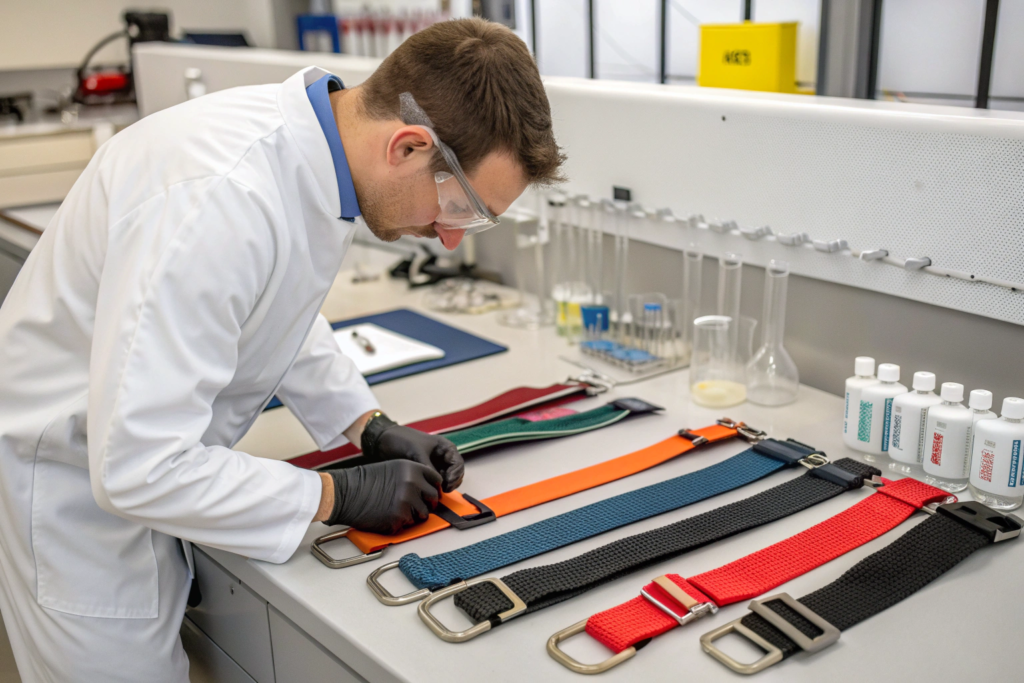
Nickel is a common allergen. Prolonged skin contact with items releasing nickel can cause dermatitis. The Nickel Release Test (like EN 1811) measures the amount of nickel that migrates from a buckle's surface when exposed to a synthetic sweat solution.
- Limit: The EU Nickel Directive stipulates a release rate of less than 0.5 µg/cm²/week.
- Importance: Ensuring buckle plating (whether on a brass buckle or steel buckle) is of sufficient quality and thickness to form a barrier is essential. A failing test is a direct health risk to customers.
Using buckles from suppliers who can provide nickel-free or compliant nickel-release certificates is a best practice in responsible sourcing.
How is general product safety for accessories like belts defined?
General product safety for belts is governed by frameworks like the U.S. Consumer Product Safety Commission (CPSC) guidelines and the EU's General Product Safety Regulation (GPSR). These require that products placed on the market be safe under normal or reasonably foreseeable conditions of use. For belts, this encompasses:
- Mechanical Safety: No sharp edges on buckles or cuts in leather that could cause injury.
- Flammability: Textile components should meet relevant flammability standards (though less critical for belts than apparel).
- Chemical Safety: As outlined above, free from hazardous levels of restricted substances.
- Choking Hazards: Particularly relevant for children's belts with small detachable parts.
Having a Supplier's Declaration of Conformity (SDoC) and maintaining a Technical File with all relevant test reports is the standard way to demonstrate due diligence and compliance.
Conclusion
The durability of a casual belt is not a matter of luck or marketing hype; it is the predictable outcome of rigorous, scientific quality testing. By systematically evaluating tensile strength, buckle integrity, colorfastness, finish adhesion, and chemical safety, brands can transform their quality assurance from a cost center into a powerful competitive advantage and a shield against risk. This commitment to proven durability builds unshakeable customer trust and fosters brand loyalty.
For brands ready to elevate their product integrity, partnering with a manufacturer that has an in-house quality lab or steadfast partnerships with accredited third-party testing facilities is essential. If you are looking to develop a line of casual belts that are as dependable as they are stylish—backed by data, not just promises—we have the expertise and processes in place. Contact our Business Director, Elaine, at elaine@fumaoclothing.com to discuss how we can build durability into every belt, from the first sketch to the final test report.