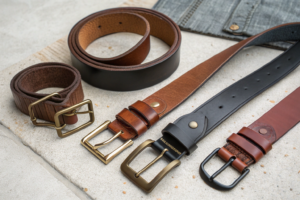
Formal suspenders represent a critical element of traditional and contemporary professional attire, yet many professionals struggle with material choices that balance aesthetics, comfort, and durability. The wrong material can lead to slippage, discomfort, or premature wear that undermines the sophisticated appearance suspenders should provide.
The top material choices for formal suspenders include silk, fine wool, premium leather, high-quality elastic blends, and technical performance fabrics. Each material serves different formal contexts, personal preferences, and functional requirements. The most appropriate selection depends on the specific formal occasion, climate considerations, movement requirements, and aesthetic preferences while maintaining the traditional elegance that defines formal suspenders.
The global formal accessories market continues to evolve, with suspenders experiencing a 12% annual growth as professionals seek alternatives to belts that can compromise suit drape and comfort. Understanding the distinct advantages of each material helps manufacturers, retailers, and consumers make informed decisions that enhance both appearance and wearing experience.
Why Does Silk Remain the Gold Standard for Formal Suspenders?
Silk has maintained its position as the premier material for formal suspenders for over a century, representing the intersection of luxury, tradition, and performance. The material's unique properties create a wearing experience that synthetic alternatives struggle to replicate, particularly in high-formality contexts where subtle details communicate sophistication.
The natural protein structure of silk creates fibers with exceptional strength relative to their diameter, allowing for elegantly thin suspenders that maintain durability. The material's natural luster provides visual depth that complements formal fabrics without overwhelming them, while its moisture-wicking properties maintain comfort during extended wear in various climates.
What Specific Silk Weaves Work Best for Formal Wear?
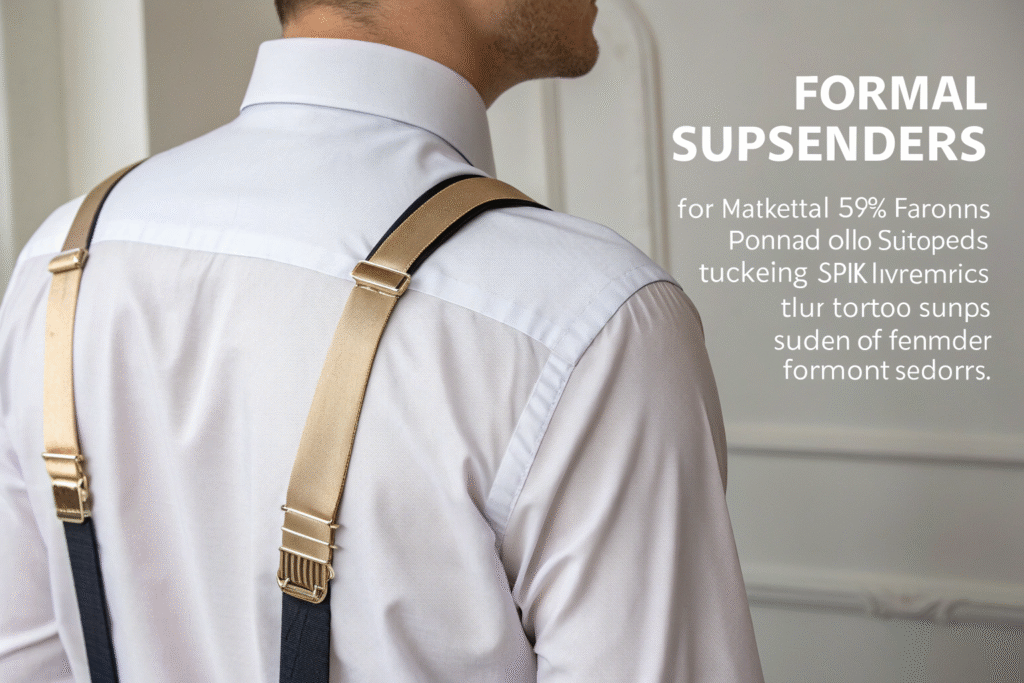
Grosgrain silk, with its distinctive ribbed texture, provides the ideal balance of flexibility, durability, and visual interest for formal suspenders. The crosswise rib pattern creates subtle light play that enhances the material's natural sheen while providing additional surface texture that prevents slippage on shirt fabrics. This weave maintains its shape exceptionally well, preventing the twisting that can occur with plain weaves.
Satin weave silk offers a smoother, more reflective surface that pairs beautifully with black-tie attire. The floating warp threads create uninterrupted light reflection that appears particularly luxurious in evening settings. However, satin's smoother surface may require more careful clip or buttonhole placement to prevent slippage. The International Silk Association standards help identify quality levels that ensure durability appropriate for formal accessories.
How Does Silk Performance Compare to Synthetic Alternatives?
While synthetic materials often match silk's appearance at first glance, they cannot replicate its performance characteristics over time. Silk's hygroscopic properties allow it to absorb up to 30% of its weight in moisture without feeling damp, maintaining comfort during formal events that may involve dancing or warm environments. This moisture management far exceeds most synthetic alternatives.
The thermal regulation properties of silk provide comfort across varying temperatures, making it ideal for events that transition between climate-controlled interiors and seasonal outdoor settings. According to textile performance studies, silk's natural temperature adaptation outperforms many technical fabrics specifically designed for climate response, making it uniquely suited to the unpredictable environments of formal occasions.
What Role Do Wool and Elastic Blends Play in Modern Formal Wear?
Wool suspenders, particularly when blended with elastic components, offer a sophisticated alternative to silk that addresses specific practical concerns of daily professional wear. These materials provide more subtle aesthetics suitable for business formal environments while offering stretch characteristics that accommodate natural movement throughout the day.
Fine merino wool blends bring natural temperature regulation and moisture-wicking properties to suspenders, creating all-day comfort for professionals who wear suspenders from morning meetings through evening events. The matte finish of wool provides a more understated elegance than silk's sheen, making it appropriate for conservative professional environments where flashier accessories might be discouraged.
How Do Elastic Blends Enhance Functionality?
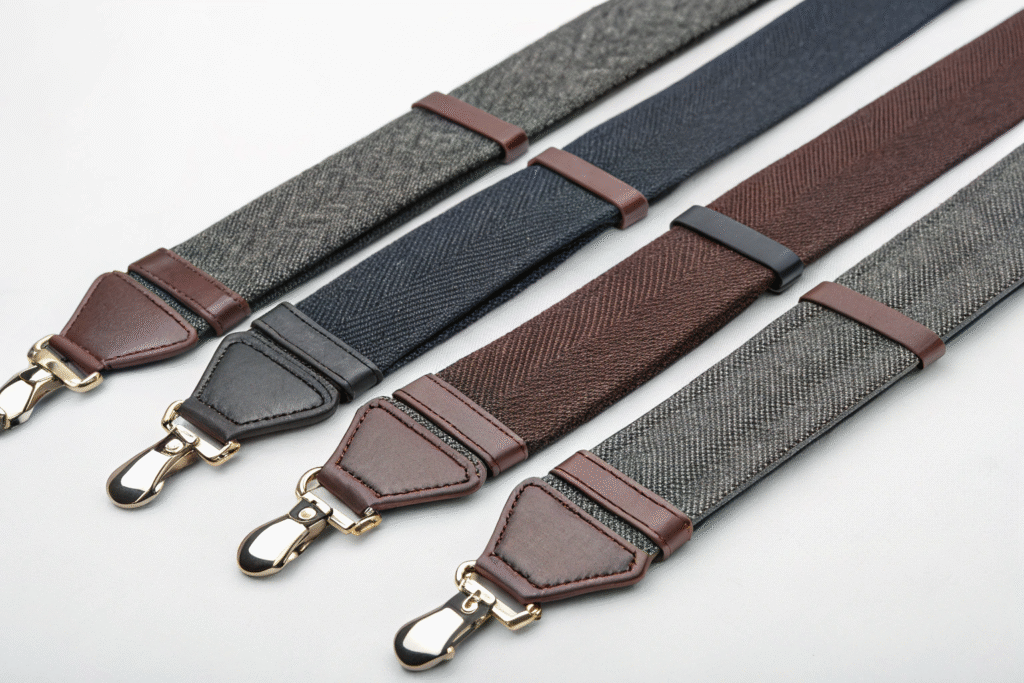
Modern elastic blends typically incorporate natural fibers like wool or cotton with synthetic elastane components in ratios between 85:15 and 95:5. This balance maintains the natural feel and appearance of traditional materials while providing 15-30% stretch capability that accommodates movement and position changes without constant adjustment.
The engineering of these blends has evolved significantly, with advanced textile manufacturing creating materials that maintain consistent tension throughout the day. Unlike early elastic suspenders that could lose their resilience, contemporary blends using wrapped elastic cores with natural fiber exteriors maintain both their aesthetic appeal and functional performance through years of regular use.
What Climate Considerations Favor Wool Suspenders?
Wool's natural thermoregulation makes it particularly suitable for professionals who transition between varying climates throughout their day or travel frequently between climate zones. The material provides warmth without weight in cooler environments while remaining comfortable in moderate temperatures due to its breathability.
For professionals in regions with distinct seasons, wool suspenders offer practical advantages over silk, which provides less insulation in cold weather. The Moisture Management Index used in textile science demonstrates wool's superior performance in maintaining comfort across diverse environmental conditions, making it a versatile choice for professionals with unpredictable schedules and environments.
How Have Technical Fabrics Entered the Formal Suspenders Market?
Technical fabrics developed for performance apparel have gradually influenced formal accessories, bringing engineered properties to traditional suspender designs. These materials offer solutions to specific wearing challenges that natural fibers cannot address, particularly for professionals with active roles during formal events or those requiring exceptional durability.
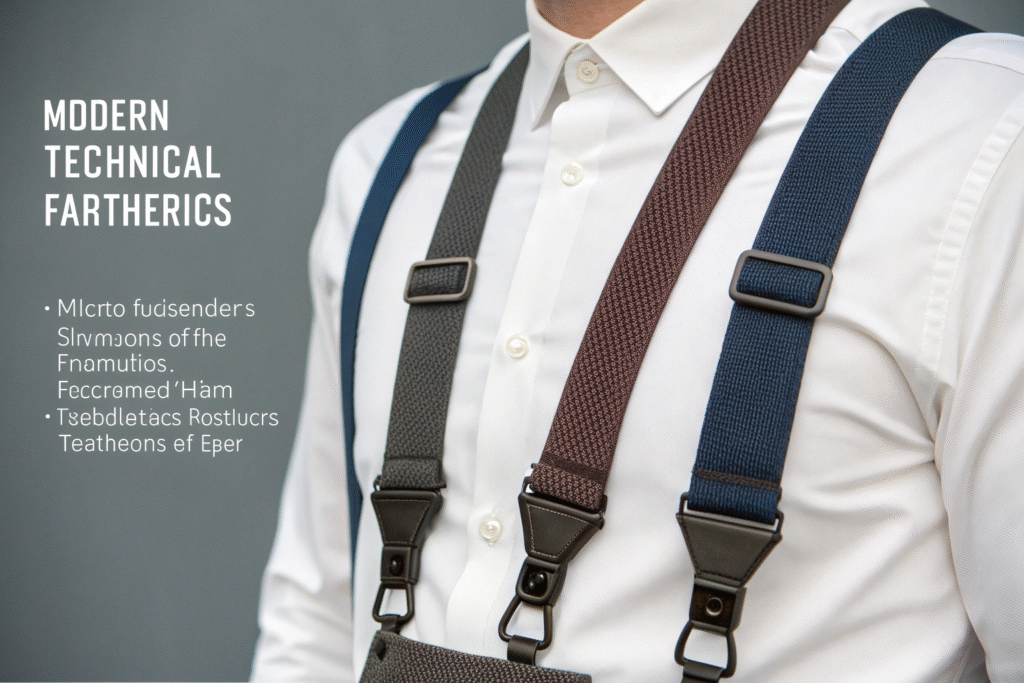
Modern technical fabrics for formal suspenders often feature micro-weaves that provide minimal stretch for comfort while maintaining precise drape, moisture-wicking treatments that exceed natural fiber capabilities, and structural elements that prevent twisting or curling during extended wear. The most successful implementations maintain traditional aesthetics while incorporating technical enhancements.
What Performance Characteristics Do Technical Fabrics Provide?
Advanced moisture management systems in technical fabrics can transport perspiration more efficiently than natural fibers, making them ideal for formal events in warm climates or for individuals who perspire moderately. These systems often combine hydrophobic and hydrophilic zones within the same fabric to direct moisture away from the body while maintaining dry contact points.
Anti-microbial treatments integrated at the fiber level (rather than applied as coatings) prevent odor development during extended wear, addressing a common concern for professionals who wear suspenders through long workdays followed by evening events. The Textile Innovation Institute standards verify these claims, ensuring that performance enhancements don't compromise safety or durability.
How Do Technical Fabrics Balance Tradition and Innovation?
The most successful technical fabric suspenders maintain traditional widths (1-1.5 inches), classic hardware, and conservative color palettes while incorporating modern performance features. This approach allows them to function within established formal dress codes while providing enhanced comfort and practicality.
Weave patterns that mimic traditional grosgrain or satin finishes help technical fabrics maintain appropriate formal aesthetics. According to fashion industry analysis, the most accepted technical formalwear incorporates innovation subtly, allowing the wearer to benefit from enhanced performance without appearing to wear "technical" or "sport" clothing in formal contexts.
What Construction Details Differentiate Premium Formal Suspenders?
Beyond material selection, construction methods significantly impact suspender performance, durability, and aesthetic quality. Premium suspenders feature details that may not be immediately visible but contribute substantially to the wearing experience and product longevity. Understanding these construction elements helps identify quality across different material choices.
The integration of hardware, reinforcement at stress points, and finishing techniques separate mass-produced suspenders from artisanal quality pieces. These details become particularly important for formal suspenders, which must maintain their appearance through years of occasional use while providing reliable performance during important events.
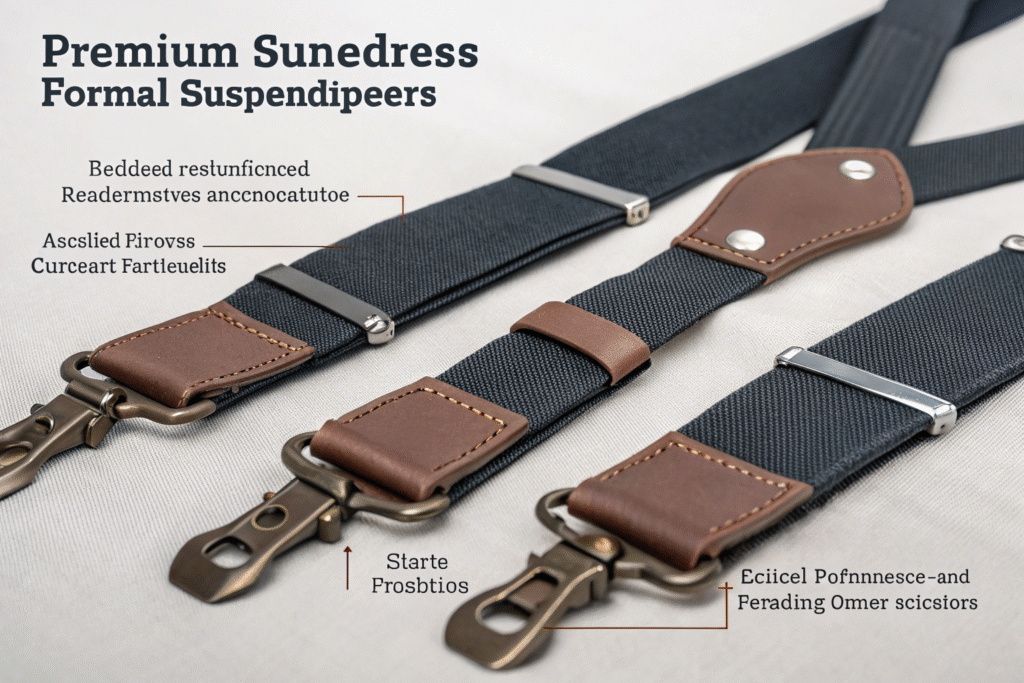
How Does Hardware Selection Impact Function and Aesthetics?
Premium suspenders feature solid brass or nickel-silver hardware rather than plated base metals, ensuring that clips and adjusters maintain their appearance through years of use. The weight and finish of quality hardware contribute to the suspenders' drape and prevent the flipping or twisting that can occur with lightweight components.
The Jewelry Metals Association standards for non-precious metals help identify hardware that will maintain its finish without tarnishing or causing skin reactions. For formal suspenders, this is particularly important for the backplate that rests against the shirt and the clips that contact trousers, where metal quality directly impacts both appearance and comfort.
What Reinforcement Techniques Ensure Long-Term Durability?
Bar-tacking at stress points—particularly where hardware attaches to the straps—distributes force across multiple stitch lines rather than concentrating it at single attachment points. This technique significantly extends product lifespan by preventing the tearing that commonly occurs with single-row stitching in mass-produced suspenders.
Reinforced buttonholes in traditional button-style suspenders prevent stretching and tearing that compromises both appearance and function. The Craftsmanship Heritage Foundation documents traditional techniques that quality manufacturers preserve, including hand-finished buttonholes that maintain their shape through repeated use while providing a visual marker of quality.
Conclusion
Formal suspenders represent a sophisticated accessory category where material selection directly impacts both aesthetic appropriateness and functional performance. Silk maintains its position as the premier choice for high-formality occasions, while wool blends offer practical advantages for daily professional wear, and technical fabrics address specific performance needs within traditional aesthetics.
The most appropriate material choice depends on the specific formal context, personal comfort requirements, and practical considerations like climate and activity level. Understanding the distinct advantages of each material helps professionals build a suspender collection that serves diverse formal needs while maintaining the elegance and tradition that define this classic accessory.
Ready to source formal suspenders in premium materials? Contact our Business Director, Elaine, at elaine@fumaoclothing.com to discuss our craftsmanship traditions and how we can develop formal suspenders that meet your specific requirements for materials, construction, and aesthetic appeal.