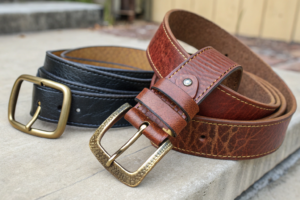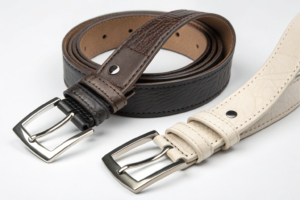
Your leather products arrive in inconsistent colors, creating mismatched sets and frustrated customers. The brown belt from one shipment doesn't match the brown wallet from another, even though they were ordered as the same color. This common manufacturing challenge costs businesses time, money, and customer trust.
Color matching in dyed leather batches is determined by multiple factors including hide quality and origin, tannery water chemistry, dye formulation consistency, environmental conditions during processing, and technician expertise. Successful color matching requires controlling these variables through standardized processes, precise measurement technology, and experienced colorists who can adjust for natural material variations while maintaining consistency across production runs.
The complexity of leather dyeing means perfect color matching remains both science and art. Understanding what influences color outcomes helps manufacturers improve consistency while managing expectations about natural material variations.
What Raw Material Variables Affect Color Absorption?
Leather is a natural material with inherent variations that significantly impact dye absorption and final color. Understanding these raw material differences is the first step toward better color control.
The primary raw material variables include hide origin and breed, animal age and diet, natural grain variations, and pre-tanning treatments. Each factor influences how consistently dyes penetrate and bond with leather fibers, creating potential color variations even with identical dye formulas.

How Does Hide Origin Influence Dye Results?
Hides from different regions contain varying collagen structures and natural oils that affect dye penetration. Cattle breeds from humid climates often have looser fiber structures that absorb dye more quickly, potentially creating darker shades. Animals from drier regions typically produce tighter-grained hides that resist dye penetration, requiring adjusted immersion times. These geographical differences mean tanneries must document hide origins and adjust dyeing protocols accordingly to maintain color consistency across shipments.
What Role Does Pre-Tanning Treatment Play?
The beamhouse operations performed before tanning significantly impact color results. Hide trimming, fleshing, and dehairing methods affect surface integrity and dye receptivity. Chrome-tanned leather accepts dye differently than vegetable-tanned leather due to their distinct molecular structures. Even the liming process duration influences hide swelling and subsequent dye penetration. Consistent pre-tanning treatments establish the foundation for predictable color outcomes throughout the dyeing process.
How Do Chemical Processes Determine Color Consistency?
The chemistry of leather dyeing involves complex interactions between dyes, auxiliaries, and leather fibers. Minor variations in these chemical processes can create significant color differences between batches.
Chemical factors affecting color matching include dye formulation accuracy, water chemistry and pH levels, temperature control, and the use of penetrants and fixatives. Each element must be carefully controlled and monitored to achieve reproducible color results.
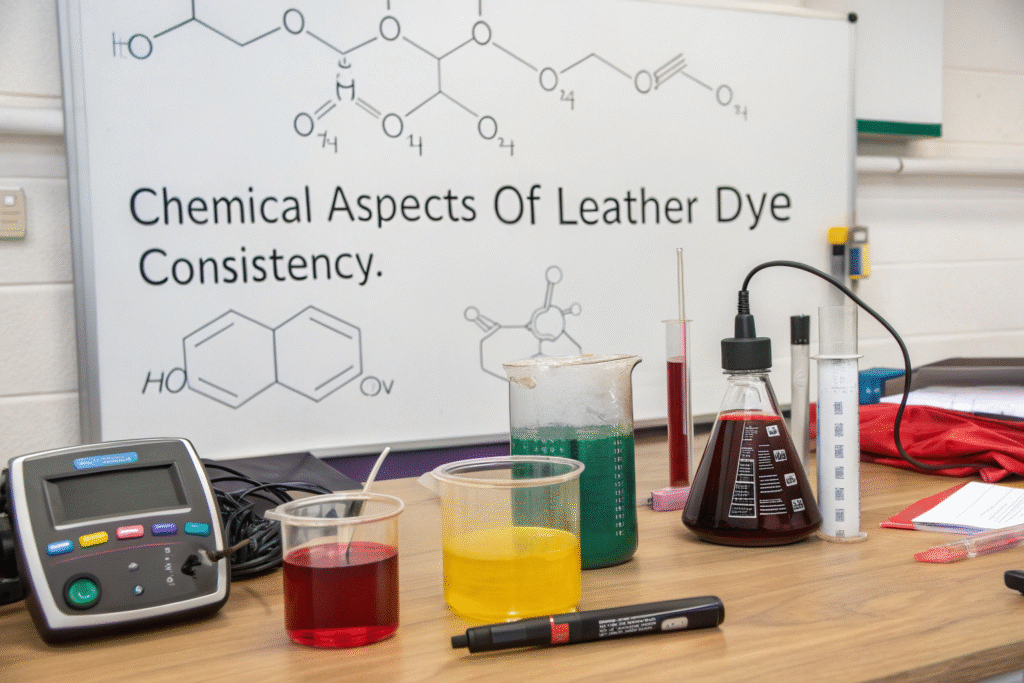
Why Does Water Chemistry Matter in Dyeing?
Water is the primary carrier for leather dyes, and its mineral content significantly impacts color development. Hard water containing calcium and magnesium can react with dyes, creating duller shades and reduced color fastness. The pH level of dye baths affects dye molecule ionization and bonding with leather fibers. Professional tanneries often use treated or distilled water to eliminate these variables, while constantly monitoring and adjusting pH throughout the dyeing process to ensure consistent color development.
How Do Temperature and Timing Affect Color Depth?
Dyeing temperature controls molecular movement and penetration rates. Higher temperatures typically accelerate dye absorption but can cause uneven results if not properly controlled. The Arrhenius equation principles apply to leather dyeing, with reaction rates approximately doubling with every 10°C temperature increase. Similarly, immersion time must be precisely controlled—too short and colors appear pale and uneven; too long and they become excessively dark with potential bleeding. Automated temperature control systems and precise timing are essential for batch-to-batch consistency.
What Role Does Technology Play in Color Measurement?
Modern color management relies on sophisticated technology to objectively evaluate and control color consistency. These tools provide data-driven approaches that surpass subjective visual assessment.
Color measurement technology includes spectrophotometers for objective color reading, color matching software for formula management, and quality control systems that track color variations throughout production. These technologies help standardize color evaluation across different lighting conditions and evaluators.
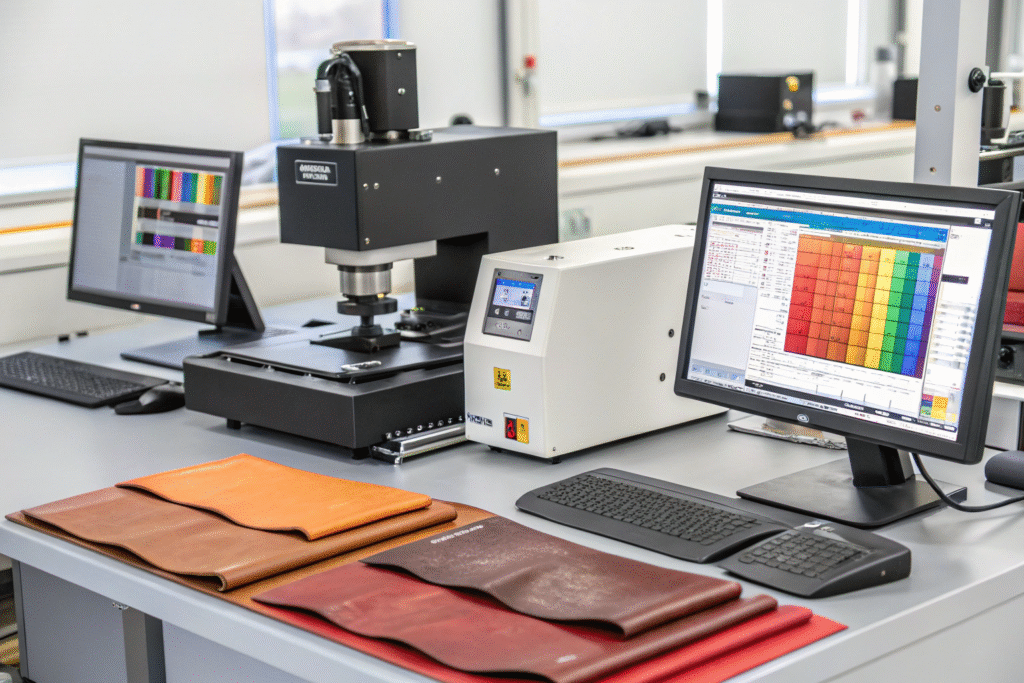
How Do Spectrophotometers Improve Color Accuracy?
Spectrophotometers measure color objectively by analyzing how surfaces absorb and reflect specific wavelengths of light. Unlike human vision, which varies between individuals and is influenced by lighting conditions, these devices provide numerical color values in standardized systems like CIELAB. This allows tanneries to establish precise color tolerances and quantitatively measure batch variations. Modern systems can detect color differences imperceptible to the human eye, enabling corrections before variations become noticeable to customers.
What Software Solutions Manage Color Formulas?
Advanced color matching software maintains libraries of dye formulations and their resulting colors. These systems can account for batch variations in raw materials and automatically calculate adjusted formulas to maintain color consistency. The software tracks color standards across different leather types and production dates, creating a searchable database that improves both consistency and efficiency. This digital approach replaces traditional recipe books and memory-based adjustments, providing reproducible results regardless of staff changes.
How Does Human Expertise Complement Technical Systems?
Despite advanced technology, human expertise remains essential for successful color matching in leather production. The most effective operations combine technological precision with experienced judgment.
Human factors include the colorist's experience with specific leather types and dye behaviors, understanding of seasonal variations in raw materials, and ability to make nuanced adjustments that technology alone might miss. This combination of art and science achieves the best results.
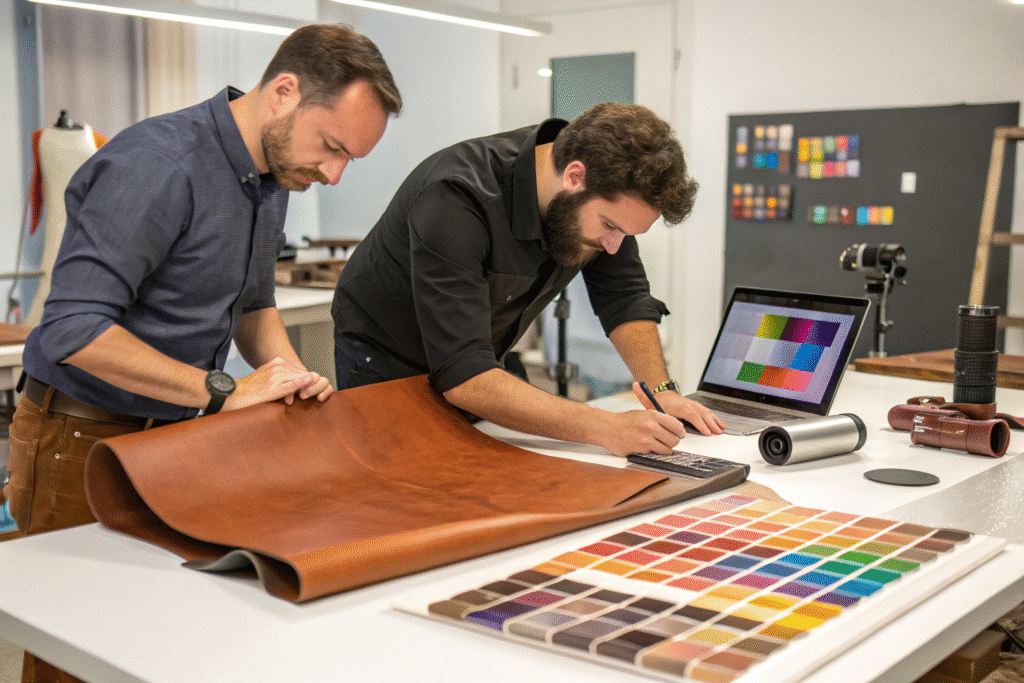
What Experience Factors Distinguish Expert Colorists?
Senior colorists develop intuitive understanding of how different leather types respond to dye variations. They recognize that the same formula may produce different results with summer hides versus winter hides due to natural variations in animal diet and fat content. This tacit knowledge allows them to anticipate necessary adjustments before measurement systems detect deviations. Their expertise becomes particularly valuable when working with natural markings or unique grain structures that require customized approaches beyond standard formulas.
How Do Production Realities Require Adaptive Decision-Making?
Even with perfect systems, production realities often require adjustments. Dye lot variations, equipment maintenance schedules, and changing environmental conditions all impact results. Experienced colorists understand how to compensate for process variations without compromising color standards. They balance ideal color matching with practical production constraints, making decisions that maintain quality while keeping production efficient. This practical wisdom complements technological systems to deliver both consistency and feasibility.
Conclusion
Color matching in dyed leather batches involves managing complex interactions between natural materials, chemical processes, technological systems, and human expertise. Success requires understanding how hide characteristics, dye chemistry, measurement technology, and experienced judgment collectively determine color outcomes. By controlling these variables through standardized processes while respecting leather's natural variations, manufacturers can achieve the color consistency that customers expect while maintaining the unique character that makes leather a valued material.
If you're struggling with color matching in your leather products, contact our Business Director, Elaine. Our manufacturing expertise includes sophisticated color management systems that deliver consistent results. Reach her at elaine@fumaoclothing.com to discuss your leather color matching requirements.