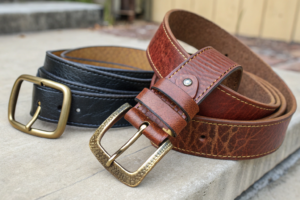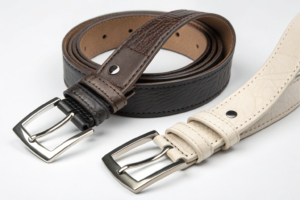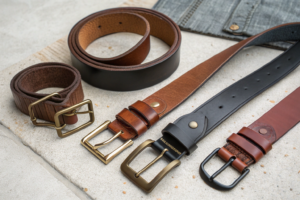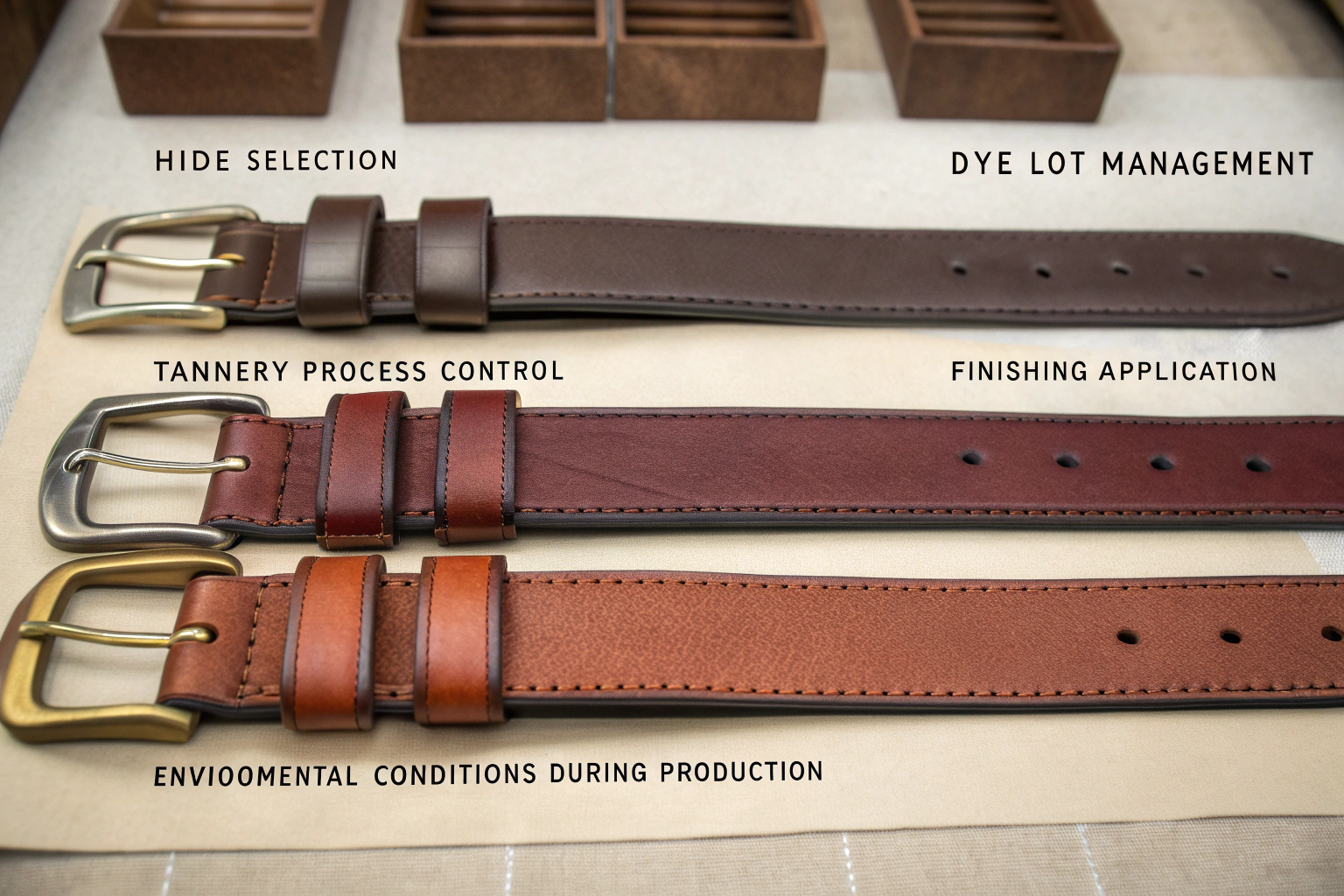
Achieving consistent leather belt color across bulk orders represents one of the most challenging aspects of leather goods manufacturing. The natural variations in hide characteristics, combined with the complex chemistry of dyeing processes, create significant hurdles for brands requiring uniform appearance across their product lines. This consistency challenge becomes particularly critical for corporate uniform programs, retail collections, and fashion brands where color matching directly impacts perceived quality and brand integrity.
Leather belt color consistency in bulk orders is determined by hide selection uniformity, dye lot management, tannery process control, finishing application consistency, and environmental condition management throughout production. The most successful approaches recognize that color consistency begins with raw material selection and extends through every manufacturing stage, requiring systematic controls rather than hoping for identical results from variable natural materials. Brands that master these factors can deliver remarkably consistent products despite leather's inherent variations.
Understanding what determines color consistency reveals why some manufacturers reliably deliver matching products while others struggle with visible variations, providing crucial insights for brands sourcing leather belts in quantity.
What Raw Material Factors Influence Color Outcome?
The characteristics of the raw hides themselves establish the foundation for color consistency, with natural variations creating challenges that must be managed before dyeing even begins.

How Does Hide Selection Impact Color Absorption?
The grading and selection of hides based on natural characteristics significantly influences how evenly they accept dyes. Hides from different animals, different regions of the same animal, and even different seasons exhibit variations in fiber density, fat content, and natural pigmentation that affect dye penetration and final appearance. Consistent manufacturers implement rigorous grading systems that sort hides by thickness, tightness of grain, and natural color before they enter the production process, ensuring that similar hides receive identical dyeing treatments.
The selection advantage extends to sourcing strategies that prioritize consistency over cost minimization. Manufacturers committed to color consistency often work with tanneries that provide hides from controlled sources—specific regions, breeds, and even feeding programs that minimize natural variations. This traceability creates a more uniform raw material base than commodity leather sourcing where hides are aggregated from multiple sources with different characteristics. The resulting consistency justifies potentially higher material costs through reduced production waste and superior finished product quality.
What Role Does Pre-Treatment Uniformity Play?
The chemical and mechanical preparation of hides before dyeing establishes the foundation for consistent color results. Processes like liming, deliming, bating, and pickling must be meticulously controlled to create uniform chemical environments across all hides. Variations in these preparatory stages create differences in hide pH, fiber opening, and chemical residues that cause identical dye formulas to produce different colors on differently prepared hides.
The most consistent manufacturers implement statistical process control throughout these preparatory stages, monitoring chemical concentrations, temperatures, timing, and mechanical actions to ensure every hide receives identical treatment. This systematic approach recognizes that color consistency begins long before dyes are applied, with variations in early stages compounding through subsequent processes to create significant final product differences. The attention to these foundational steps separates manufacturers who achieve true consistency from those who merely hope for it.
How Do Dyeing Processes Affect Color Uniformity?
The application of color to leather involves complex chemical processes where precise control determines consistency across production batches.
What Dye Formulation Practices Ensure Consistency?
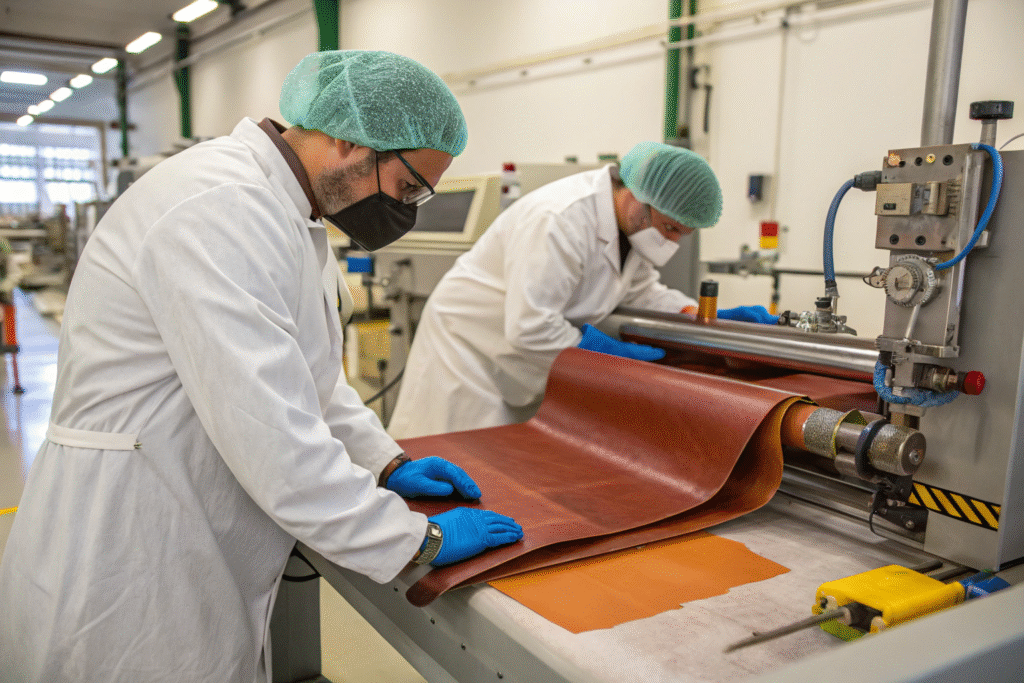
Maintaining consistent dye formulations requires sophisticated inventory management and mixing precision that many manufacturers underestimate. Dye powders vary in potency between batches, requiring testing and adjustment before use in production. The most consistent manufacturers implement first-in-first-out dye inventory systems, maintain climate-controlled storage to prevent moisture absorption that alters dye concentration, and use precision digital scales for mixing rather than volumetric measurements that introduce variability.
The formulation advantage extends to water quality management, where minerals, pH, and temperature variations in mixing water can alter dye performance. Manufacturers achieving exceptional consistency often use reverse osmosis or deionized water systems that eliminate water quality as a variable, and they maintain strict temperature controls throughout the dyeing process. These comprehensive controls prevent the subtle variations that accumulate to create visible color differences in finished products.
How Does Application Method Influence Results?
The method of dye application significantly impacts color uniformity, with different techniques offering varying consistency levels. Drum dyeing, where hides rotate in large drums containing dye solutions, typically provides the most consistent results because it exposes all hide surfaces to identical dye concentrations and mechanical action. Spray applications require precise equipment calibration and operator skill to achieve uniformity, while hand-applied methods introduce significant variability that challenges bulk consistency.
The most advanced implementations use computer-controlled dyeing systems that monitor and adjust dye concentration, temperature, and mechanical action in real-time throughout the process. These systems can compensate for the natural dye depletion that occurs as hides absorb color, maintaining consistent dye bath conditions from beginning to end of each batch. This technological approach delivers significantly better consistency than traditional methods where dye concentration naturally decreases throughout the process, creating variations between hides dyed early versus late in the sequence.
What Production Controls Maintain Color Standards?
Maintaining color consistency requires systematic controls throughout manufacturing rather than relying on any single process step.
| Production Control | Consistency Impact | Implementation Method |
|---|---|---|
| Dye Lot Management | Prevents batch-to-batch variation | Strict sequencing and documentation of production batches |
| Environmental Control | Eliminates drying and curing variations | Climate-controlled production areas with stable temperature/humidity |
| Equipment Calibration | Ensures consistent application | Regular verification of spray systems, drums, and measuring equipment |
| Process Timing | Maintains chemical reaction consistency | Automated timing controls rather than manual estimation |
| Quality Checkpoints | Identifies variations early | Spectral measurement at multiple production stages |
How Does Tannery Process Control Affect Outcomes?
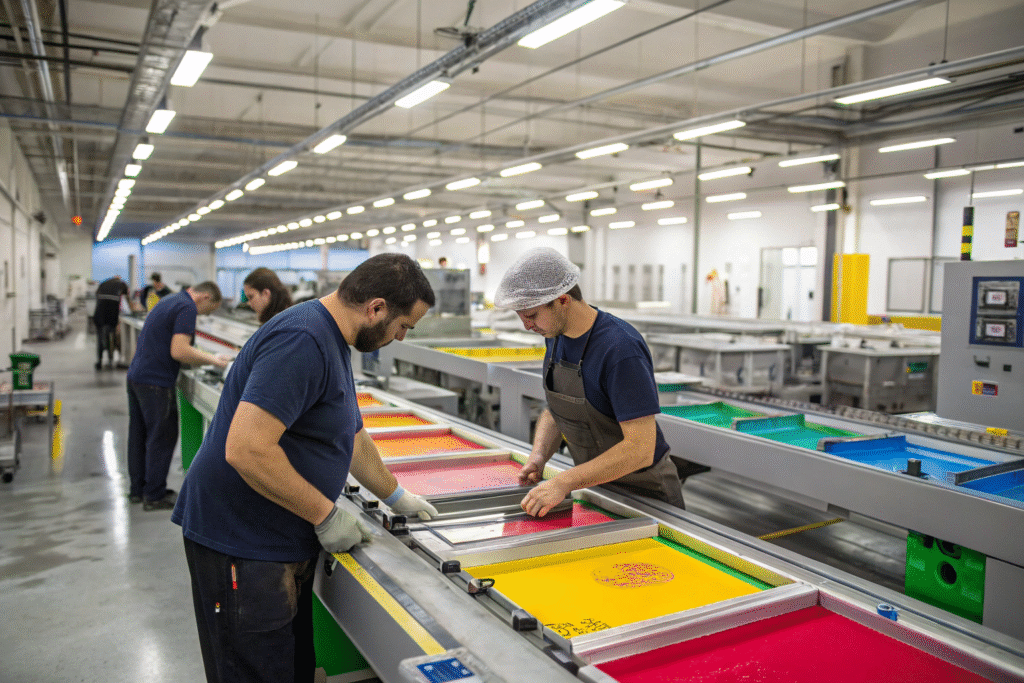
The tannery's quality management systems directly determine color consistency through standardized procedures and documented controls. Tanneries with ISO 9001 certification typically demonstrate better color consistency because they maintain comprehensive documentation of process parameters, raw material characteristics, and environmental conditions for each production batch. This documentation creates traceability that helps identify and correct consistency issues while providing manufacturers with the information needed to match future orders to previous production.
The process control advantage extends to staffing consistency, where tanneries with low employee turnover maintain institutional knowledge that supports consistency. Experienced technicians recognize subtle signs of process variation before they create significant color differences, allowing adjustments that automated systems might miss. This combination of systematic controls and human expertise creates the most reliable consistency, particularly for challenging colors that require nuanced application.
What Role Does Finishing Play in Color Consistency?
The final finishing processes significantly influence perceived color through surface treatments that alter light reflection and absorption. Top coats, sealants, polishing, and embossing all change how color appears to the human eye, meaning identically dyed leather can look different after finishing. Consistent manufacturers control these final stages as meticulously as dyeing, with standardized application thicknesses, drying conditions, and mechanical treatments that ensure uniform final appearance.
The finishing consistency requires particular attention to application equipment maintenance. Nozzles that become partially clogged in spray systems create uneven coating thickness, buffing wheels that wear unevenly create variations in surface shine, and embossing plates that accumulate residue produce inconsistent grain patterns. The most reliable manufacturers implement preventive maintenance schedules and regular equipment inspection that prevent these mechanical variations from introducing color inconsistencies at the final production stage.
How Can Brands Specify and Verify Color Consistency?
Effective communication and verification protocols between brands and manufacturers ensure color expectations align with production capabilities.
What Specification Methods Ensure Accurate Communication?
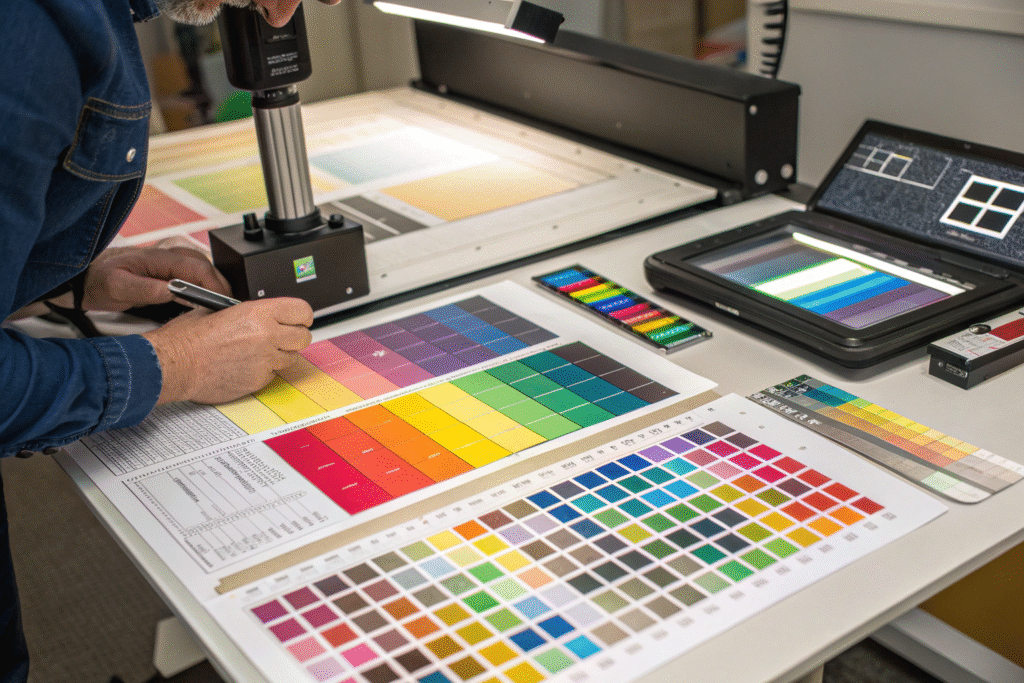
Establishing precise color standards using physical references and quantitative measurements prevents the subjective descriptions that lead to consistency issues. The most effective specifications include physical leather swatches approved by both brand and manufacturer, spectral data from color measurement devices, and detailed descriptions of application methods and finish types. This comprehensive approach eliminates the ambiguity of terms like "dark brown" or "burgundy" that different parties might interpret differently.
The specification advantage extends to approval processes that include production-run samples rather than just lab dips. While lab-created samples show color potential, they often differ from production results due to scale differences. The most thorough specifications require pre-production samples from actual manufacturing equipment and conditions, creating realistic expectations before full production begins. This practice prevents disappointing discoveries that color achievable in small batches cannot be maintained at production scale.
What Verification Systems Confirm Consistency?
Implementing spectrophotometric measurement provides objective consistency verification that surpasses visual inspection alone. These instruments measure color in numerical values across the visual spectrum, detecting variations too subtle for the human eye but potentially noticeable when products are viewed together. Consistent manufacturers use these devices at multiple production stages—raw material inspection, after dyeing, after finishing—to quantify consistency and make adjustments before variations become unacceptable.
The verification process should include defined tolerance levels that specify how much variation is acceptable, recognizing that perfect consistency is impossible with natural materials. The most effective tolerance systems use the Delta E measurement scale, with commercial standards typically accepting variations of 2-3 Delta E units while luxury standards might require 1-1.5 units. These quantitative standards prevent disagreements about whether consistency meets requirements by replacing subjective judgments with measurable values.
Conclusion
Leather belt color consistency in bulk orders results from systematic management of natural material variations through controlled processes rather than any single factor. The most successful approaches recognize that consistency begins with raw material selection and extends through every production stage, requiring investment in process controls, measurement systems, and supplier relationships that prioritize predictability over cost minimization.
Brands that understand these determining factors can make informed sourcing decisions, establish realistic expectations, and implement verification systems that ensure their color requirements are met. As leather remains a preferred material for belts despite synthetic alternatives, mastering color consistency provides significant competitive advantage through superior product quality and brand perception.
Ready to achieve better color consistency in your leather belt orders? Contact our Business Director, Elaine, at elaine@fumaoclothing.com to discuss our color management systems and manufacturing controls that deliver exceptional consistency across bulk production.