In the competitive landscape of fashion accessories, customer acquisition costs are rising. Brands are increasingly turning to a powerful, cost-effective growth lever: the referral program. For a belt brand, whether selling genuine leather dress belts or trendy woven fashion belts, a well-executed referral program can transform satisfied customers into a passionate salesforce. But launching a "Refer a Friend" button is not a strategy; it's just a feature. True success hinges on a deep understanding of human psychology, value exchange, and seamless execution. So, what separates a program that generates a trickle of referrals from one that creates a self-sustaining growth engine?
The success of a belt referral program is determined by a combination of intrinsic motivation, irresistible incentive structure, flawless user experience, and continuous optimization. It requires more than just offering a discount; it must make customers feel like valued insiders who are sharing a genuine discovery. The program must be easy to use, provide clear and immediate value to both the referrer and the referee, and be strategically promoted at key moments in the customer journey.
A successful program doesn't just track referrals; it fosters community and leverages social proof, turning your product into a conversation piece. Let's deconstruct the core pillars that build a referral engine capable of driving measurable ROI for your belt business.
How to structure incentives that customers can't resist?
The incentive is the fuel of your program. A weak or poorly structured incentive will result in zero participation. The goal is to create an offer that feels generous, fair, and exciting for both parties involved—the existing customer and their friend.
To structure irresistible incentives, employ a dual-sided reward: both the referrer and the new customer receive a meaningful benefit. The reward should be substantial enough to motivate action (e.g., 20% off is common, but a free accessory or a significant credit like $25 often performs better). Use tiered rewards for multiple referrals (e.g., "Refer 3 friends, get a free belt"). Crucially, ensure the reward is relevant to your product—offering a discount on future belt purchases or a free belt accessory like a polishing kit or extra buckle reinforces your brand ecosystem.
The psychology is key: the reward should feel like a "thank you," not a transactional payment. It should enhance the customer's perception of your brand's generosity.

What is the psychological impact of a "give $X, get $X" model?
The "give $X, get $X" model (e.g., "Give $20, Get $20") is powerful because it creates perfect fairness and simplicity. It leverages the principle of reciprocity and shared benefit. The referrer isn't just getting a reward for themselves; they are empowered to give a genuine gift to a friend. This transforms the act from a selfish grab for a discount into a prosocial behavior: "I love this brand and I want you to experience it, and we both get a treat."
This model removes any potential awkwardness or feeling of "selling out" friends. It positions the referrer as a savvy connector who shares good deals. For a belt brand, this model works exceptionally well because it can be applied directly as store credit, allowing the new customer to put it toward the exact men's leather belt or women's fashion belt they desire, increasing the average order value on their first purchase.
Why should rewards be product-related rather than just cash?
Offering pure cash back (e.g., $10 via PayPal) can attract low-quality referrals and cheapen your brand's perceived value. A product-related reward, such as store credit, a free belt keeper, or early access to a new designer belt collection, achieves several strategic goals:
- Deepens Brand Engagement: It encourages the customer to return to your store, browse again, and potentially spend more.
- Increases Customer Lifetime Value (LTV): A customer who uses a credit to make a second purchase is more likely to become a repeat buyer.
- Acts as a Product Sample: A free accessory introduces the customer to another part of your catalog.
- Enhances Perceived Value: A "free leather care kit valued at $30" feels more substantial and brand-building than "$30 off your next order."
This approach turns the referral program into a tool for cultivating deeper loyalty, not just a one-time transaction.
What technical setup ensures a seamless referral experience?
A clunky, confusing referral process will kill participation no matter how great the incentive. The experience must be effortless, transparent, and integrated into the customer's natural journey with your brand.
A seamless referral experience requires a dedicated, mobile-optimized referral portal accessible from the customer's account dashboard. It should provide a unique, easily shareable link that can be copied or shared directly to major platforms (WhatsApp, Instagram, Email, SMS). The system must track referrals in real-time, provide clear status updates (e.g., "Pending," "Earned"), and automate the delivery of reward codes instantly upon the friend's successful purchase. Integration with your e-commerce platform (like Shopify or WooCommerce) and email service provider is non-negotiable for automation.
Friction is the enemy. Every extra click or moment of uncertainty will cause drop-off.

How important is a branded, trackable referral link?
A branded, trackable link (e.g., stylishbelts.com/friend/johnsmith) is crucial for four reasons:
- Trust: It looks professional and legitimate, not like a spammy affiliate link. Friends are more likely to click on a link that clearly goes to your official store.
- Attribution: It allows your referral software to accurately credit the correct customer when a purchase is made, preventing disputes and ensuring fairness.
- Branding: It reinforces your brand name at the moment of sharing.
- Analytics: It provides data on which channels (SMS vs. Email vs. Social) are most effective for your audience.
Using generic "share this page" buttons without personalization is a missed opportunity. The link should feel like a personal invitation from the customer.
What are the common technical pitfalls that kill conversion?
Several technical issues can derail a program:
- Broken Links or Landing Pages: The shared link leads to a 404 error or a non-product page.
- Poor Mobile Experience: The share interface or the landing page isn't optimized for phones, where most sharing happens.
- Delayed or Missing Reward Notifications: The referrer doesn't get an immediate confirmation that their share was tracked or when their reward is issued, leading to distrust.
- Complicated Code Redemption: The friend receives a discount code that is difficult to apply at checkout.
- Lack of Fraud Prevention: No safeguards against self-referrals (using different emails) or referral fraud, which can drain your marketing budget.
A reliable referral platform partner or a well-briefed development team is essential to avoid these pitfalls. This operational reliability is part of the professional service you must provide to your participating customers.
When and how should you promote your referral program?
A referral program hidden in the footer of your website is a wasted asset. Strategic promotion at high-engagement moments is what drives participation. You need to remind customers of the program when they are most likely to feel positive about your brand.
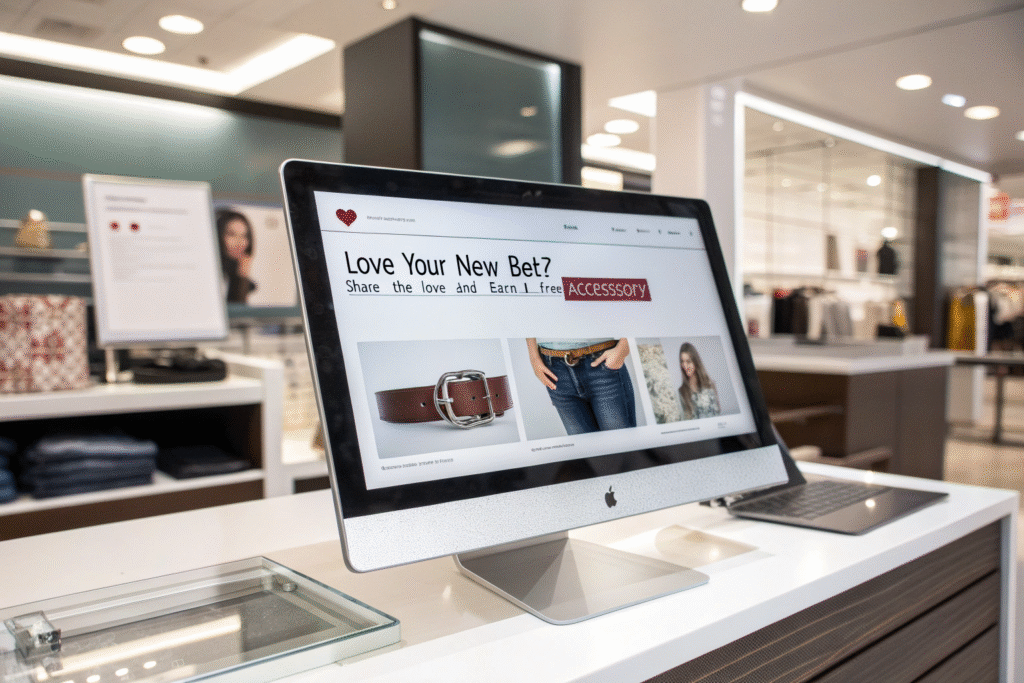
Promote your referral program proactively at these key moments: immediately after a purchase (in the order confirmation email and on the "thank you" page), after a positive review is submitted, on the customer's account dashboard homepage, and via targeted email campaigns to loyal customers (e.g., those who have made 2+ purchases). Use clear, benefit-driven language like "Love your new belt? Share the love and earn a free accessory."
Passive promotion is not enough. You must integrate the program into the ongoing conversation you have with your customers.
Why is the post-purchase moment the most effective?
The post-purchase moment is a peak of positive sentiment. The customer has just invested in your product, they are excited for it to arrive, and they are receptive to messages from your brand. This is the perfect time to invite them to become an advocate.
Including a referral call-to-action in the order confirmation email or on the post-checkout page can capture this enthusiasm. The message can be framed as, "While you wait for your new automatic buckle belt to arrive, why not tell a friend? You'll both get $20 off when they make their first purchase." This ties the referral to the specific product they just bought, making the suggestion highly relevant.
How can you leverage email segmentation to boost referrals?
Not all customers are equal referrers. Email segmentation allows you to target your most valuable potential advocates with tailored messages.
- Segment by Purchase Frequency: Target customers who have bought from you more than once. They are proven loyalists.
- Segment by Product Type: Customers who purchased higher-margin items (like a genuine alligator belt) may be more responsive to an exclusive referral offer.
- Segment by Engagement: Target customers who open your emails regularly or have recently written a positive review.
For these segments, you can send a more personalized email: "As one of our top customers, we're giving you early access to our referral program with double rewards this month." This makes them feel special and increases the perceived value of participating.
How do you measure and optimize referral program ROI?
Launching a program is just the beginning. Continuous measurement and optimization are what turn a good program into a great one. You need to move beyond vanity metrics (total shares) and focus on business outcomes.
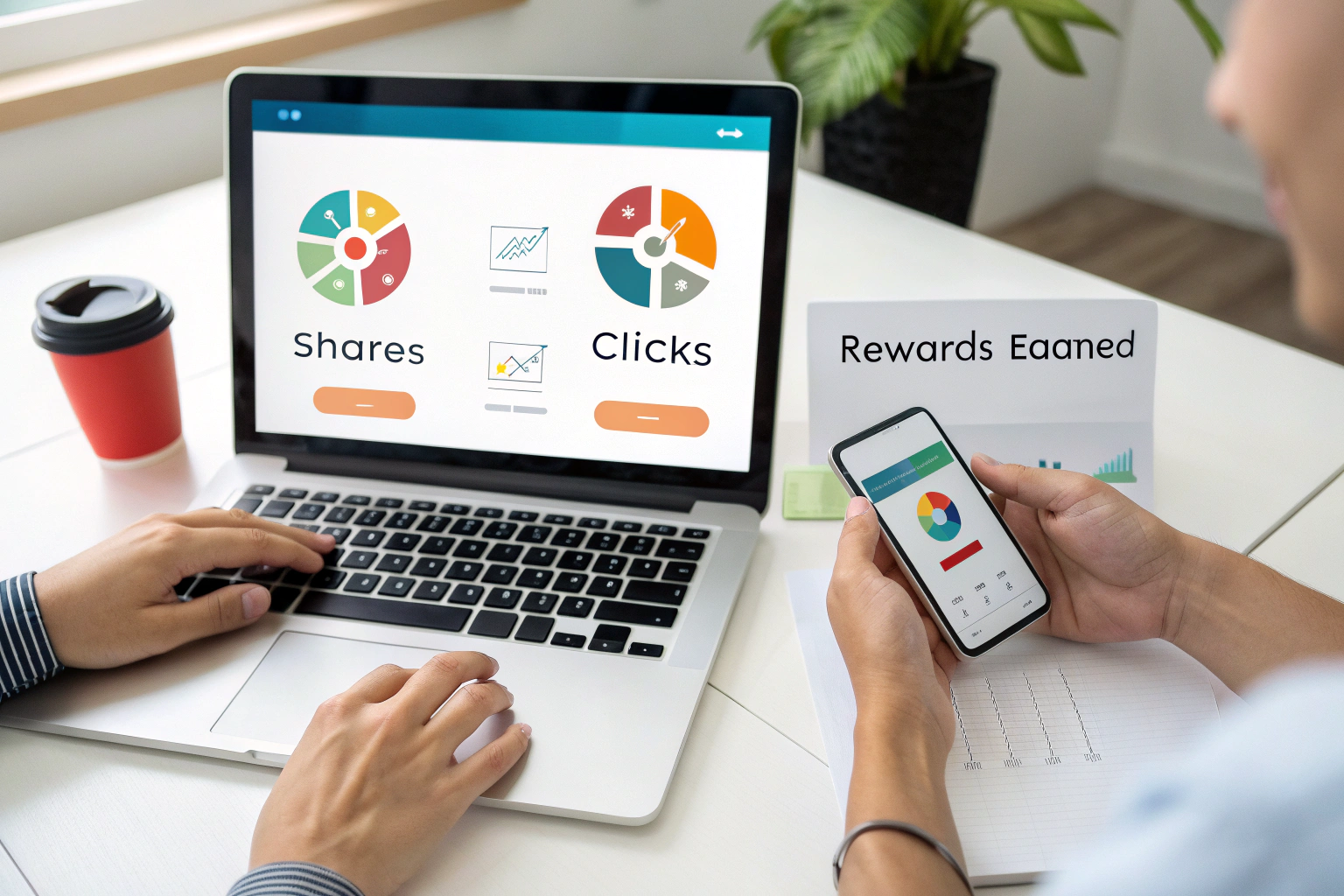
Measure the success of your referral program by tracking key performance indicators such as: Participation Rate (% of customers who refer), Conversion Rate (% of referred leads who become customers), Customer Acquisition Cost (CAC) via referrals vs. other channels, Lifetime Value (LTV) of referred customers, and overall program ROI. Use A/B testing to optimize every element, from the incentive amount and copy to the placement of the referral prompt.
Data-driven decisions allow you to double down on what works and quickly fix what doesn't.

What are the key metrics beyond "number of shares"?
While shares are an activity metric, these are the business outcome metrics that matter:
- Referral Conversion Rate: This tells you how compelling your offer is to new people. A high share count with a low conversion rate means your incentive or landing page needs work.
- CAC via Referrals: Calculate the total cost of rewards paid out divided by the number of customers acquired. This should be significantly lower than your CAC from paid ads.
- LTV:CAC Ratio for Referrals: Do referred customers have a higher lifetime value? Often, they do, as they come in with built-in trust. A high ratio confirms the program's health.
- Time-to-Conversion: How long from share to purchase? A short time indicates a highly motivated referee.
Monitoring these metrics through a dashboard (like those provided by ReferralCandy or GrowSurf) is essential for management.
How can A/B testing refine your program's performance?
A/B testing allows you to make incremental, proven improvements. Test one variable at a time, such as:
- Incentive Value: Test a 15% discount vs. a $25 credit vs. "free shipping on your next order."
- Messaging: Test "Get a Reward" vs. "Give $20, Get $20" vs. "Earn a Free Gift."
- Channel Emphasis: In your referral portal, test highlighting the "Copy Link" button vs. the "Share via Email" button.
- Promotional Timing: Test introducing the program in the 2nd email after purchase vs. the 4th.
By systematically testing, you can discover the exact combination that maximizes participation and conversion for your specific belt brand audience, ensuring your marketing budget is used with maximum efficiency.
Conclusion
The success of a belt referral program is not a matter of chance; it is a deliberate design built on compelling incentives, frictionless technology, strategic promotion, and relentless optimization. It transforms the transactional relationship of buying a belt into a collaborative partnership where your happiest customers become your most effective marketers. In an industry where quality and trust are paramount, a word-of-mouth recommendation for a durable leather belt or a stylish chain belt carries unparalleled weight.
For brands ready to harness this power, the process begins with a partner who understands both the art of customer loyalty and the science of conversion. If you are looking to build or refine a referral program that truly drives growth for your belt line, we can connect you with expertise in e-commerce strategy and customer engagement. To discuss how to integrate a winning referral strategy into your business model, contact our Business Director, Elaine, at elaine@fumaoclothing.com. Let's build a community that grows with every share.