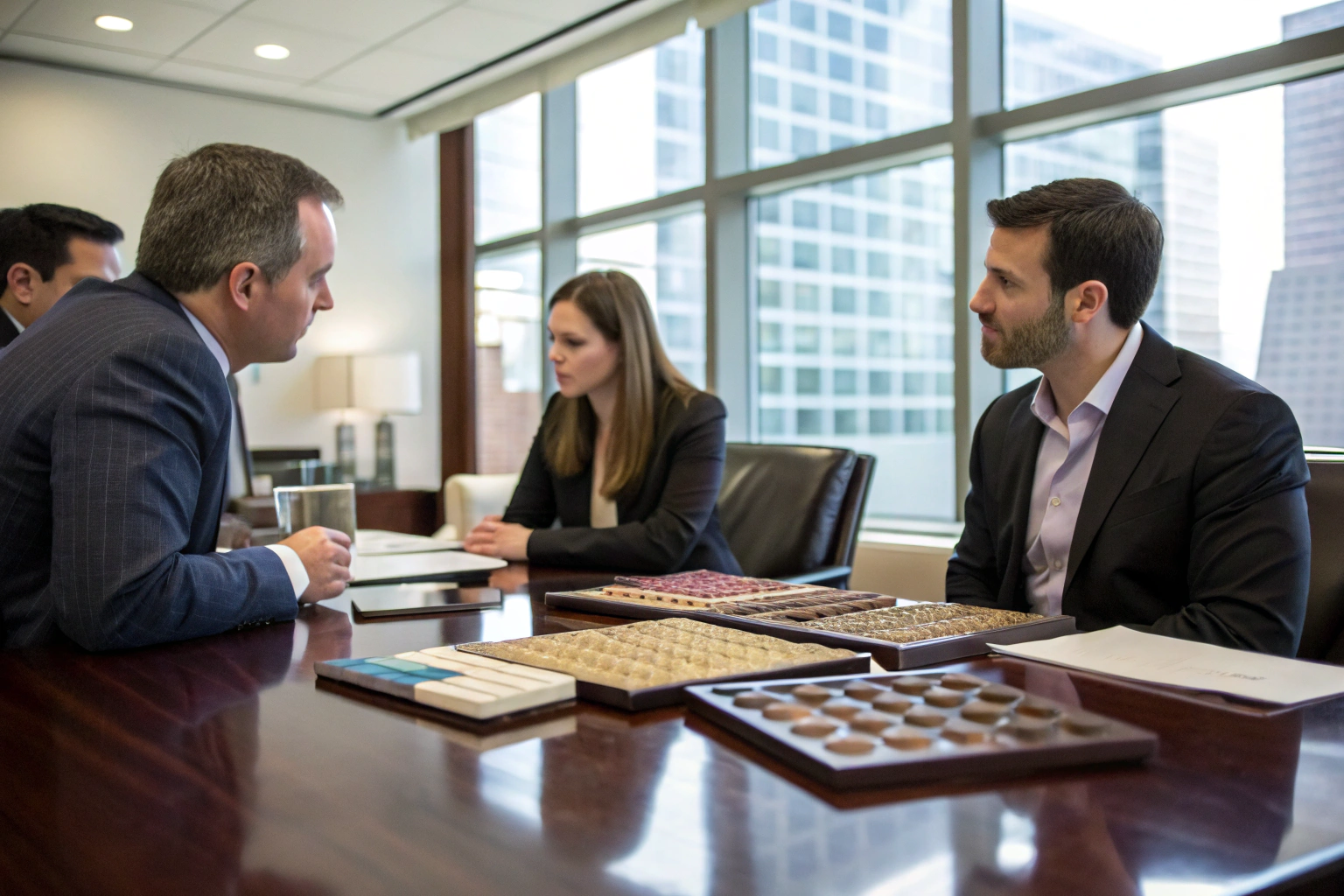
For a fashion brand, retailer, or influencer, receiving a beautifully crafted, free belt sample in the mail seems like a win. But for the belt factory or brand running the campaign, that sample is a high-stakes investment. With sampling costs—materials, labor, shipping, and logistics—quickly adding up, a poorly executed campaign is pure loss. So, what separates a sampling initiative that floods your inbox with qualified orders from one that vanishes into a void of polite "thank you" emails? Success is not accidental; it's engineered through strategic targeting, impeccable presentation, and a systematic follow-up process that converts interest into action.
Success in belt sampling campaigns is determined by a clearly defined strategic objective (not just "getting feedback"), the precision targeting of recipients based on concrete buying authority and need, the perceived value and presentation of the sample itself, and a structured follow-up system that measures ROI and nurtures recipients toward a purchase decision. It's a focused business development tool, not a scattergun marketing tactic.
For manufacturers like us, a sampling campaign is often the first physical touchpoint with a potential high-value client. It must flawlessly represent your capabilities and make the case for a partnership. Let's dissect the components of a campaign that delivers a tangible return on investment.
How to Define Objectives and Target the Right Recipients?
The most common fatal error is sampling without a goal. "We want to get our product out there" is not a strategy. A successful campaign begins with a crystal-clear objective that dictates every subsequent choice: who to target, what to send, and how to follow up.
Clear objectives include: converting a specific number of qualified leads into first orders, entering a new market segment (e.g., sustainable boutiques or corporate gifting), gathering authentic testimonials and user-generated content (UGC) from credible sources, or testing a new material/design with a focus group of industry experts before full production. The target list is then built backwards from this objective.
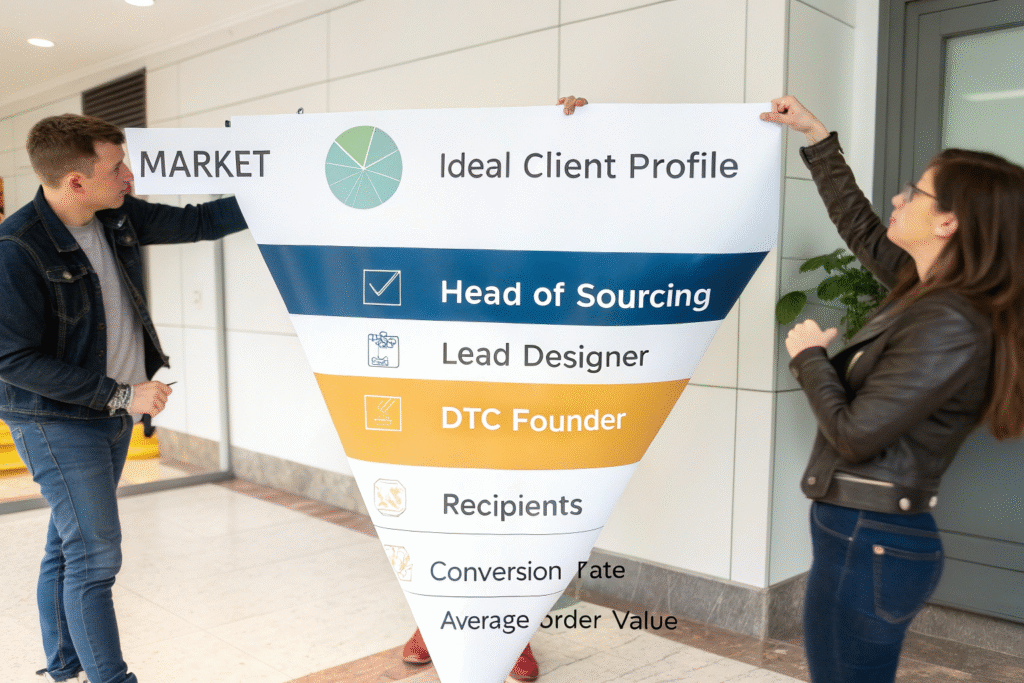
How to Build a High-Intent Target List?
Avoid buying generic lists. Build yours through research:
- Identify Role & Authority: Target individuals with direct buying power or heavy influence. Titles like Head of Product Development, Sourcing Manager, Lead Accessories Buyer, Founder/CEO of a DTC brand, Senior Designer at a relevant fashion house. Use LinkedIn Sales Navigator to search by title, company size, and industry.
- Assess Genuine Need: Look for signals. Has their brand recently launched an accessories line? Do they already source from similar regions? Are they posting about supply chain challenges? A sample sent in response to a perceived need is 10x more effective than a cold send.
- Prioritize by Tier: Create an A/B/C list. A-List: High-potential, dream clients you've already had contact with. B-List: Strong fit based on profile. C-List: Wider net for awareness. Allocate your best samples and most personal follow-up to the A-List.
Why is a "Soft Launch" or Pre-Engagement Critical?
A sample landing on a completely cold desk has a low success rate. Increase receptivity with pre-engagement:
- Warm Introduction: Have a mutual connection introduce you via email.
- Personalized LinkedIn Outreach: Send a short note referencing their work before mentioning a sample. "Ron, I saw your latest collection featuring woven accessories—impressive. My factory specializes in similar techniques. Would you be open to receiving a physical sample of our new elastic woven belt to feel the quality firsthand?"
- Brief Email Inquiry: Gauge interest before incurring the cost of shipping.
This approach, rooted in account-based marketing (ABM) principles, ensures the sample is expected and valued, not perceived as junk mail.
What Makes a Sample Physically Compelling and "Sticky"?
The sample itself is your silent salesman. In a buyer's office flooded with products, it must stand out not just visually but tactically. It must be "sticky"—meaning it stays on their desk, gets shown to colleagues, and becomes a reference point. This is achieved through a combination of product excellence and experiential presentation.
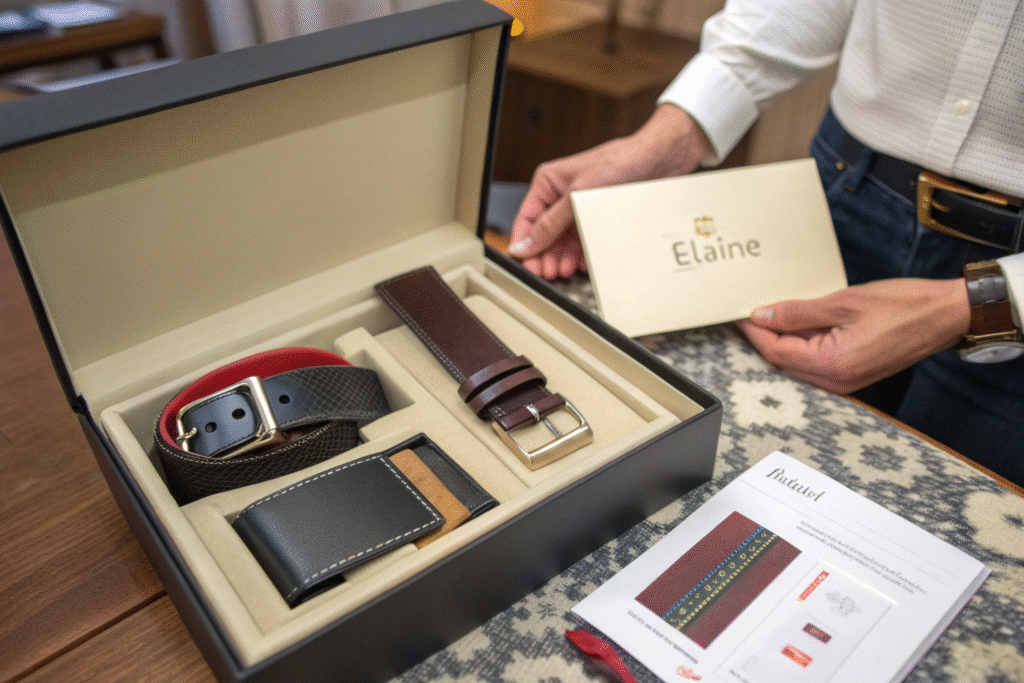
A compelling sample showcases your best and most unique craftsmanship, includes supporting materials that tell a complete story (swatches, finish options), is presented in branded, high-quality packaging that reinforces your professional image, and is accompanied by clear, concise documentation that makes the next step effortless. It should feel like a gift, not a brochure.
How to Curate the Sample Selection?
Don't send your most basic black belt. Send the belt that best demonstrates your unique value proposition (UVP).
- Highlight Technical Innovation: If you excel at magnetic closures, send that. If it's heritage tooling, send a beautifully carved piece.
- Demonstrate Versatility: A reversible belt (black/brown) shows two products in one.
- Include "The Story": Send a small card with the sample's story. "This strap uses vegetable-tanned leather from the Tuscany region, tanned for 90 days. The buckle is a custom sand-cast brass piece." This educates and adds perceived value.
- The "Swatch Kit" Multiplier: Always include a small, organized folio of additional material swatches and buckle options. This turns a single sample into a presentation of your range and sparks ideas for customization.
Why is Packaging and Documentation Part of the Product?
The unboxing is a brand moment. Use custom-printed boxes, tissue paper, and a hand-signed note from your Business Director (e.g., "Elaine"). The documentation must be flawless:
- Professional Line Sheet: A clean PDF with product specs, available colors/materials, MOQs, lead times, and FOB prices. Do not hide pricing—it's a commercial sample, not a mystery gift.
- Easy Contact: A dedicated landing page or contact QR code that goes directly to a responsible person (not a generic info@ email).
- Call to Action (CTA): Be specific. "To discuss a custom order based on this sample, please schedule a 15-minute call here [link] or reply to this email."
This professional package positions you not as a faceless factory, but as a capable, attentive partner ready for business. It leverages the psychology of reciprocity and commitment in negotiations.
How to Structure the Follow-Up for Maximum Conversion?
The sample's arrival is the beginning of the sales process, not the end. A passive "hope they call us" approach fails 99% of the time. Success is determined by a proactive, multi-touch follow-up sequence that is persistent but respectful, providing value at each step and systematically removing barriers to a decision.
Effective follow-up is a time-bound sequence of communications (email, phone, LinkedIn) that provides additional value, asks for specific feedback, addresses potential objections preemptively, and culminates in a clear request for a next step (meeting, quote request, small trial order). It is tracked meticulously in a CRM to measure engagement and conversion rates.
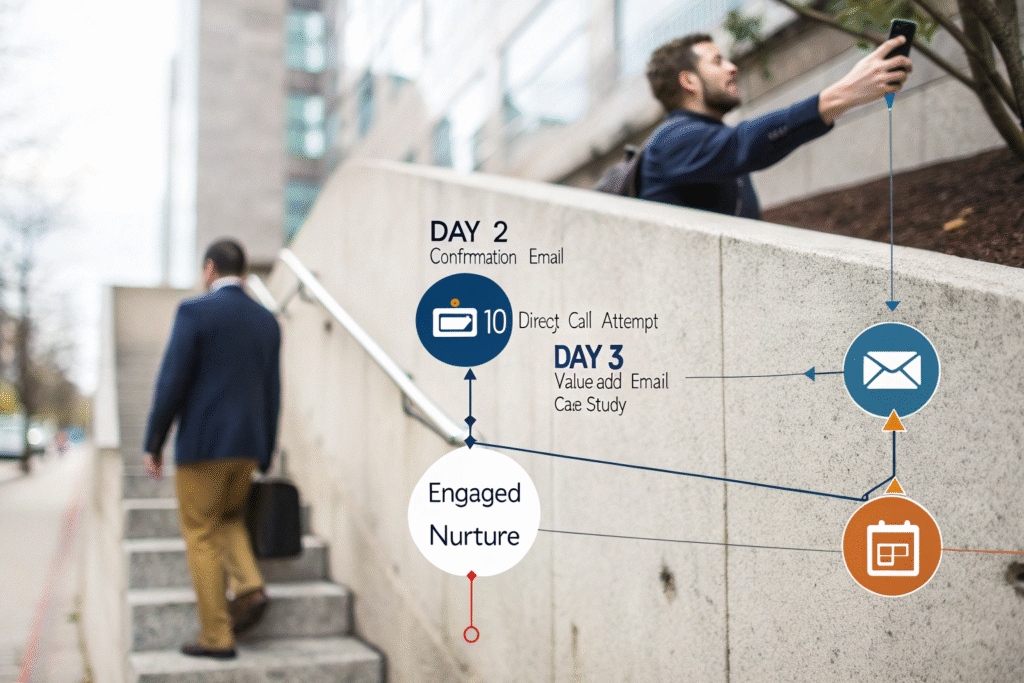
What Does a High-Converting Follow-Up Sequence Look Like?
Day 1 (Automated): Delivery confirmation email with tracking. "Your sample from StylishBelts has been delivered. I hope it arrives safely."
Day 3 (Personal): First follow-up from the named contact (Elaine). "Hope the sample arrived. Curious to hear your first impressions, particularly on the hand-feel of the leather. We're here to answer any questions." This asks for a specific, easy-to-give feedback.
Day 7 (Value-Add): Share a relevant case study or piece of content. "Thought you might find this interesting: a case study on how we helped [Similar Brand] reduce lead time by 30%. Would a similar approach be relevant for your supply chain?"
Day 10 (Direct Ask): A polite phone call or email with a clear, low-commitment CTA. "Would you be open to a brief 15-minute call next week to discuss your sourcing needs and how we might fit? I can also prepare a preliminary quote if you have a target price point in mind."
Day 14-21 (Closing/Re-engagement): If no response, a final email. "I understand you're busy. I'll close your file for now but have attached our full catalog for future reference. Please don't hesitate to reach out if your needs change." This clears the deck but leaves the door open.
How to Use Feedback (Even Negative) to Advance the Sale?
If a recipient responds with feedback like "It's nice, but too expensive," or "The buckle isn't right for our line," this is gold. It means they engaged. The follow-up now becomes a solution-oriented consultation.
- On Price: "I appreciate that feedback. Could you share your target FOB for a similar belt? We can explore alternative leathers or construction methods to meet it."
- On Design: "Thank you for being specific. We have over 50 other buckle designs. Could I send you a digital catalog of our buckle library to see if something aligns better?"
This transforms the sampling campaign from a product showcase into a collaborative development conversation, dramatically increasing the odds of a future order. This aligns with consultative selling methodologies.
How to Measure ROI and Optimize Future Campaigns?
A sampling campaign is an investment, and its return must be quantified. Without measurement, you cannot learn, improve, or justify the budget. Success is not just a feeling; it's a number. Establishing key performance indicators (KPIs) before launch and tracking them religiously is what separates professional operations from hopeful guesswork.
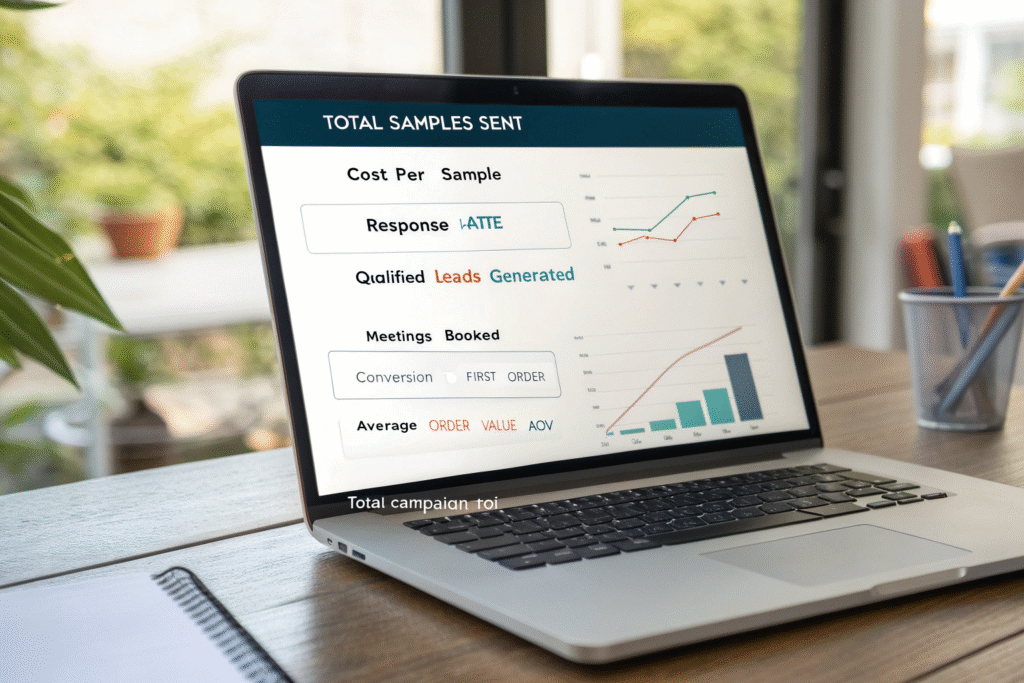
Critical metrics to track include: Cost Per Sample (all-in), Response Rate (any reply), Qualified Lead Rate (meeting minimum criteria), Meeting/Quote Request Rate, Conversion Rate to First Order, Average Order Value (AOV) of converted leads, and ultimately, the Total Campaign ROI calculated as (Total Order Value from Campaign / Total Campaign Cost). This data informs which recipient profiles, sample types, and follow-up tactics work best.
How to Set Up Tracking and Attribution?
- Unique Identifiers: Use a dedicated email address for the campaign (e.g., samples@...), a specific tracking phone number, or unique promo codes on line sheets.
- CRM Mandatory: Every target, every interaction, and every outcome must be logged in a Customer Relationship Management system.
- Post-Campaign Survey: Send a short survey to all recipients (even non-responders) asking for feedback on the sample and process. Offer a small incentive.
- Calculate Full Cost: Include material cost, labor for custom assembly, packaging, international shipping, and the pro-rated time of the sales team. This gives you your true Customer Acquisition Cost (CAC) via sampling.
How to Use Data to Iterate and Improve?
After each campaign, conduct a retrospective analysis:
- Which recipient profile (title, industry, company size) had the highest conversion rate? Double down on that profile.
- Which sample product generated the most engagement? Make it your flagship sample.
- At which follow-up touchpoint did most leads convert? Optimize that step.
- What was the most common objection? Address it preemptively in future sample documentation or follow-up scripts.
This continuous improvement loop turns sampling from a cost center into a predictable, scalable lead generation engine. It allows you to allocate budget confidently, knowing the probable return.
Conclusion
Success in belt sampling campaigns is a disciplined science, not an art. It hinges on the deliberate alignment of a strategic objective with a surgically targeted audience, elevated by a sample experience that communicates premium capability, and driven home by a systematic, value-added follow-up process that is meticulously measured. When executed with this rigor, a sampling campaign becomes one of the most powerful tools in a B2B manufacturer's arsenal—transforming cold prospects into collaborative partners and generating a clear, quantifiable return on investment.
For brands and factories alike, mastering this process means moving beyond hoping for serendipity and into the realm of predictable growth. By respecting the recipient's time, showcasing your best work with professionalism, and engaging with persistence and insight, you can ensure that your next sample isn't just another item on a shelf, but the start of a profitable, long-term relationship.
If you are planning a sampling campaign to introduce your brand or new collection to the market, partnering with a manufacturer that understands the full lifecycle—from impeccable sample production to data-informed follow-up support—can make all the difference. We specialize in creating compelling sample kits and can advise on campaign strategy. Contact our Business Director, Elaine, to discuss how we can help you make every sample count: elaine@fumaoclothing.com. Let's turn samples into sales.