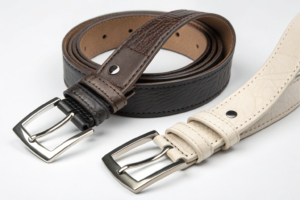
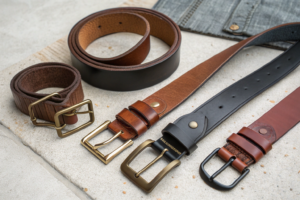
In the world of belts, the buckle is more than a fastener—it's the functional and aesthetic heart of the accessory. Choosing between a pin buckle, plate buckle, and D-ring buckle defines not only how the belt fastens but also its style, ease of use, and suitability for different occasions. For designers, brands, and consumers, understanding these core differences is essential for creating or selecting the right belt for the right purpose. Whether aiming for classic elegance, modern minimalism, or rugged utility, the buckle type sets the tone.
The key differences lie in their closure mechanism, profile, and stylistic association. A pin buckle (or prong buckle) uses a metal pin through a hole for a classic, adjustable fit. A plate buckle (including automatic buckles) features a flat plate that engages a track or holes, offering a sleek, often micro-adjustable closure. A D-ring buckle uses two metal rings in a "D" shape for a simple, friction-based closure, popular for casual and woven belts. Each offers distinct advantages in security, adjustability, and visual weight.
Understanding these mechanisms helps decode why certain belts feel and function the way they do, and guides better design and purchasing decisions. Let's fasten our knowledge and dive into the details of each type.
How does the classic pin buckle mechanism work?
The pin buckle, also universally known as the prong buckle, is the most traditional and widely recognized design. Its operation is simple, reliable, and has remained largely unchanged for centuries, making it the default choice for dress belts and many casual leather belts.
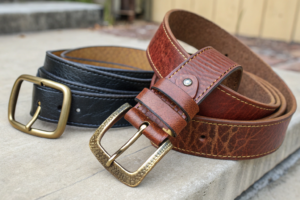
The pin buckle mechanism consists of a metal frame with a central, fixed pin or prong. The user threads the belt strap through the frame, then pushes the pin through one of the pre-punched holes in the strap. The loose end of the strap is then tucked through a separate keeper loop to secure it. The fit is determined by the discrete hole spacing (typically 1 inch apart), which is the system's main limitation.
Its enduring popularity is due to its proven reliability, intuitive use, and the clean, finished look it provides when the tail is neatly tucked away. It represents a standard of formalwear and business attire.

What are the advantages and limitations of hole spacing?
The hole-based adjustment is a defining characteristic with clear pros and cons.
- Advantages:
- Simplicity and Reliability: No moving parts to fail.
- Secure Hold: When the pin is correctly engaged, it provides a very secure closure.
- Clean Aesthetic: Offers a tidy, traditional look favored in formal settings.
- Limitations (The "Hole Problem"):
- Incremental Adjustment: Fit is limited to the fixed holes. The common 1-inch spacing often leaves users between a "too tight" and "too loose" setting.
- Leather Stress: Repeated use can stretch and deform individual holes over time, especially on softer leathers.
- Precision Requirement: The buckle frame and pin must align perfectly with the holes for easy fastening.
For a dress belt where a precise, sharp look is paramount, the pin buckle is ideal. For everyday casual belts where comfort and adaptability are key, this limitation becomes more noticeable.
Why is the pin buckle considered the standard for formal wear?
The pin buckle reigns in formal contexts for several reasons tied to tradition and aesthetics:
- Low Profile: A simple, polished frame sits flush against the body without bulky mechanisms, creating a sleek silhouette under suit jackets.
- Material Elegance: It is easily crafted from high-end materials like polished stainless steel, brass, or even precious metals, complementing other fine accessories like cufflinks or watch cases.
- Discreetness: Its operation is silent and subtle, aligning with the understated nature of classic formal dress codes.
In markets for men's formal belts, the pin buckle is virtually synonymous with the category, setting a benchmark for professional appearance.
What defines the modern plate buckle system?
The plate buckle represents a category of modern buckle designs where a flat, often rectangular or square plate is the dominant visual element. This category includes both traditional auto-loop styles and innovative ratchet belt (automatic buckle) systems. It is the buckle of choice for contemporary, tech-influenced, and minimalist fashion.
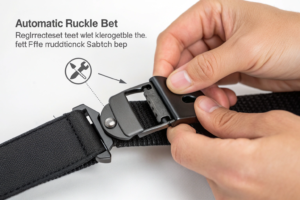
The plate buckle system is defined by a flat front plate that covers the closure mechanism. In a traditional auto-loop plate buckle, the strap feeds through and folds back, secured by friction or a small peg. In an automatic plate buckle, the plate houses a ratchet mechanism that engages with teeth on the belt's inner side, allowing for micro-adjustments with a pull-and-click action, released by a button or lever.
This design prioritizes a clean, unbroken visual line and often introduces superior functionality over the pin system.
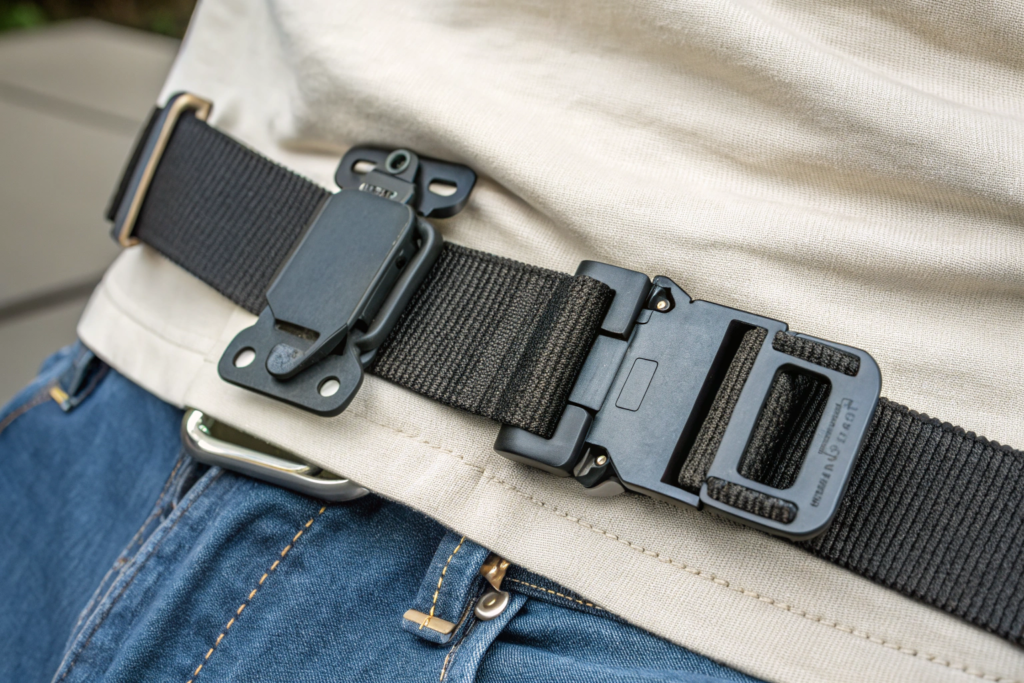
How does the automatic (ratchet) mechanism provide micro-adjustment?
The automatic buckle or ratchet belt mechanism solves the fundamental flaw of hole spacing.
- Mechanism: The belt strap has a track of fine, parallel teeth. Inside the buckle plate, a spring-loaded metal pawl clicks into these teeth.
- Adjustment: To tighten, the user simply pulls the free end of the strap—the pawl clicks forward over the teeth, holding the belt securely at that exact millimeter position. To loosen, a button on the buckle's side or bottom retracts the pawl, allowing the strap to slide freely.
- Benefit: This provides dozens of incremental fit points (e.g., every ¼-inch), enabling a truly custom fit that adapts to bloating, different clothing layers, and provides all-day comfort. This is a major selling point for travel belts and everyday comfort belts.
The engineering challenge is ensuring the pawl and teeth are durable and resistant to slipping, which relates directly to quality control in manufacturing.
Are plate buckles suitable for both casual and business styles?
Absolutely, and their versatility is a key strength. The aesthetic of the plate itself can be tailored to the setting.
- Business/Formal: A slim, minimalist plate buckle in brushed steel or matte black with hidden seams can look incredibly modern and sharp with a suit. Brands like MISSION have popularized this in professional settings.
- Casual: Larger plates, textured finishes (like brushed metal or colored enamel), and more pronounced designs work perfectly with jeans, chinos, and casual wear.
The plate buckle's ability to look both high-tech and elegantly simple has driven its adoption across the style spectrum, making it a core component of modern belt design.
What is the functional appeal of the D-ring buckle?
The D-ring buckle (or double-ring buckle) is the champion of simplicity, ease, and a distinctively relaxed, utilitarian vibe. It's most commonly found on fabric belts, woven belts, canvas belts, and many women's fashion belts.
The D-ring buckle consists of two metal "D"-shaped rings—one fixed to the belt end, and one free-moving. The user threads the long strap through both rings, then pulls it back on itself to create tension and secure the belt via friction. There are no pins, holes, or moving mechanical parts. Its appeal lies in its infinite adjustability, effortless operation, and lightweight, low-profile feel.
It's the go-to mechanism for belts where ease, speed, and a casual aesthetic are top priorities.

Why is it the preferred choice for fabric and woven belts?
The D-ring buckle is perfectly matched to the properties of fabric straps for several reasons:
- No Holes Needed: Fabric can fray if holes are punched. The D-ring system requires no perforations, preserving the integrity of woven materials like nylon, cotton canvas, or elastic.
- Infinite Adjustability: It can be fastened at any point along the strap's length, providing a perfect fit for any waist size without regard to pre-set increments. This makes it ideal for unisex belts and one-size-fits-most products.
- Lightweight & Flexible: The buckle itself is usually minimal metal, and it doesn't create a stiff point on the belt, allowing the fabric to drape and move naturally with the body.
This synergy is why you'll find D-rings on everything from martial arts obi belts to bohemian wrap belts and activewear belts.
Can a D-ring buckle provide a secure hold for heavy use?
This is a common concern. The security comes entirely from friction and the angle of pull.
- Mechanism: When correctly fastened, the strap makes a sharp bend through the two rings, creating significant friction that locks it in place. The greater the tension (i.e., the tighter the belt), the stronger the hold.
- Limitations: For light to medium-duty casual wear, it is perfectly secure. However, for extreme activities or carrying heavy loads (like a tool belt), the friction-based hold can theoretically slip under constant, extreme strain. For such applications, a positive-locking mechanism like a pin or ratchet is preferred.
- User Error: If not threaded correctly or if the tail is too short, it can come loose. Proper length and threading are part of the design.
For the vast majority of casual, fashion, and athletic applications, the D-ring buckle provides ample security with unmatched ease of use.
How to choose the right buckle for your product or outfit?
Selecting a buckle is a decision that balances function, aesthetics, and target audience. There is no single "best" type—only the best for a specific purpose.
Choose a pin buckle for traditional, formal, or business-casual styles where a classic look is key. Choose a plate buckle (especially automatic) for modern, minimalist designs where precise comfort, micro-adjustment, and a sleek profile are priorities. Choose a D-ring buckle for casual, fabric-based, or boho-style belts where easy adjustability, lightweight feel, and a relaxed aesthetic are paramount.
For product developers, this choice also impacts manufacturing complexity, cost, and the customer experience.
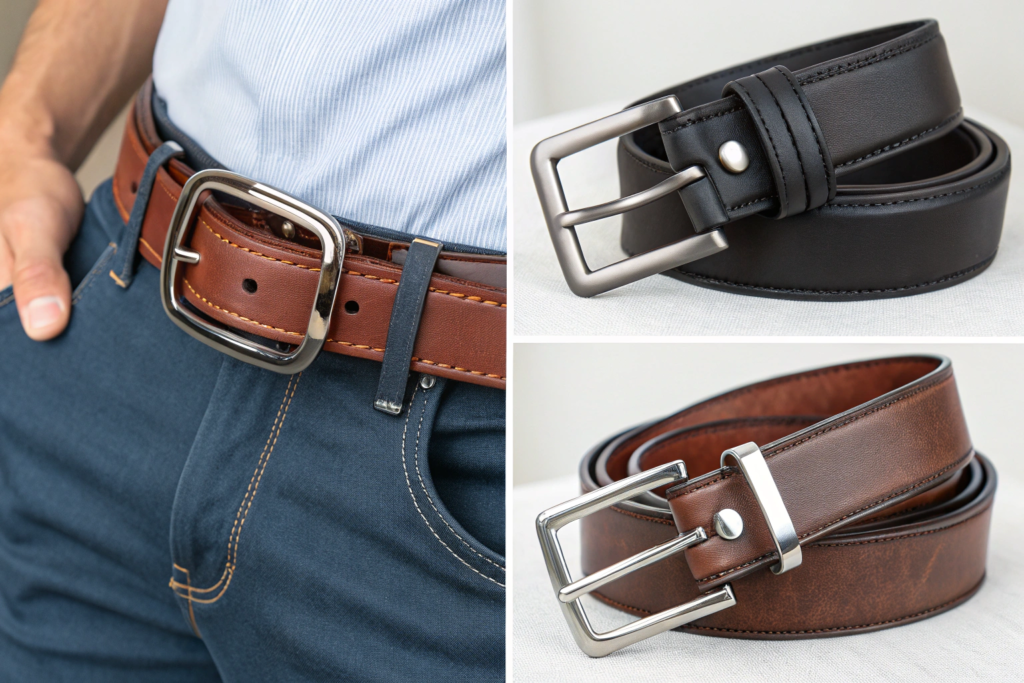
What are the manufacturing considerations for each type?
The buckle choice directly affects production:
- Pin Buckle: Requires precise hole-punching in the leather strap. Consistency in hole alignment and spacing is critical. The hardware is simple but must be durable.
- Plate Buckle (Automatic): Involves more complex assembly. The ratchet mechanism (pawl, spring, button) must be reliable. The belt strap requires molding or stamping of the teeth track, which demands higher precision tooling. This is reflected in a higher production cost but also allows for a higher retail price point.
- D-Ring Buckle: Manufacturing is generally simpler and more cost-effective. No holes or special tracks are needed on the strap. The focus is on the quality of the rings and the strength of the attachment point.
Understanding these implications helps in planning product development timelines, costing, and quality assurance strategies.
How does buckle choice impact the overall brand perception?
The buckle is a silent brand ambassador.
- Pin Buckle: Communicates heritage, tradition, and reliability. It's safe, respected, and signals adherence to classic style codes.
- Plate Buckle (Automatic): Signals innovation, modernity, and customer-centric design (solving the fit problem). It appeals to a tech-savvy, value-driven consumer.
- D-Ring Buckle: Evokes ease, casual flexibility, and a carefree lifestyle. It's associated with creativity, travel, and informal expression.
Aligning your buckle choice with your brand's core message—whether it's "crafted elegance," "engineered comfort," or "effortless style"—is a crucial strategic decision.
Conclusion
The difference between a pin buckle, plate buckle, and D-ring buckle is a fundamental lesson in form, function, and fashion. The pin buckle offers timeless, secure formality. The plate buckle delivers modern, precision-engineered comfort and a minimalist aesthetic. The D-ring buckle provides effortless, infinite adjustability with a relaxed, utilitarian charm. Each serves a distinct purpose and caters to a different wearer need and stylistic desire.
For anyone involved in the world of belts—from the designer sketching a new line to the consumer building a versatile wardrobe—understanding these differences empowers better choices. It ensures that the buckle isn't just an afterthought, but a intentional component of a product's identity and utility. If you are developing a belt line and need guidance on selecting and sourcing the perfect buckle mechanism to match your vision, our expertise in design and manufacturing can help. Contact our Business Director, Elaine, at elaine@fumaoclothing.com to fasten the details of your next successful collection.