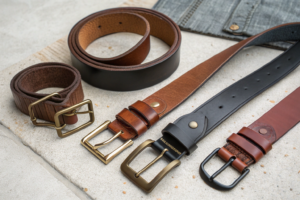
Travelers face constant challenges with packing efficiency, weight restrictions, and space optimization. Traditional belts maintain rigid structures that consume disproportionate luggage space, create awkward packing shapes, and can damage other items. The fundamental limitation of rigid belt cores conflicts with the need for compact, efficient packing in modern travel.
Collapsible core belts are ideal for luggage because they transform from rigid waistwear to flat-packed accessories, eliminate bulk and awkward shapes, reduce packed volume by up to 80%, and prevent damage to other items. These innovative belts utilize flexible core materials, strategic segmentation, or transformative structures that maintain functionality during wear while achieving remarkable compactness when packed.
The evolution of travel accessories has accelerated as consumers seek smarter packing solutions without sacrificing style or functionality. This analysis explores how collapsible core technology addresses specific luggage challenges while maintaining belt performance.
What Structural Innovations Enable Effective Collapsibility?
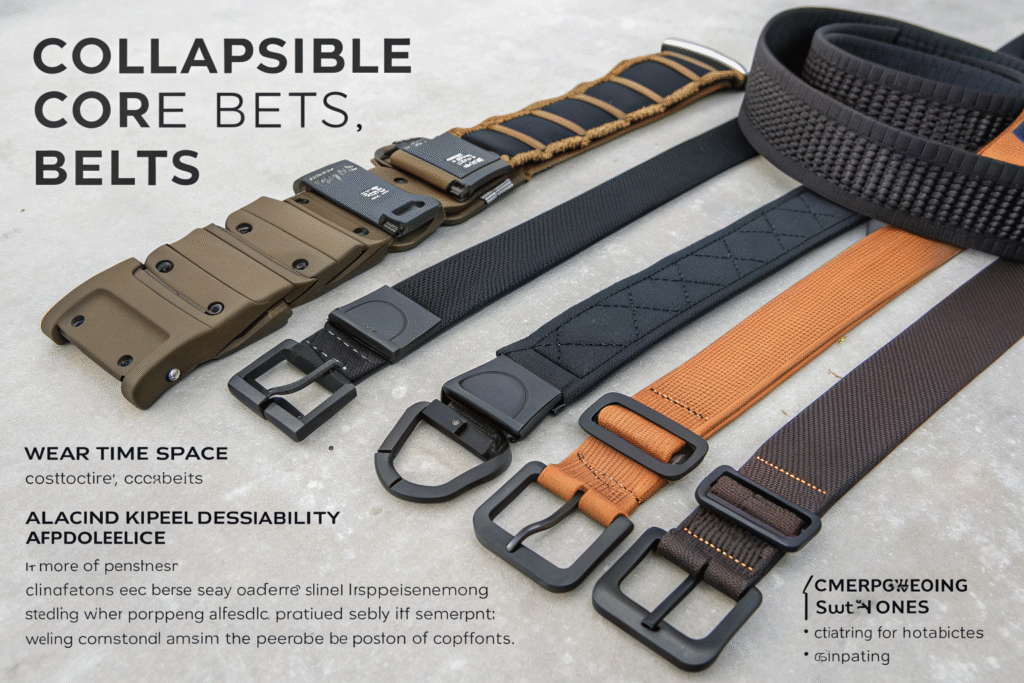
Collapsible core belts employ various engineering approaches to achieve their space-saving transformation. Each method balances wear-time rigidity with packed flexibility through innovative material and structural solutions.
The most effective designs maintain complete functionality and professional appearance during wear while achieving remarkable compactness when packed. This dual-state capability represents a significant advancement in accessory design.
How Do Segmented Core Systems Work?
Interlocking segmented systems with precision-engineered joints create belts that fold at specific points while maintaining rigidity between segments. These systems typically use high-strength polymers or composite materials with living hinges or mechanical joints that allow controlled folding. The most advanced designs incorporate self-aligning features and positive locking mechanisms that ensure proper reassembly and secure wear.
What Role Do Flexible Core Materials Play?
Advanced elastomeric composites and shape-memory materials provide the foundation for continuously flexible cores that roll compactly. These materials offer sufficient rigidity during wear to prevent buckling or excessive flexibility while allowing tight rolling or folding when packed. The most sophisticated formulations maintain their structural integrity through thousands of compression and expansion cycles without permanent deformation.
What Space Savings Do Collapsible Belts Achieve?
The primary advantage of collapsible core belts lies in their dramatic space reduction compared to traditional rigid belts. Understanding the specific space savings helps travelers make informed packing decisions and justifies the technology adoption.
Space efficiency extends beyond simple volume reduction to include shape optimization, weight distribution, and protection of other packed items. Each factor contributes to overall luggage optimization.
How Much Packed Volume Reduction Can Travelers Expect?
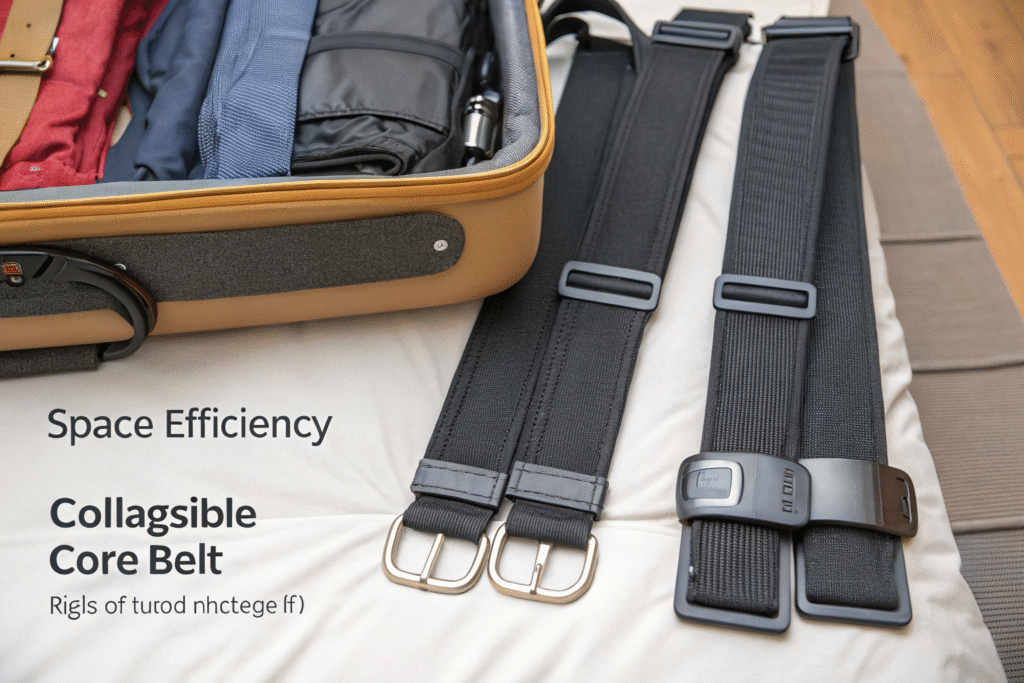
Collapsible core belts typically reduce packed volume by 70-85% compared to traditional rigid belts, transforming from substantial rigid circles to flat packages approximately the size of a smartphone. This dramatic reduction creates valuable space for other essentials, particularly important for carry-on travelers or those using smaller luggage. The space savings often exceed what's achievable through careful folding of clothing or other soft goods.
Why Does Shape Optimization Matter Beyond Simple Volume?
The ability to conform to available space rather than demanding specific accommodation represents a significant advantage over rigid belts. Collapsible belts can fill irregular spaces between other items, utilize peripheral luggage areas, or slide into flat compartments that would otherwise remain unused. This shape adaptability maximizes packing efficiency beyond what simple volume measurements indicate.
What Material Properties Balance Rigidity and Flexibility?
The fundamental challenge in collapsible core design lies in creating materials that are sufficiently rigid during wear yet flexible enough for compact packing. Advanced materials science has developed several solutions to this apparent contradiction.
The most successful materials provide appropriate stiffness for their specific position in the belt structure while allowing the overall system to achieve remarkable compactness. Each material choice represents a careful balance of physical properties.
How Do Composite Materials Achieve Dual-State Performance?
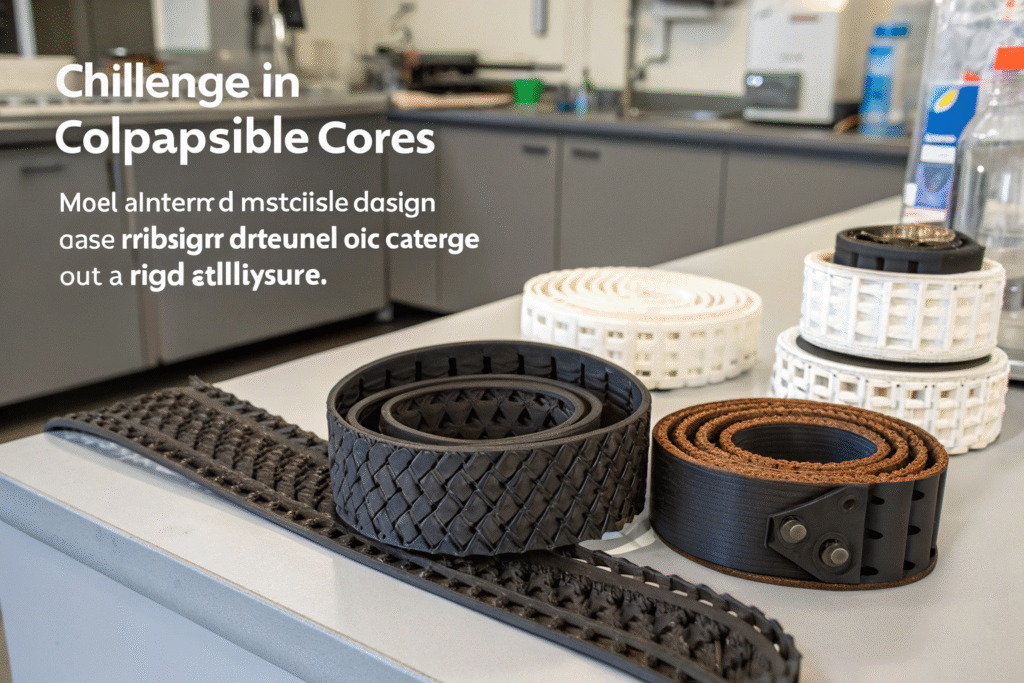
Layered composite structures with variable stiffness properties create belts that feel rigid during wear yet fold or roll compactly. These composites typically combine stiff elements for structural integrity with flexible layers that allow deformation. The most advanced systems use strategic material placement and directional reinforcement to optimize the balance between wear-time performance and packed compactness.
What Role Do Thermoplastic Elastomers Play?
Advanced thermoplastic elastomers (TPEs) with engineered hardness and recovery properties provide the flexibility needed for compact packing while maintaining sufficient rigidity for comfortable wear. These materials can be formulated to specific hardness levels (typically 70-90 Shore A) that prevent the floppiness that makes some flexible belts difficult to handle. Their shape memory ensures consistent return to proper form after unpacking.
What Travel-Specific Benefits Drive Adoption?
Beyond space savings, collapsible core belts offer several travel-specific advantages that address common frustrations experienced by frequent travelers. These practical benefits complement the primary space efficiency advantage.
Time savings, organizational simplicity, and weight reduction collectively enhance the travel experience beyond mere space optimization. Each benefit addresses identifiable pain points in modern travel.

How Do Collapsible Belts Streamline Security Processing?
The ability to pack belts rather than wearing them through security eliminates the removal and replacement process that slows security lines. Travelers can pack collapsible belts in carry-on luggage and put them on after clearing security, saving time and reducing stress. This advantage becomes particularly valuable during peak travel periods when every minute counts.
What Organizational Advantages Simplify Packing?
Collapsible belts fit perfectly in designated accessory compartments rather than consuming main luggage space or creating awkward bulges. Their predictable packed dimensions allow for systematic packing approaches that maximize space utilization. This organizational benefit helps travelers maintain order throughout trips involving multiple destination changes.
| Feature | Travel Benefit | Impact |
|---|---|---|
| Flat Packing | 70-85% space reduction | Carry-on compliance, more packing options |
| Flexible Shape | Utilizes irregular spaces | Better space utilization, less wasted volume |
| Light Weight | Reduced luggage weight | Avoid overweight fees, easier carrying |
| Security Ready | Easy packing pre-security | Faster security processing |
Conclusion
Collapsible core belts represent a significant innovation in travel accessories by solving the fundamental conflict between wear-time functionality and packed efficiency. Through advanced materials, clever engineering, and thoughtful design, these belts maintain complete functionality during wear while achieving remarkable space savings when packed. The combination of dramatic volume reduction, shape adaptability, weight savings, and security processing advantages makes them particularly valuable for modern travelers facing luggage restrictions and efficiency demands.
Ready to develop collapsible core belts for your travel-focused collections? At StylishBelts, we specialize in creating space-efficient accessories that balance performance with packing innovation. Contact our Business Director Elaine today at elaine@fumaoclothing.com to discuss how our collapsible core technology can enhance your travel product offerings.