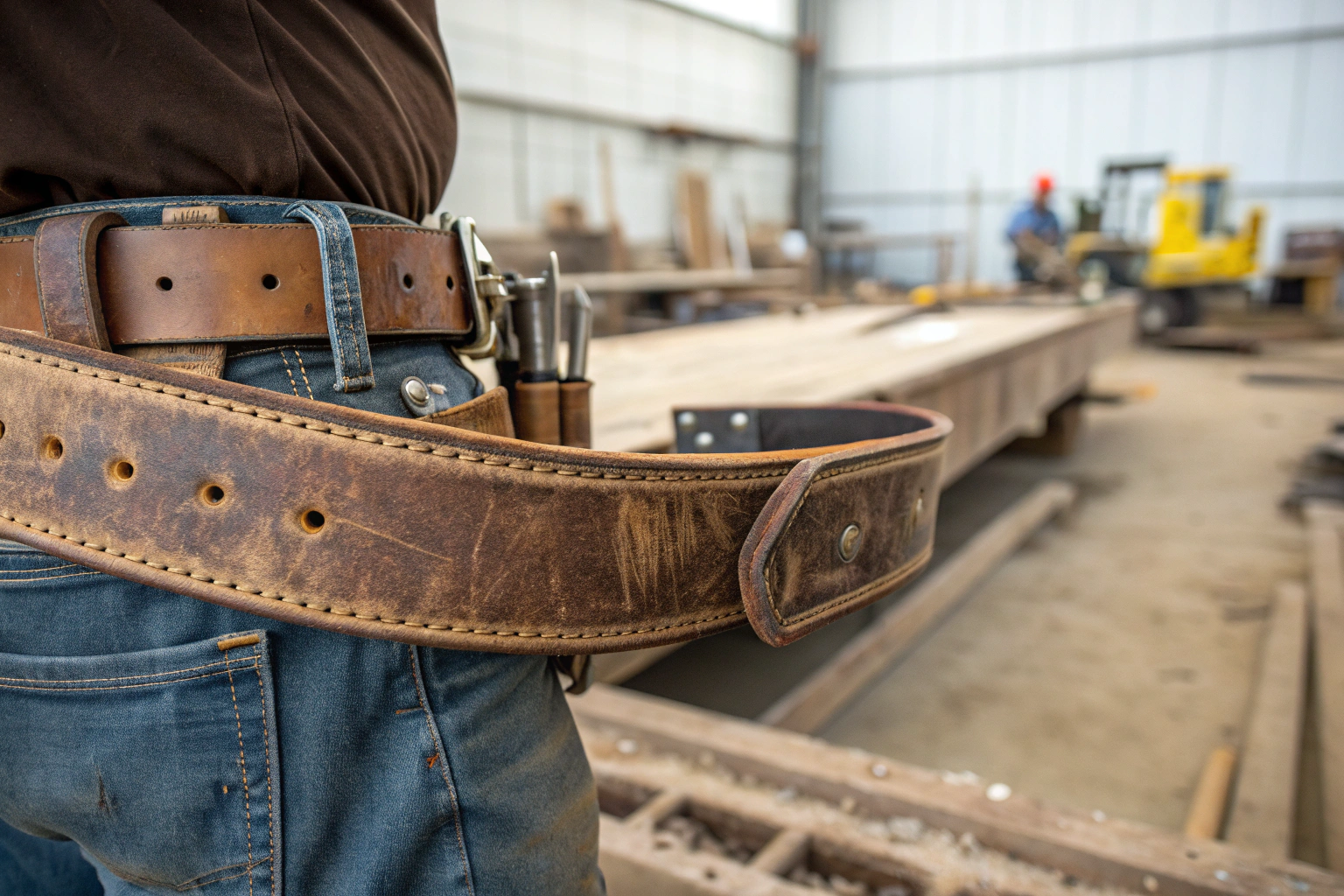
You're on a construction site, and your belt takes daily abuse—snagging on equipment, exposure to weather, and constant stress from carrying tools. Within months, many belts show their weakness: the leather cracks, the stitching fails, or the stretch makes it useless. This reliability failure isn't just inconvenient; it's a safety risk and recurring expense. The solution lies in the fundamental material choice.
Cowhide leather is superior for work belts because it offers exceptional durability, natural resistance to elements, comfortable break-in characteristics, and reliable strength under heavy loads. Its dense fiber structure, thickness availability, and natural toughness withstand workplace demands that quickly destroy lesser materials. This isn't just theoretical superiority—it's proven through generations of tradespeople who depend on their gear daily.
This guide will examine the specific properties that make cowhide the gold standard for work belts. We'll explore its structural durability, environmental resistance, comfort evolution, and practical performance under working conditions.
How Does Structural Durability Withstand Workplace Abuse?
Work belts face unique stresses: tool weight, frequent impact, abrasion against equipment, and constant flexing. Synthetic materials and thinner leathers quickly fail under these conditions, developing permanent stretch, tears, or delamination that renders them unreliable.
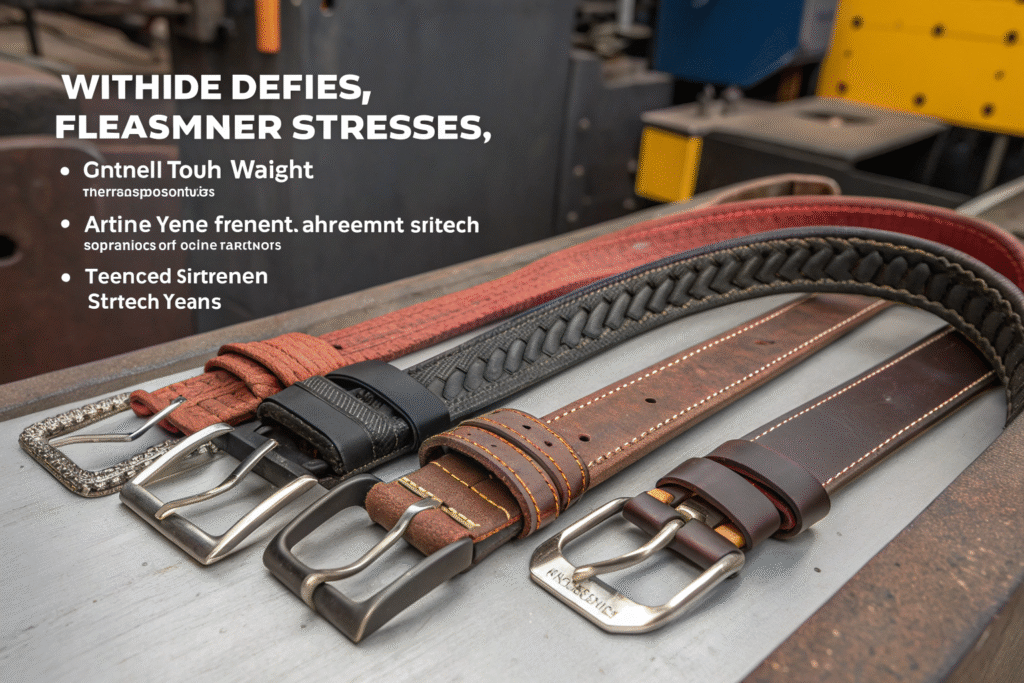
Cowhide's durability comes from its dense, interwoven fiber structure. The collagen fibers in quality cowhide are tightly packed and randomly oriented, creating a natural composite material that resists tearing and maintains integrity even when the surface shows wear. This structural strength is what separates temporary accessories from lifelong tools.
What Physical Properties Create This Durability?
Several measurable characteristics contribute to cowhide's workplace performance:
- Tensile Strength: High resistance to pulling forces prevents stretching under tool weight
- Tear Resistance: The interlocking fiber structure resists propagating small cuts into large tears
- Abrasion Resistance: Withstands rubbing against rough surfaces and equipment
- Puncture Resistance: Dense fiber network prevents penetration from sharp edges
These properties make full-grain cowhide belts capable of supporting pounds of tools daily without significant deformation or failure.
How Does Thickness Impact Work Belt Performance?
Thickness directly correlates with load-bearing capacity and longevity:
| Thickness | Best For | Tool Weight Capacity | Expected Lifespan |
|---|---|---|---|
| 3.0-3.5mm | Light Duty | Up to 5 lbs | 1-2 years |
| 3.5-4.0mm | Medium Duty | 5-10 lbs | 2-4 years |
| 4.0-5.0mm | Heavy Duty | 10-20+ lbs | 5+ years |
For most tradespeople, 4.0-4.5mm represents the ideal balance between durability and wearability. Our work belt collection focuses on this thickness range for optimal performance.
Why Does Natural Resistance to Elements Matter?
Work environments expose belts to conditions that would destroy most materials: water, UV exposure, temperature extremes, and chemical contact. While treated materials might resist specific threats, they often fail when conditions change or the treatment wears off.
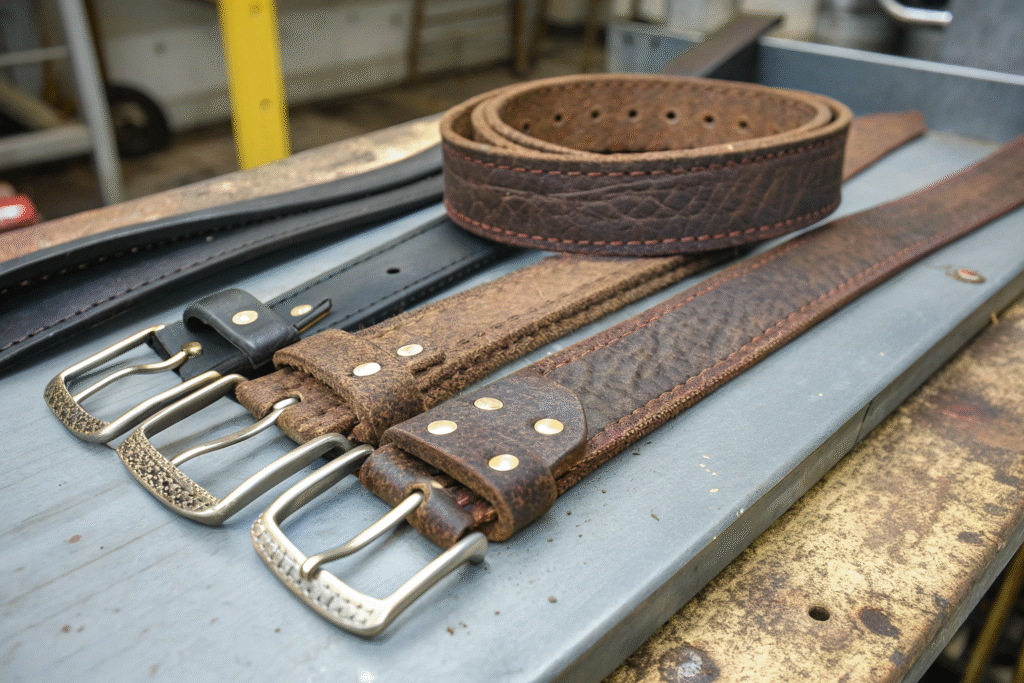
Cowhide possesses inherent natural resistance that doesn't depend on surface treatments. The tightly packed fibers and natural oils create barriers against moisture, while the dense structure resists UV degradation. This built-in protection ensures performance even when maintenance is inconsistent.
How Does Cowhide Handle Moisture and Temperature?
The natural properties provide remarkable environmental adaptation:
- Water Resistance: Tight fiber structure slows water penetration, allowing time to dry properly
- Mold/Mildew Resistance: Natural tannins inhibit microbial growth in damp conditions
- Temperature Stability: Maintains flexibility in cold and doesn't become tacky in heat
- Breathability: Allows moisture vapor to escape while blocking liquid water
This balanced performance makes cowhide ideal for outdoor work belts that face changing weather conditions.
What Maintenance Enhances Natural Resistance?
While inherently tough, proper care extends cowhide's lifespan significantly:
- Regular Cleaning: Removing dirt and debris prevents abrasive damage
- Conditioning: Replenishing natural oils maintains flexibility and water resistance
- Proper Drying: Air drying away from direct heat prevents stiffness and cracking
- Storage Care: Keeping belts in moderate conditions when not in use
This maintenance regimen ensures your investment in quality continues delivering value for years.
How Does Comfort Evolution Benefit Daily Wear?
New cowhide can feel stiff, but this initial firmness is actually a strength indicator. The break-in process creates a personalized fit that combines support with comfort, unlike synthetic materials that either start comfortable but degrade or remain uncomfortably stiff.
The break-in process gradually molds the leather to the wearer's body while maintaining structural integrity. This creates a custom-fit experience that off-the-shelf synthetic belts cannot match, providing both immediate support and long-term comfort.

What Happens During the Break-In Period?
The transformation process involves several stages:
- Initial Stiffness: The dense fiber structure provides maximum support
- Gradual Molding: Leather conforms to the wearer's movements and body shape
- Patina Development: Surface characteristics evolve while strength remains
- Personalized Fit: The belt becomes uniquely suited to its owner's body and use patterns
This natural adaptation process typically takes 2-4 weeks of regular wear but results in a belt that fits better than any mass-produced alternative.
How Does Aged Cowhide Perform Compared to New?
Properly broken-in cowhide offers the ideal combination of properties:
- Maintained Strength: Structural integrity remains despite surface softening
- Enhanced Flexibility: Becomes more comfortable without losing support
- Improved Drape: Conforms to body movements more naturally
- Character Development: Shows honest use while maintaining functionality
This aging process creates belts that tell a story while performing reliably year after year.
What Practical Performance Advantages Do Workers Notice?
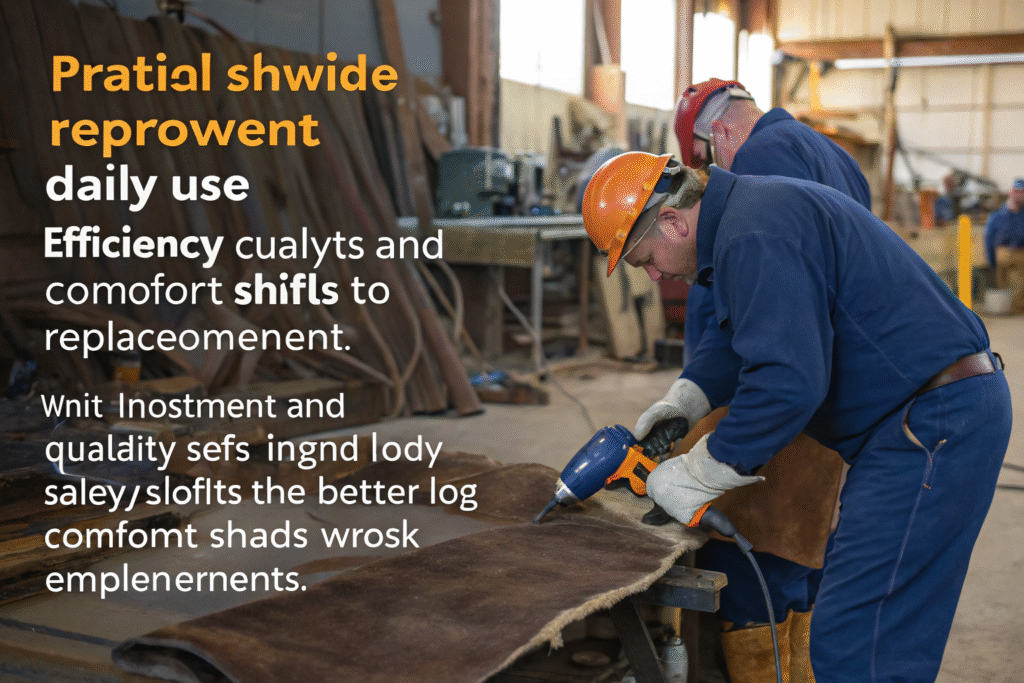
The theoretical advantages of cowhide become concrete benefits in daily use. Workers report specific performance differences that affect their efficiency, safety, and comfort throughout long shifts. These practical benefits justify choosing cowhide over cheaper alternatives.
From tool retention to all-day comfort, the real-world advantages translate to better work experiences and fewer equipment replacements. The initial investment in quality cowhide pays dividends through reliable performance when it matters most.
How Does Cowhide Enhance Tool Management?
The material properties directly impact tool-carrying functionality:
- Minimal Stretch: Tools remain positioned properly without constant adjustment
- Secure Attachment: Provides firm anchor points for tool holders and pouches
- Weight Distribution: Handles heavy loads without digging into hips or back
- Durability at Stress Points: Reinforces areas where tools attach
These characteristics make cowhide the preferred choice for professional tradespeople who depend on their gear.
What Long-Term Economic Benefits Justify the Investment?
While initial cost is higher, the lifetime value is significantly better:
- Replacement Cycle: Quality cowhide belts last 3-5x longer than synthetic alternatives
- Consistent Performance: Maintains functionality throughout its lifespan
- Reduced Downtime: Fewer equipment failures during critical work
- Resale Value: Well-maintained leather retains value better than worn synthetics
This economic calculation makes cowhide the smarter choice for workers who view their gear as investments rather than expenses.
Conclusion
Cowhide leather's superiority for work belts stems from its unique combination of structural durability, natural environmental resistance, comfortable break-in characteristics, and proven practical performance. The dense fiber structure withstands workplace abuse that destroys lesser materials, while the natural properties provide protection against elements without depending on surface treatments. The break-in process creates a personalized fit that improves with age, and the practical benefits translate to better tool management and long-term economic value. For these reasons, cowhide remains the definitive choice for workers who demand reliability from their equipment and recognize that quality tools enhance both safety and productivity.
If you're looking for work belts that combine traditional cowhide durability with modern manufacturing standards, our factory specializes in heavy-duty belt construction. Contact our Business Director, Elaine, at elaine@fumaoclothing.com to discuss work belt solutions built to withstand your specific professional demands.