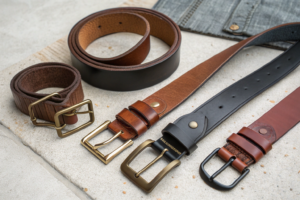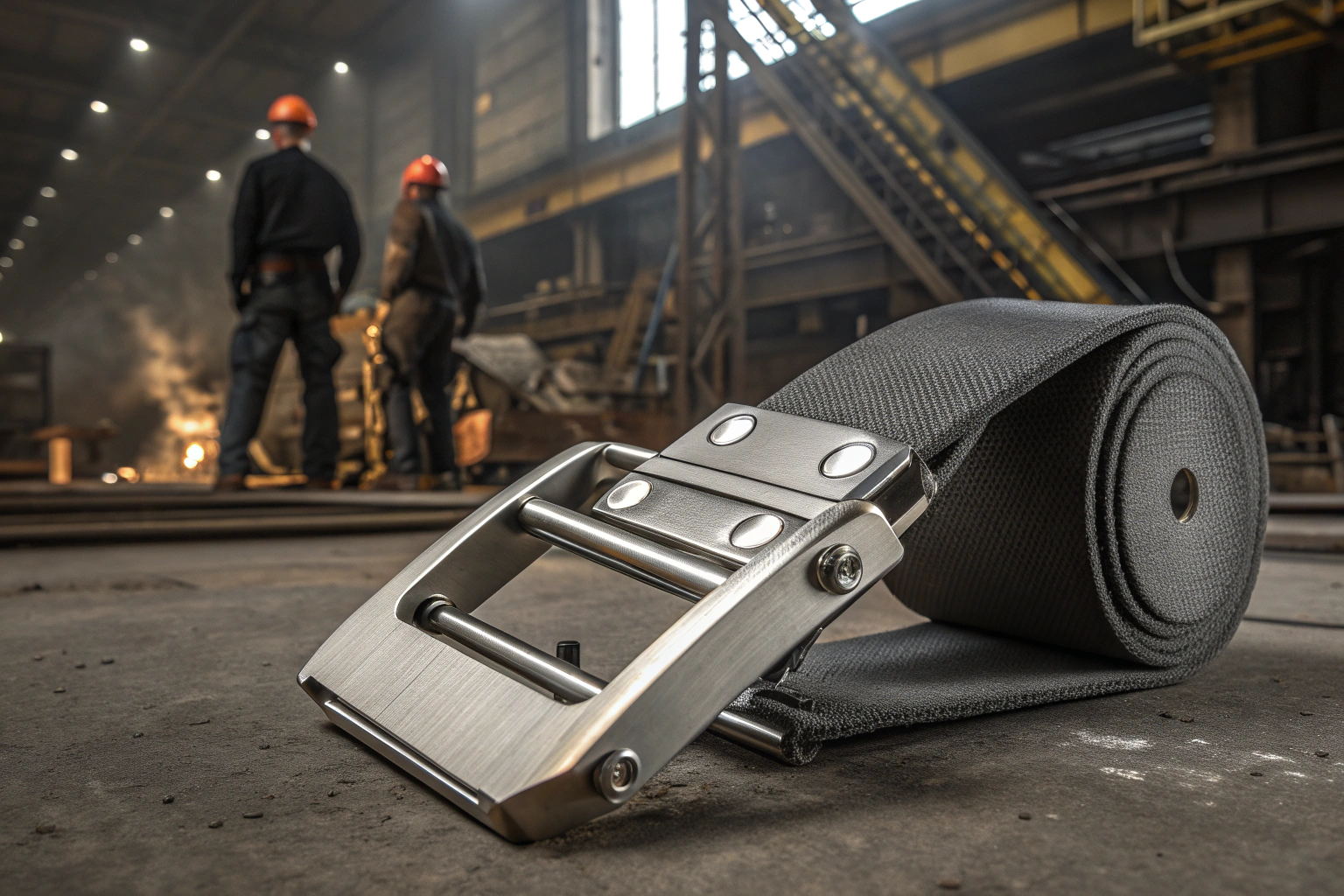
Industrial work environments demand accessories that can withstand extreme conditions while maintaining functionality and safety. From construction sites to manufacturing floors, workers rely on belts that secure tools and support physical labor without failing under pressure. The buckle, as the critical connection point, must meet rigorous standards that few materials can satisfy.
Stainless steel stands as the premier choice for industrial belt buckles due to its exceptional strength-to-weight ratio, superior corrosion resistance, reliable performance under stress, and cost-effective durability. Unlike alternative materials that compromise on key characteristics, stainless steel delivers balanced performance across all requirements for industrial applications, maintaining integrity in environments where failure is not an option.
Understanding why stainless steel consistently outperforms alternatives requires examining its material properties, manufacturing advantages, and long-term value proposition in demanding work environments.
What Material Properties Define Stainless Steel's Superiority?
The fundamental characteristics of stainless steel create a combination of properties uniquely suited to industrial buckle applications.
How Does Corrosion Resistance Protect Industrial Buckles?
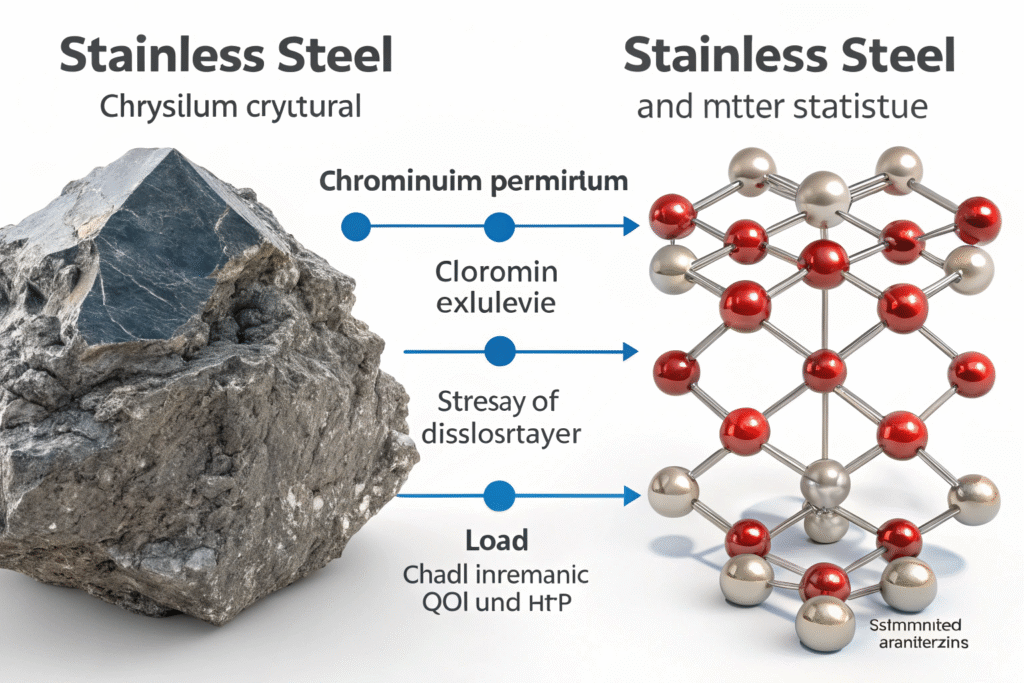
Stainless steel's corrosion resistance stems from its chromium content, which forms an invisible protective oxide layer when exposed to oxygen. This self-repairing barrier prevents rust and deterioration from moisture, chemicals, and environmental exposure that rapidly degrade ordinary steels. For industrial workers exposed to weather, sweat, and workplace chemicals, this property ensures buckles remain functional and presentable through years of service.
The chromium oxide layer reforms almost instantly when scratched or damaged, providing continuous protection that coatings and platings cannot match. This inherent (rather than applied) protection means stainless steel buckles maintain their corrosion resistance even when surface wear occurs through daily use. Industrial applications particularly benefit from grades like 304 and 316 stainless steel, which offer enhanced resistance to specific corrosive agents encountered in various work environments.
What Mechanical Strength Do Industrial Applications Require?
Industrial belt buckles must withstand substantial mechanical stress from tool weight, worker movement, and occasional impact. Stainless steel provides tensile strength ranging from 70,000 to 100,000 psi depending on grade and treatment, significantly outperforming alternative metals like aluminum or zinc alloys. This strength ensures buckle tongues don't deform under load and attachment points remain secure.
The material's hardness—typically 150-200 Brinell—resists the abrasion that occurs when buckles contact equipment, structures, and work surfaces. Unlike softer metals that develop wear patterns affecting functionality, stainless steel maintains its critical dimensions and engagement surfaces through extended service. This dimensional stability proves crucial for safety-critical applications where buckle failure could result in dropped tools or compromised fall protection.
How Does Manufacturing Flexibility Benefit Buckle Design?
Stainless steel's processing characteristics enable diverse manufacturing approaches that support both functional and economic requirements.
What Production Methods Optimize Cost and Quality?
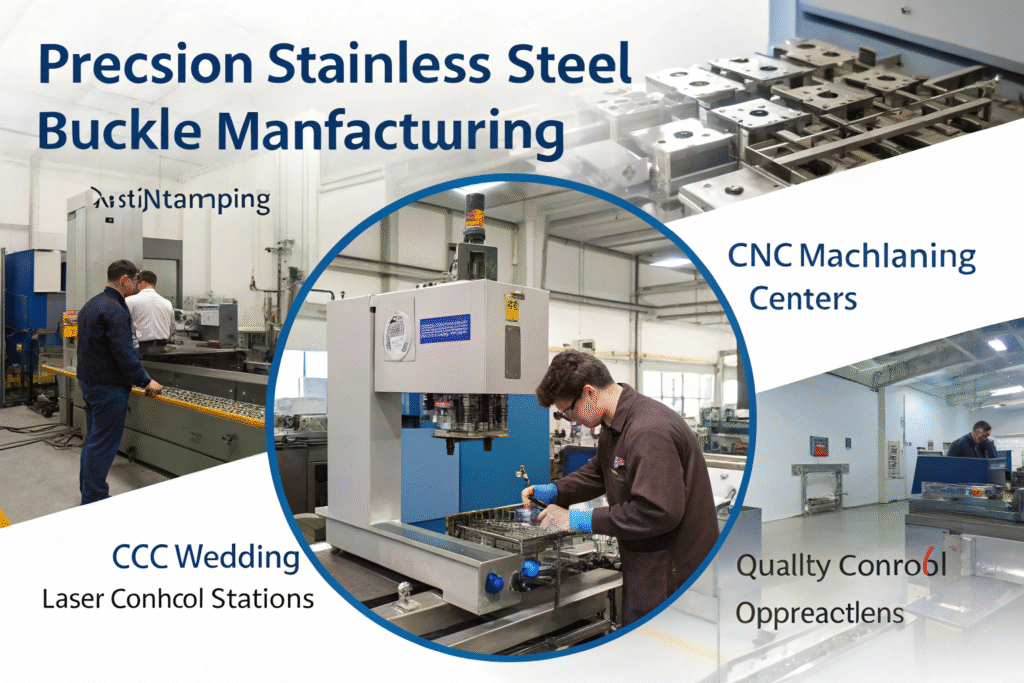
Stainless steel accommodates multiple fabrication methods that balance production volume with design complexity. High-volume buckle designs typically utilize precision stamping, where custom tooling creates finished parts in single operations with minimal material waste. For intermediate volumes, investment casting produces complex geometries with excellent surface quality, while CNC machining serves low-volume specialized applications requiring tight tolerances.
This manufacturing flexibility allows buckle producers to select the most cost-effective approach for specific market segments without compromising material integrity. The same stainless steel alloy can be processed through different methods to create economically viable products across price points—from basic utilitarian buckles to premium designs with sophisticated features. This scalability ensures stainless steel remains competitive regardless of production volume or target price point.
How Does Surface Finish Variety Enhance Application Suitability?
Stainless steel accepts numerous surface treatments that tailor buckles for specific working environments. Mechanical finishes like brushing, polishing, and bead blasting provide different aesthetic appearances and practical benefits—satin finishes hide minor scratches in high-wear applications, while mirror polishing facilitates cleaning in food processing or medical settings. Electrochemical processes can darken surfaces for reduced visibility in tactical applications or enhance hardness for extreme abrasion resistance.
This finish versatility means a single stainless steel buckle design can be adapted for multiple industrial sectors through surface treatment selection. The base material remains identical, ensuring consistent mechanical properties while the surface characteristics address specific environmental factors. This adaptability significantly reduces development costs when creating buckle variants for different market segments.
What Safety Advantages Does Stainless Steel Provide?
Industrial environments impose safety requirements that extend beyond basic functionality to encompass worker protection and regulatory compliance.

How Does Non-Sparking Property Enhance Safety?
Certain stainless steel grades offer non-sparking characteristics crucial in environments containing flammable gases, vapors, or combustible dust. Unlike carbon steels that can produce incendiary sparks when struck against surfaces, specific stainless formulations minimize this risk, making them preferred in petroleum, chemical, mining, and grain handling operations. This intrinsic safety property cannot be added to other materials through coatings or treatments.
The non-sparking quality stems from stainless steel's low carbon content and specific alloying elements that reduce friction-induced ignition risk. For workers in classified hazardous locations, this property may represent a regulatory requirement rather than merely a beneficial feature. Buckle manufacturers serving these markets typically certify their products through independent testing to verify non-sparking performance under standardized impact conditions.
What Hygiene Benefits Support Specialized Applications?
Stainless steel's non-porous surface and cleanability make it ideal for industries with strict hygiene requirements like food processing, pharmaceuticals, and healthcare. The material withstands repeated cleaning with aggressive sanitizers without degradation, maintaining both appearance and structural integrity. This durability proves more cost-effective than replacements requiring frequent replacement due to chemical damage.
The hygienic properties extend beyond cleanability to include biological resistance—stainless steel doesn't support bacterial growth or absorb contaminants that could transfer to workers or products. For industries implementing HACCP, GMP, or other hygiene management systems, stainless steel buckles provide documented compliance with material contact requirements that alternative metals struggle to satisfy.
How Does Lifecycle Cost Analysis Favor Stainless Steel?
The economic argument for stainless steel extends beyond initial purchase price to encompass total cost of ownership throughout the product lifecycle.
What Durability Factors Reduce Replacement Frequency?
Stainless steel buckles typically outlast alternative materials by significant margins in industrial environments. Where zinc alloy buckles may deteriorate within months in corrosive conditions and aluminum versions deform under repeated stress, stainless steel maintains functionality for years without significant degradation. This extended service life directly reduces replacement frequency and associated purchasing, inventory, and downtime costs.
The durability advantage becomes particularly pronounced in environments with multiple stress factors—moisture, chemicals, abrasion, and impact. While other materials might withstand individual challenges, stainless steel resists the combined effects that rapidly destroy lesser materials. This comprehensive durability means a single stainless steel buckle design can serve across multiple departments or applications within a facility, simplifying inventory and procurement processes.
How Does Maintenance Simplicity Impact Operational Costs?
The minimal maintenance requirements for stainless steel reduce long-term ownership costs. Unlike plated buckles that require careful cleaning to preserve protective coatings or painted versions needing touch-up for corrosion protection, stainless steel withstands aggressive cleaning methods without special procedures. This simplicity translates to reduced labor costs and elimination of specialized maintenance supplies.
In many industrial applications, routine cleaning occurs as part of standard equipment maintenance—stainless steel buckles simply undergo the same process as other equipment without requiring separate attention. The material's natural corrosion resistance means occasional thorough cleaning restores appearance and function regardless of interval between cleanings, unlike materials requiring regular maintenance to prevent irreversible deterioration.
Conclusion
Stainless steel's dominance in industrial belt buckle applications reflects its unmatched combination of strength, corrosion resistance, manufacturing flexibility, and lifecycle economics. No alternative material delivers equivalent performance across all critical parameters for demanding work environments. As industrial safety standards tighten and cost pressures increase, stainless steel continues to represent the optimal balance of performance and value.
The material's inherent properties align perfectly with industrial requirements, while ongoing manufacturing innovations ensure stainless steel buckles remain competitively priced against inferior alternatives. For procurement specialists, safety managers, and workers alike, stainless steel delivers confidence that buckle failure won't compromise safety or productivity.
Ready to specify stainless steel buckles for your industrial belt applications? Contact our Business Director, Elaine, at elaine@fumaoclothing.com to discuss how our stainless steel buckle designs can meet your specific industrial requirements while delivering exceptional lifecycle value.