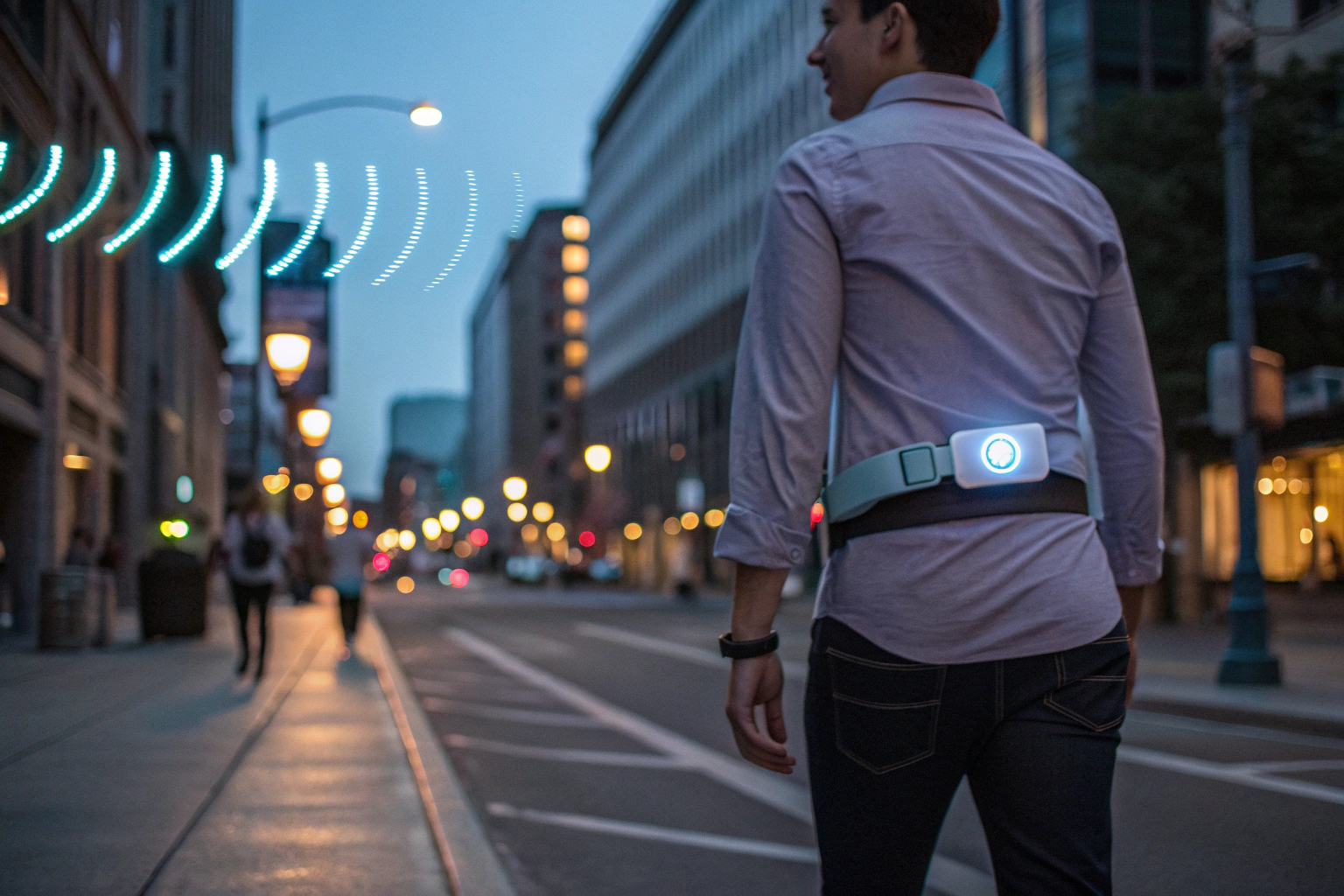
In the rapidly evolving landscape of wearable technology, the quest for seamless, hands-free interaction is paramount. From smartwatches to AR glasses, the goal is to reduce friction between human intent and digital action. Enter the voice-command buckle—an innovation that reimagines the humble belt clasp as a conversational interface. For forward-thinking brands and buyers in the tech wear, urban fashion, and accessibility markets, this represents more than a gimmick; it represents a strategic integration point for ambient computing, turning an essential accessory into a powerful, context-aware control hub.
Voice-command buckles are ideal for tech wear because they provide a discreet, always-accessible, and socially acceptable point of interaction for smart devices without requiring the user to raise a wrist or look at a screen. Positioned at the body's centerline, they offer superior microphone placement for voice pickup and can integrate haptic feedback, making them perfect for controlling music, navigating, sending quick messages, or managing IoT devices while on the move, especially in situations where using a phone or watch is impractical or unsafe.
This innovation moves wearable tech beyond the wrist and into the core of an outfit. It's about embedding intelligence where it is most convenient and least obtrusive, creating a fluid connection between the digital self and the physical world. Let's explore the technical, design, and market forces driving this niche.
How does voice-command hardware integrate into a belt buckle?
Integrating full voice-command capabilities into a belt buckle is a significant engineering challenge. It requires miniaturizing a suite of components typically found in smart speakers into a robust, fashion-forward form factor that can withstand daily wear, flexing, and environmental exposure.
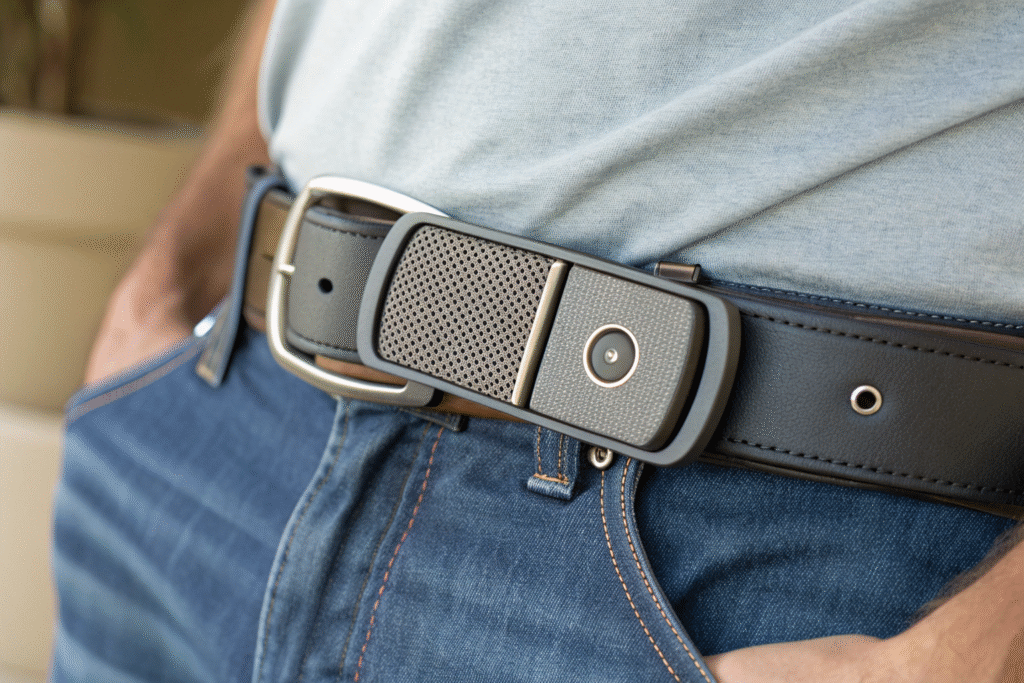
Voice-command hardware integrates into a belt buckle by housing a multi-microphone array for noise-canceling voice pickup, a low-power System-on-Chip (SoC) with a neural processing unit for keyword spotting, a Bluetooth module for connectivity, a high-quality speaker or haptic motor for feedback, and a long-lasting rechargeable battery. All this is embedded in a rigid module that is either the buckle itself or a discrete pod attached to a traditional buckle, sealed against moisture and dust.
The design philosophy must balance technological capability with wearability. The buckle cannot be overly thick, heavy, or generate excessive heat. This requires a manufacturer with hybrid expertise in compact electronics design and accessories manufacturing, not just one or the other.
What is the role of a multi-microphone array and noise cancellation?
Clear voice pickup in noisy environments is the single biggest technical hurdle. A single microphone would be overwhelmed by street noise, wind, and fabric rustle. A multi-microphone array is critical because it uses beamforming technology.
This means the array can digitally "focus" its sensitivity in the direction of the user's mouth while dampening sounds from other directions. Advanced algorithms perform acoustic echo cancellation and wind noise reduction. For a tech wear product meant to be used in urban environments, this capability is non-negotiable. It ensures the device reliably responds to "Hey Google," "Alexa," or a custom wake word even on a crowded subway platform, making the interaction dependable and frustration-free. Sourcing a supplier that uses proven voice processing chips from vendors like Qualcomm or Synaptics is a strong indicator of quality.
How are battery life and charging solved in a wearable form factor?
Battery life is the Achilles' heel of all wearables. A voice-command buckle cannot require daily charging. Solutions involve several strategies:
- Ultra-Low-Power Wake Word Engine: The specialized NPU listens for the trigger phrase using minimal power, keeping the main Bluetooth and processor asleep.
- Efficient Battery Tech: A slim, high-density lithium-polymer battery is custom-shaped to fit the buckle cavity.
- Wireless Charging: The most elegant solution. The entire belt can be laid on a charging pad, or the buckle module can be removed and placed on a dock. This eliminates ports that can fail due to lint and moisture.
- Solar-Assisted Power: For outdoor tech wear, a small photovoltaic film on the buckle face can provide trickle charge in daylight.
A realistic target for a primary device is 3-5 days of typical use. Manufacturers should provide detailed battery life test reports under simulated usage conditions, a key part of quality control for smart accessories.
Why is the waist an optimal location for a voice interface?
While smartwatches and earbuds dominate, they have limitations. The waist—specifically the belt buckle—offers unique ergonomic and social advantages that make it a compelling, complementary location for a voice interface.
The waist is optimal because it is a stable, central point on the body with consistent proximity to the mouth for clear audio, and it allows for a larger battery and antenna than an earbud. Socially, speaking to your waist is less conspicuous and disruptive than talking into your wrist (which can appear rude) or having in-ear devices constantly plugged in. It also keeps the hands and wrist completely free for other tasks.
This positioning supports contextual computing. The buckle knows it's being worn, it's centered on the body, and with additional sensors (like an IMU), it could infer if the user is walking, cycling, or driving, tailoring responses accordingly.
Does this placement improve accuracy over smartwatches or phones?
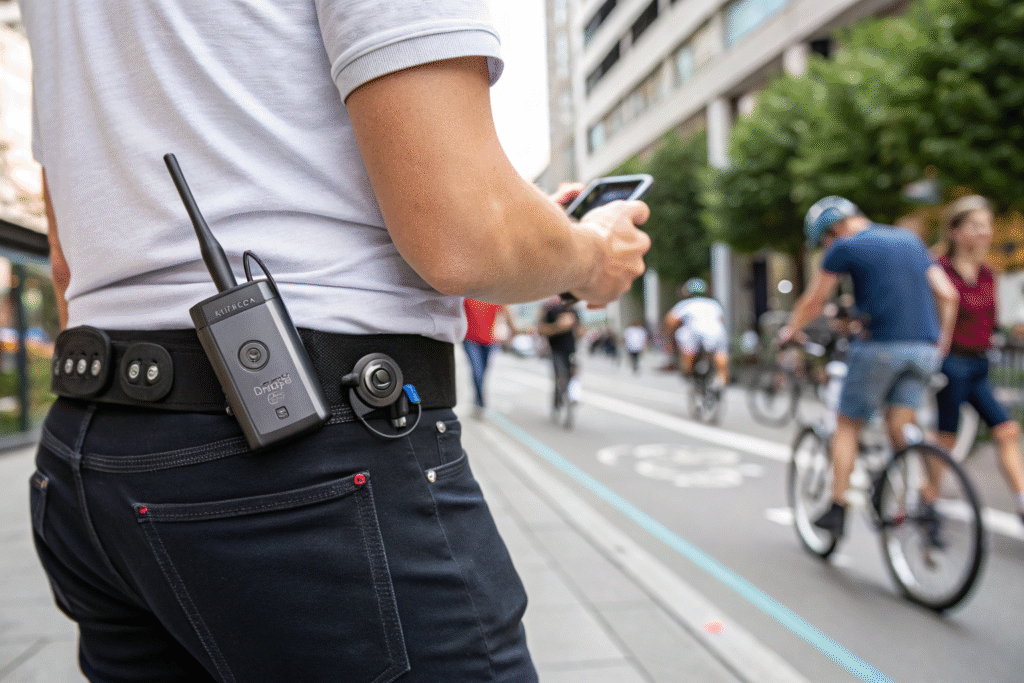
In many scenarios, yes. For voice recognition accuracy, the waist-mounted microphone is closer to the mouth than a phone in a pocket or bag and is in a more consistent position than a wrist, which moves erratically. It also avoids the "head-turn effect" where a smartwatch mic can be occluded by the user's own hand or body.
Furthermore, being a dedicated voice interface, its primary microphone can be optimized for speech, unlike a phone's multi-purpose mic. This can lead to better performance in noisy environments. For accessibility, this hands-free, always-ready interface can be a game-changer for individuals with limited mobility or vision, allowing them to control their environment or communicate without fumbling for a device.
How can it create a seamless hands-free experience for urban professionals?
For the urban professional, efficiency is currency. A voice-command buckle integrated into a dress belt or fashion belt can streamline the workday:
- Commuting: "Navigate to the office," get transit updates, or control a podcast without touching the phone while holding a coffee and a briefcase.
- Meetings: Quickly add an action item to a notes app or set a reminder by whispering a command.
- Logistics & Field Work: For professionals in warehousing, inspections, or healthcare, it allows for hands-free data logging, inventory checks, or accessing procedural information.
This creates a seamless experience where technology recedes into the background, augmenting capability without demanding attention. It's the embodiment of tech wear that works for you, not the other way around.
What are the key design challenges for fashion-forward tech wear?
The greatest challenge is making the technology invisible or desirable. A clunky, plastic-laden buckle will fail in the fashion market, no matter its technical prowess. The design must satisfy both the engineer and the stylist.
Key design challenges include: 1) Miniaturization without sacrificing performance or battery life. 2) Creating a durable, aesthetically pleasing casing (e.g., metal, ceramic, sustainable composite) that houses the electronics. 3) Ensuring the device is comfortable, not too heavy, and doesn't overheat. 4) Designing intuitive, subtle feedback (via light, sound, or haptics). 5) Making the product easy to maintain (cleanable, water-resistant) and service.
The product must succeed first as a belt, then as a tech device. This requires a deeply collaborative process between industrial designers, electrical engineers, and apparel accessory experts.
How to balance tech functionality with minimalist aesthetics?
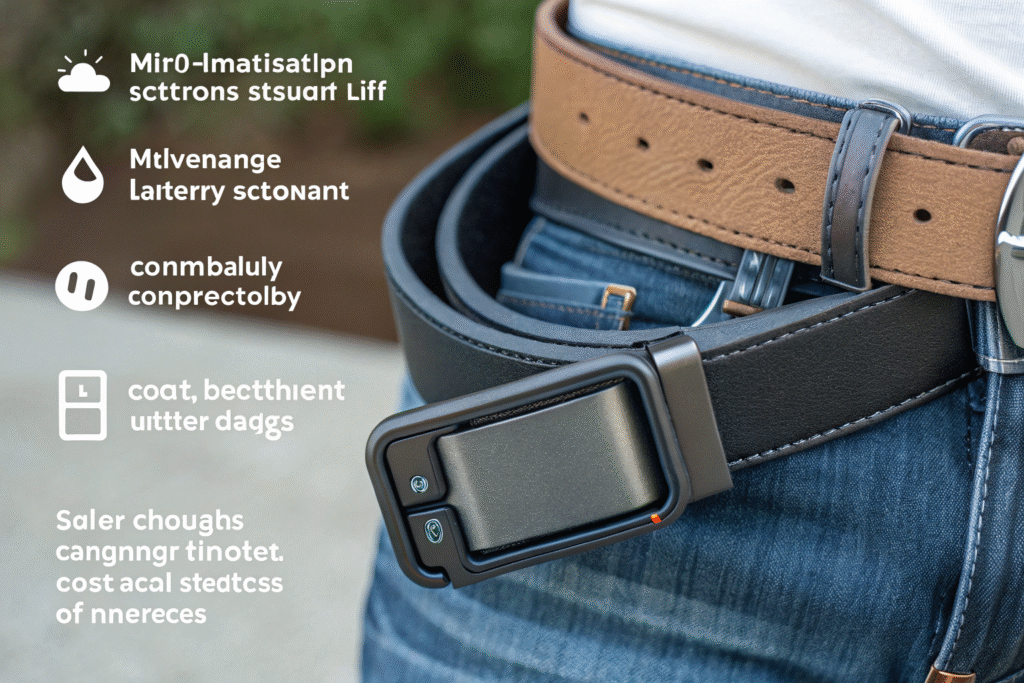
The answer lies in integrated design. The tech should not be added on; it should be baked in. Strategies include:
- Using the buckle's existing metal shell as a heat sink and antenna.
- Embedding micro-perforations for the microphone and speaker that are virtually invisible.
- Using materials like brushed titanium or matte ceramic that naturally conceal seams and sensors.
- Employing minimalist LED indicators that are hidden until activated.
The goal is a product that looks like a premium designer belt buckle until you interact with it. This appeals to the fashion-conscious tech user who doesn't want to wear a gadget but wants its benefits. Sourcing requires finding a manufacturer with a strong ID (Industrial Design) team and a proven ability to create consumer electronics with a high fit-and-finish standard.
What are the IP and certification hurdles for a connected accessory?
Bringing a connected voice device to market involves a maze of intellectual property and regulatory compliance.
- IP: Using wake words like "Alexa" or "Hey Google" requires licensing agreements with Amazon or Google. Alternatively, developing a proprietary wake word requires significant investment in custom voice model training.
- Certifications: Mandatory certifications include FCC/CE for radio emissions, Bluetooth SIG qualification, and potentially Qi certification for wireless charging. If it includes a battery, UN38.3 for transportation and local battery regulations apply.
- Software & Data: Compliance with data privacy laws (GDPR, CCPA) for voice data collection and storage is critical.
A manufacturer experienced in bringing connected wearables to market will have a roadmap for navigating these hurdles. They should be prepared to discuss their partnerships with voice AI platforms and their track record with certification labs—a vital part of their professional and reliable service.
Conclusion
Voice-command buckles are not merely a novelty; they represent a logical and powerful evolution in the tech wear ecosystem. By leveraging the waist's optimal positioning for discreet, reliable voice interaction, they solve real-world usability problems left unaddressed by wrist- or ear-based devices. Their ideal application lies in creating a truly ambient, hands-free layer of computing that integrates effortlessly into professional, urban, and active lifestyles.
For brands, this represents a high-value, defensible product category where fashion meets cutting-edge utility. Success, however, hinges on overcoming significant design and technical challenges to create a product that is both technologically robust and aesthetically compelling. If you are looking to pioneer in this space, you need a manufacturing partner with convergent expertise. For a strategic discussion on developing your own line of voice-integrated smart belts and accessories, contact our Business Director, Elaine, at elaine@fumaoclothing.com. Let's build the interface of the future, together.