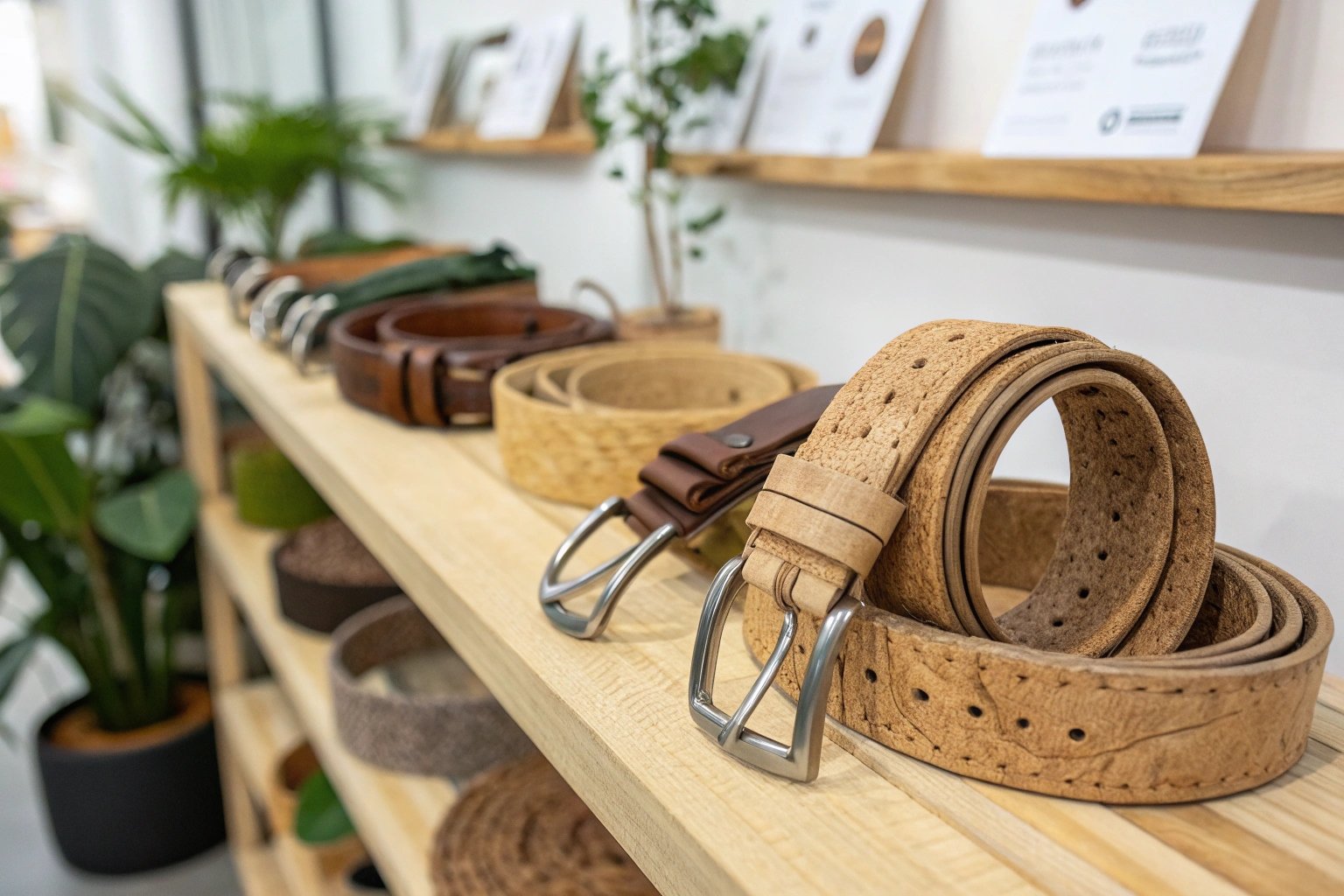
In 2025, eco-friendly fashion is no longer a niche — it's the new standard. Accessories, especially belts, are being redesigned with sustainability in mind as consumers demand planet-positive alternatives to traditional leather or PVC options.
Innovative materials like cork, apple leather, recycled PET, and bio-based PU are transforming the way belts are designed, manufactured, and marketed — making eco-friendly belts both stylish and sustainable.
As a belt manufacturer exporting globally, we’ve seen the surge in demand for sustainable solutions firsthand. From major department stores to boutique brands, buyers now ask not just how a belt looks, but what it's made from and how it was sourced.
Which Bio-Based Materials Are Leading the Belt Revolution?
Bio-materials derived from plants, fruit waste, or renewable sources are gaining momentum as sustainable alternatives to animal leather and synthetic plastics in belt production.
What Makes Cork Leather Ideal for Belt Manufacturing?
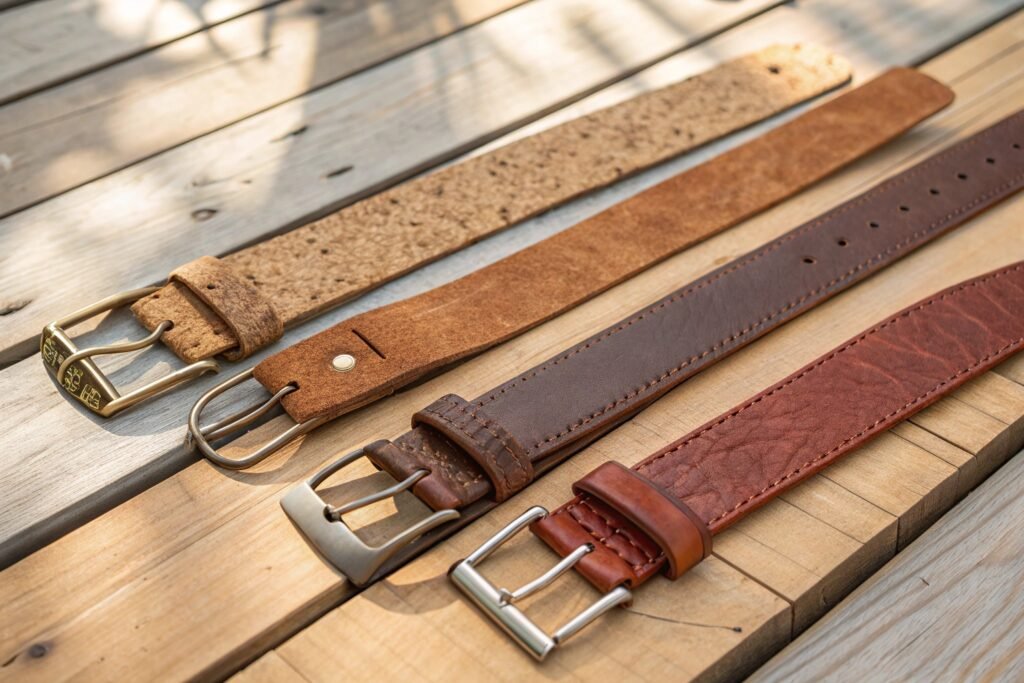
Cork leather, harvested from the bark of cork oak trees, is water-resistant, flexible, and fully renewable. It's lightweight but durable, making it a prime option for vegan belts.
Brands like Bleed Clothing use cork in their unisex belt collections. Our clients love cork because it's hypoallergenic and requires no harmful tanning processes. We bond cork to recycled textile backings for extra strength and dye it using non-toxic pigments.
Are Fruit-Based Leathers Like AppleSkin and Piñatex Practical?
Yes. Apple leather (from apple pomace waste) and Piñatex (from pineapple leaf fibers) are two leading fruit-based materials offering a leather-like feel without animal ingredients.
AppleSkin is soft and ideal for fashion belts with embossed finishes. Piñatex offers a raw, textured aesthetic, popular with ethical streetwear brands. Companies like Naeco and Hugo Boss have both adopted these materials into belt or accessory lines. We’re testing AppleSkin in batch production now, with positive tensile results.
How Are Recycled Materials Transforming Belt Design?
Recycled materials are making belts more circular — giving textile waste, plastic bottles, and even leather offcuts a second life while reducing landfill contribution.
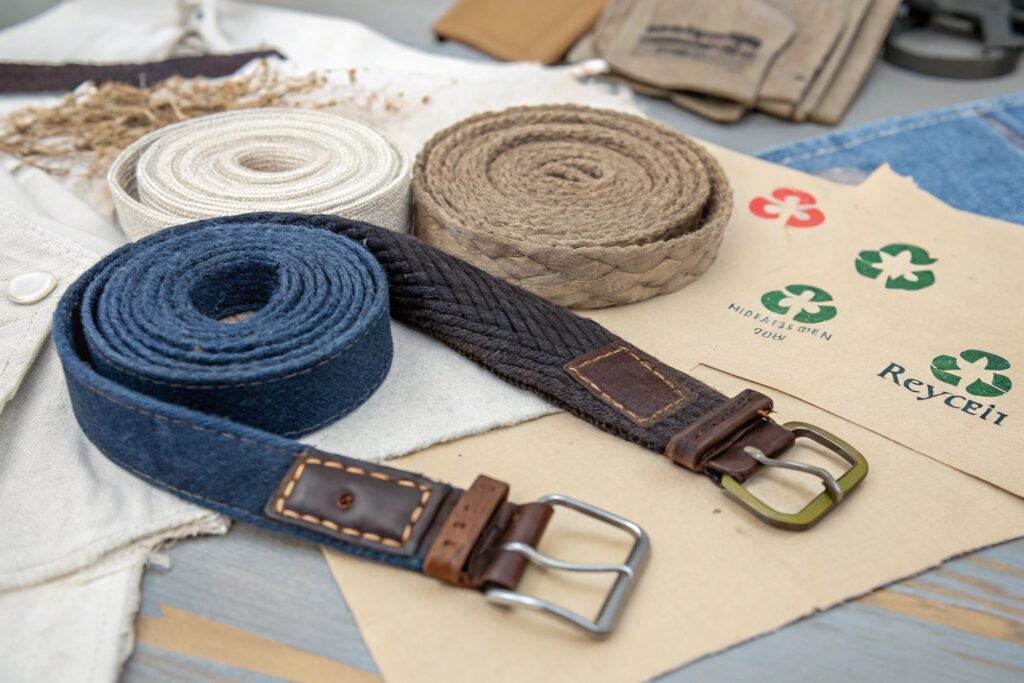
Can rPET (Recycled Plastic Bottles) Be Used for Belts?
Absolutely. We use rPET yarn to make durable webbed or woven belts that are strong and washable. Each belt can repurpose up to 3–5 plastic bottles depending on width and length.
rPET is GRS-certified and widely accepted in European eco fashion. Brands like Patagonia and Tentree incorporate it into accessories. We reinforce rPET belts with biodegradable PU tips for structure and aesthetics.
What Is Recycled Leather and How Is It Applied?
Recycled leather is created by grinding leather offcuts into fibers, then re-binding them with natural latex or PU. It maintains a leather feel while reducing waste and cost.
For structured belts like dress or casual styles, we recommend using 60–80% recycled leather content for optimal shape retention. Brands such as Elvis & Kresse are known for luxury accessories using upcycled materials, and we’ve supplied them with components in past seasons.
What Are the Advantages of Using Vegan Leather Alternatives?
Vegan leathers help brands move away from petroleum-based synthetics while still offering fashionable, animal-free belts. New-age vegan materials are increasingly durable, ethical, and biodegradable.
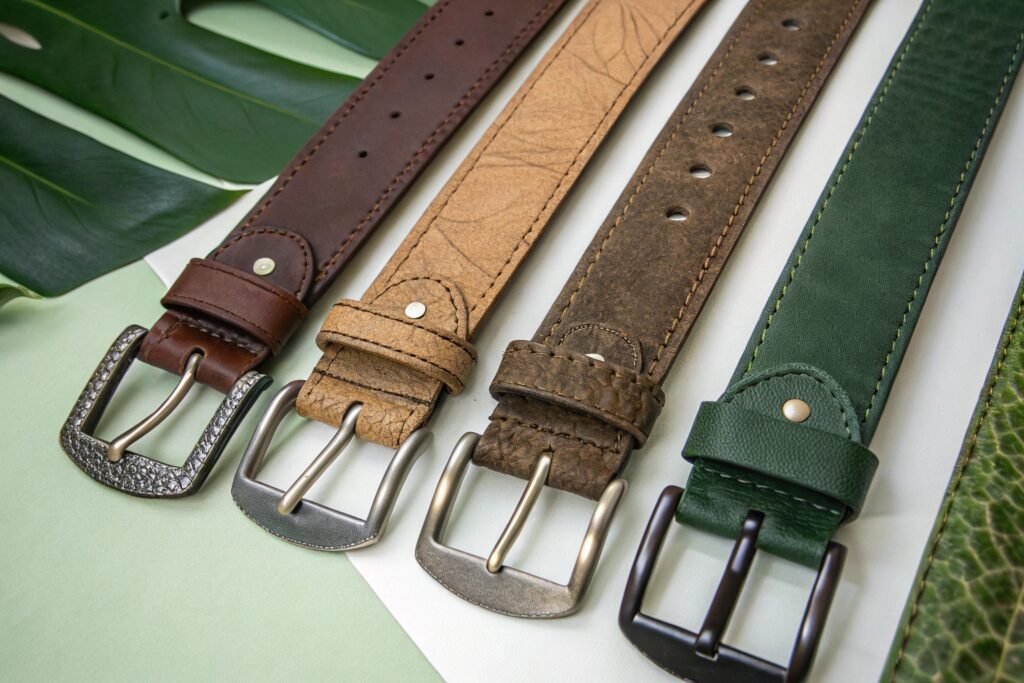
Is Cactus Leather the Future of Plant-Based Belts?
Cactus leather, developed by companies like Desserto, is flexible, breathable, and certified biodegradable. It’s made from mature cactus leaves that regrow without irrigation.
We’ve created belt prototypes using cactus leather and metal-free buckles for several European fashion houses. Its soft touch and matte finish make it a luxury vegan option for sustainable brands looking to replace cowhide or PU.
Can Mycelium Leather Compete with Traditional Leather?
Mycelium leather (mushroom-based) is still emerging but offers exciting potential. It’s grown using agricultural waste and mimics the structure of real hide without any animal harm.
Pioneers like MycoWorks and Bolt Threads are scaling up. While pricing is currently high, early adopters in premium accessory markets are already experimenting with this leather-alternative for future collections.
What Should Brands Consider When Sourcing Eco-Friendly Belt Materials?
Going green isn’t just about the raw material — it’s about responsible sourcing, certifications, durability, and customer education. Choosing the right eco-material involves balancing aesthetics, performance, and compliance.
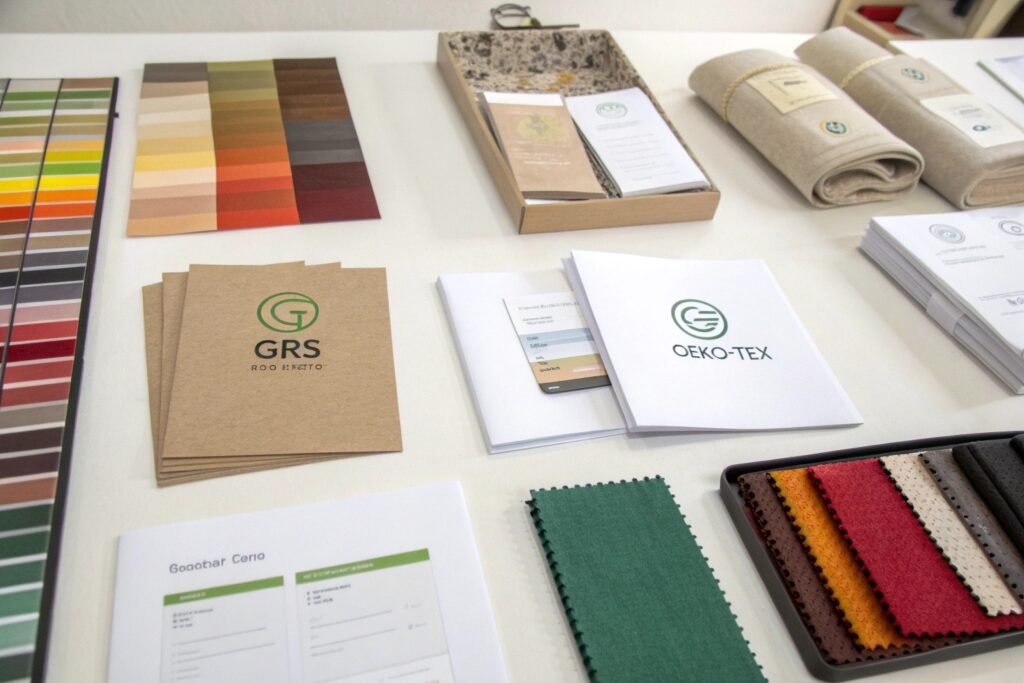
Which Certifications Should You Look For?
Reputable certifications give your eco-belts market credibility. These include:
- GRS (Global Recycled Standard)
- OEKO-TEX® for non-toxic dyes
- USDA Biobased for plant-origin materials
- FSC for paper-based packaging
- PETA-Approved Vegan
Platforms like Textile Exchange offer excellent tools for verifying suppliers. At StylishBelts, we provide full certification trails with every eco-belt shipment.
How to Educate Shoppers About Eco Belt Materials?
Clear storytelling builds trust. Brands should highlight material origin, environmental savings, and care instructions. Use hang tags, product pages, and influencer content to showcase your sustainability efforts.
We help clients create packaging inserts that explain the difference between bio-PU and fossil PU, or how cork is harvested without killing trees. Many of our DTC clients also use QR codes linked to their sustainability transparency pages to build brand loyalty.
Conclusion
Material innovation is unlocking a new era of sustainable belts. From cork and cactus leather to rPET and mushroom hide, eco-friendly materials allow fashion brands to meet rising consumer demand for low-impact accessories — without compromising design or function. At StylishBelts, we are proud to support brands of all sizes in making the shift to greener, smarter belt manufacturing with certified materials, scalable production, and lasting quality. The future of belts is not just fashionable — it’s ethical, renewable, and built to last.