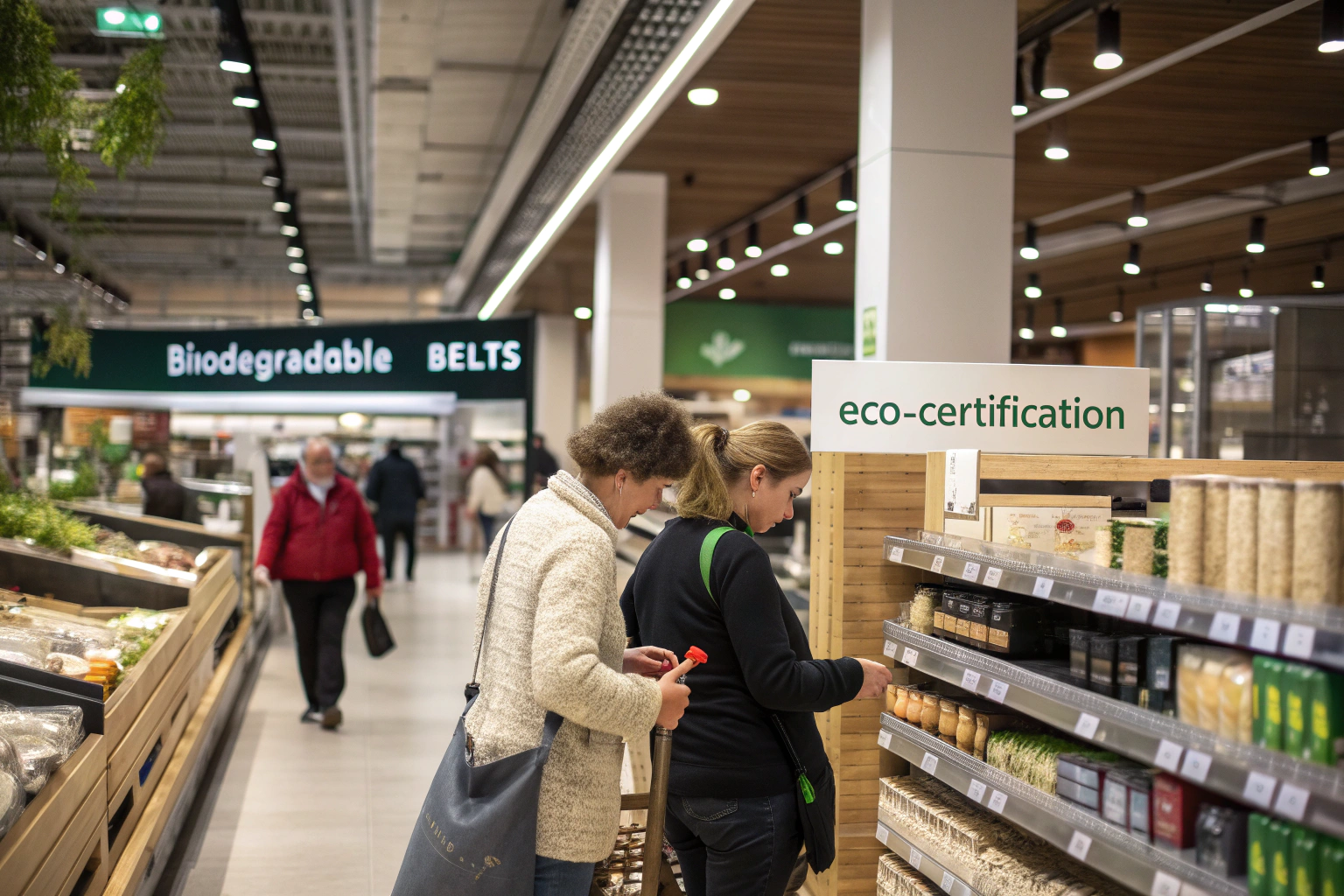
Supermarket buyers face increasing pressure from environmentally conscious consumers while managing tight margins and space constraints. Traditional leather and synthetic belts dominate the market, but their environmental impact concerns both retailers and shoppers. The emergence of biodegradable belts represents a solution that aligns with sustainability initiatives while meeting consumer demand for eco-friendly alternatives.
Biodegradable belts are gaining supermarket shelf space because they address critical retail needs: satisfying consumer demand for sustainable products, supporting corporate environmental commitments, differentiating from competitors, and potentially offering higher margins through value-added positioning. These belts utilize materials like plant-based polymers, natural fibers, and innovative composites that break down efficiently after disposal, appealing to the growing market of environmentally conscious shoppers.
The global sustainable fashion market is projected to reach $8.25 billion by 2025, with accessories representing a rapidly growing segment. Supermarkets expanding their clothing and accessories offerings recognize biodegradable belts as strategic products that demonstrate environmental responsibility while driving foot traffic and basket size. Understanding this shift helps suppliers position products effectively in the competitive retail landscape.
What Consumer Trends Drive Biodegradable Belt Demand?
The movement toward sustainable consumption has evolved from niche concern to mainstream expectation. Today's shoppers increasingly consider environmental impact when making purchasing decisions, with particular attention to disposable fashion items and accessories. Biodegradable belts meet this demand by offering a practical solution to fashion waste.
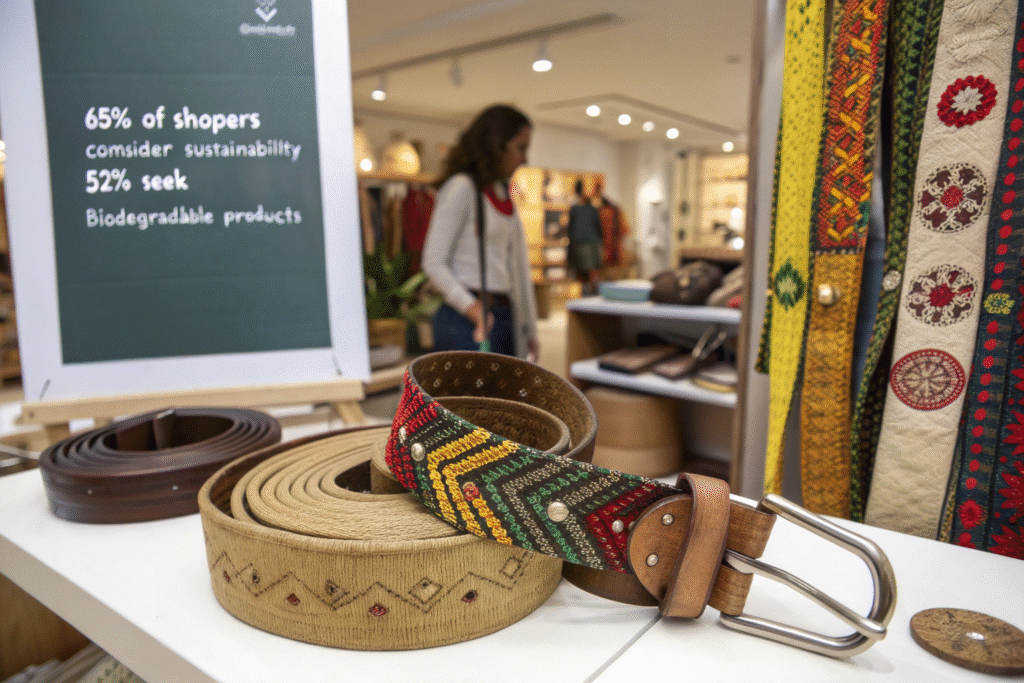
Recent consumer surveys indicate that 65% of shoppers consider sustainability factors when purchasing accessories, and 52% specifically seek biodegradable or compostable products. This represents a significant shift from five years ago, when price and style dominated purchasing decisions almost exclusively. The demographic driving this change spans generations, with Millennials and Gen Z showing the strongest preferences but older generations increasingly adopting sustainable shopping habits.
How Do Environmental Concerns Influence Shopping Behavior?
Shoppers increasingly understand the environmental impact of traditional belt materials. Leather production involves significant water consumption and chemical usage in tanning processes, while synthetic belts derived from petroleum can take centuries to decompose. Biodegradable alternatives address these concerns directly, offering consumers a way to reduce their environmental footprint without sacrificing functionality.
The Environmental Protection Agency data on textile waste demonstrates the scale of the problem, with millions of tons of clothing and accessories entering landfills annually. Consumers aware of these statistics actively seek products with better end-of-life outcomes. Biodegradable belts positioned as solutions to this waste stream resonate strongly with this informed consumer segment.
What Role Does Certification Play in Purchase Decisions?
Eco-certifications provide third-party validation that helps consumers identify genuinely sustainable products amidst widespread greenwashing. Certifications like OK Biodegradable, USDA Certified Bioplastic, and various compostability standards give shoppers confidence that products will perform as advertised environmentally. Supermarkets prefer certified products because they reduce the risk of misleading claims that could damage retailer reputation.
The Global Eco-Labeling Network establishes standards that help harmonize certification requirements across markets. Biodegradable belts carrying recognized certifications simplify the purchasing decision for consumers overwhelmed by competing environmental claims. This certification advantage often justifies slightly higher price points by providing tangible proof of environmental benefits.
How Do Retail Economics Support Biodegradable Belt Placement?
Supermarket buying decisions ultimately hinge on financial performance, and biodegradable belts offer several economic advantages that support their shelf placement. Beyond their environmental appeal, these products can deliver superior margins, inventory turns, and customer loyalty metrics that justify their position in competitive planograms.
The typical markup on sustainable products exceeds conventional alternatives by 15-30%, providing retailers better gross margin performance. Additionally, sustainable products often demonstrate higher sell-through rates and lower return rates, improving overall inventory efficiency. These financial metrics make compelling cases for buyers allocating precious shelf space.
What Margin Structures Make Biodegradable Belts Attractive?
While biodegradable belt materials sometimes cost more than conventional alternatives, their retail pricing typically maintains standard percentage margins while delivering higher absolute profit per unit. A belt costing $2.00 to produce might retail for $8.00 (75% margin), while a biodegradable version costing $2.50 could retail for $10.00 (also 75% margin) but delivers $0.50 additional gross profit per unit.
The retail margin optimization strategies increasingly favor products with environmental credentials because they support premium positioning. Supermarkets recognize that certain customer segments show less price sensitivity for sustainable products, enabling maintained margins despite higher costs. This dynamic creates financial incentives for featuring biodegradable options prominently.
How Do Biodegradable Belts Enhance Category Performance?
The introduction of biodegradable belts often elevates entire accessory department performance through several mechanisms. They attract new customers specifically seeking sustainable options, increase basket size through complementary purchases, and generate positive publicity that drives store traffic. These halo effects benefit the entire category beyond direct belt sales.
Category management data from NielsenIQ studies demonstrates that sustainable product introductions typically increase overall category sales by 8-12% within six months. This uplift comes from both new customers and increased purchase frequency from existing customers excited by the new options. This proven sales impact makes biodegradable belts attractive to supermarket buyers managing category performance.
What Material Innovations Enable Commercial Viability?
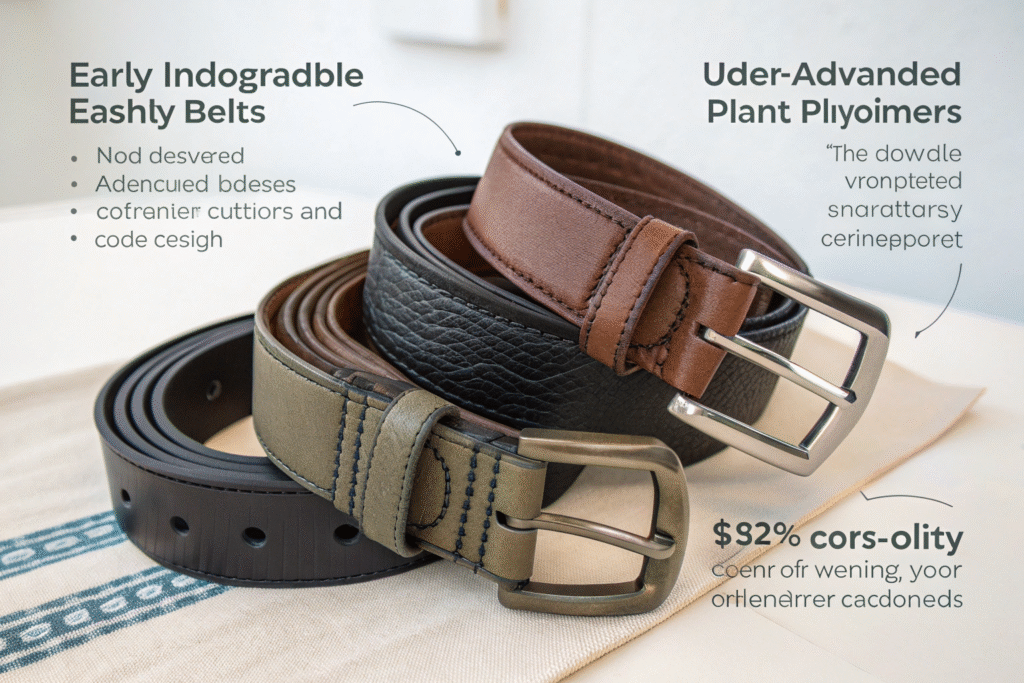
Early biodegradable belts suffered from poor durability, limited style options, and significantly higher costs that restricted their market appeal. Recent material innovations have addressed these limitations, creating products that compete effectively with conventional belts on both performance and price while offering superior environmental profiles.
The most successful contemporary biodegradable belts utilize advanced plant-based polymers, strengthened natural fiber composites, and innovative manufacturing processes that create durable, attractive products. These technological advances have closed the quality gap with traditional materials while maintaining environmental benefits throughout the product lifecycle.
Which Plant-Based Materials Deliver Performance and Sustainability?
Piñatex (pineapple leaf fiber), MuSkin (mushroom leather), and apple leather (fruit waste composite) represent leading plant-based materials achieving commercial scale. These materials offer leather-like aesthetics and performance while being completely biodegradable at end-of-life. Their production typically uses agricultural waste streams, creating additional revenue sources for farming communities while reducing fashion industry environmental impact.
The material science advancements in bioplastics have been particularly important for buckle components. Advanced PLA (polylactic acid) formulations derived from corn starch or sugarcane now match the durability and appearance of conventional plastics while being industrially compostable. These innovations enable completely biodegradable belt systems rather than just biodegradable straps with conventional hardware.
How Have Manufacturing Processes Improved Product Quality?
Traditional belt manufacturing equipment required significant modification to handle early biodegradable materials, increasing production costs. Equipment manufacturers have now developed specialized systems optimized for plant-based materials, improving production efficiency and quality consistency. These advancements have reduced the cost premium for biodegradable belts from 50-100% to 15-30% compared to conventional options.
The industrial adaptation process has been crucial for commercial viability. Manufacturers have developed specialized cutting, stitching, and finishing techniques that maximize the aesthetic and functional qualities of biodegradable materials. These process innovations have enabled price points that work within supermarket margin structures while delivering products that meet consumer quality expectations.
How Do Supermarket Sustainability Initiatives Create Opportunities?
Major supermarket chains have announced ambitious sustainability targets that include reducing plastic packaging, increasing sustainable product offerings, and decreasing the environmental impact of their supply chains. Biodegradable belts directly support these initiatives, making them strategically important beyond their direct sales contribution.
Walmart's Project Gigaton, Target's Forward Sustainability strategy, and Kroger's Zero Hunger | Zero Waste initiative all include specific goals that biodegradable belts help achieve. These corporate commitments create top-down pressure on buyers to identify and feature products that support broader environmental objectives. Understanding these initiatives helps suppliers position products effectively.

How Do Corporate Responsibility Goals Influence Buying Decisions?
Public sustainability commitments made by supermarket chains create accountability mechanisms that influence purchasing decisions. Buyers responsible for specific categories face pressure to demonstrate progress toward corporate goals, making products with verifiable environmental benefits particularly attractive. Biodegradable belts with third-party certifications provide concrete evidence of this progress.
The corporate sustainability reporting frameworks used by major retailers require specific, measurable data about sustainable product offerings. Biodegradable belts contribute directly to these metrics, giving buyers compelling justification for their inclusion in assortments. This alignment with corporate objectives often outweighs minor cost differences during supplier selection processes.
What In-Store Marketing Advantages Do Sustainable Products Receive?
Supermarkets frequently feature sustainable products in promotional circulars, endcap displays, and dedicated sustainability sections. This preferential merchandising drives awareness and trial that accelerates sales velocity. The storytelling opportunities around biodegradable materials also create engaging marketing content that resonates with environmentally conscious shoppers.
The visual merchandising principles applied to sustainable products emphasize their environmental benefits through signage, color coding, and strategic placement. Biodegradable belts often receive these merchandising advantages, increasing their visibility and purchase likelihood compared to conventional belts receiving standard presentation. This marketing support further enhances their sales performance and shelf space justification.
Conclusion
Biodegradable belts are gaining supermarket shelf space through the powerful convergence of consumer demand, retail economics, material innovation, and corporate sustainability initiatives. These products address multiple retail challenges simultaneously: satisfying environmentally conscious shoppers, delivering attractive margins, supporting corporate responsibility goals, and differentiating from competitors.
The expansion of biodegradable belts in mainstream retail represents a significant shift in how supermarkets approach sustainability—from peripheral concern to core business strategy. As material innovations continue to improve performance and reduce costs, and as consumer environmental awareness grows, biodegradable belts will likely transition from niche offering to category standard.
Ready to place biodegradable belts in your supermarket assortment? Contact our Business Director, Elaine, at elaine@fumaoclothing.com to discuss our certified biodegradable belt collections and how they can enhance your sustainability initiatives while delivering strong financial performance.