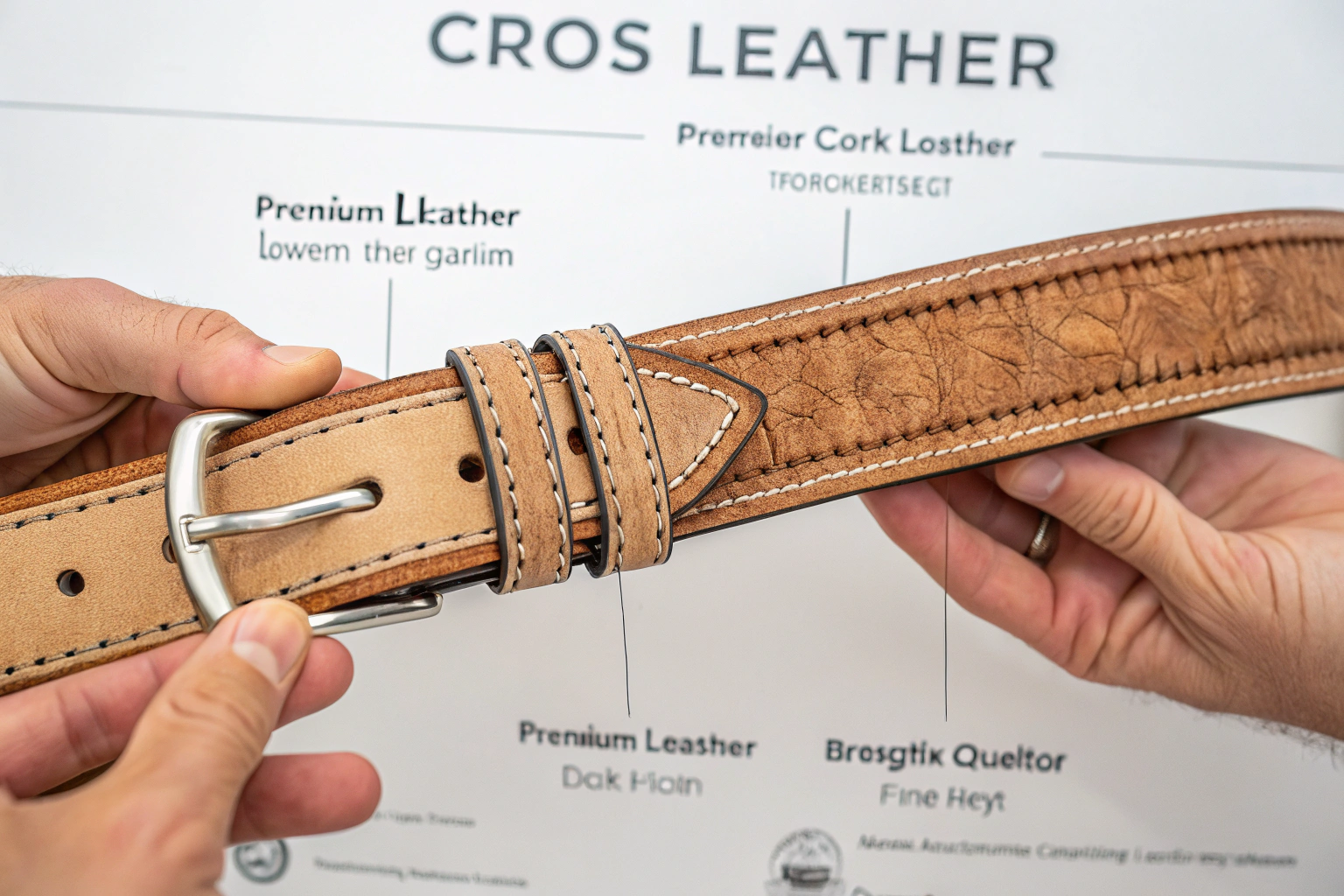
Do your leather belts develop stains and odors from sweat? This common problem ruins expensive accessories and forces frequent replacements. Customers complain about belt deterioration, leading to returns and brand damage.
Cork-lined leather belts are scientifically superior for sweat control because cork is naturally moisture-wicking, antimicrobial, and breathable. Unlike standard leather belts that trap moisture against your skin, cork lining actively pulls sweat away from the body and allows it to evaporate. This preserves both the leather and the wearer's comfort throughout the day.
This innovative combination of natural materials solves the persistent problem of belt sweat damage. We'll explore the science behind cork's unique properties, compare it to other lining materials, and explain why this solution benefits both consumers and retailers.
What Natural Properties Make Cork Ideal for Belt Linings?
Cork isn't just for wine bottles - it's a technological marvel of natural engineering. The material's cellular structure gives it unique advantages that synthetic linings can't match. These inherent qualities make it perfect for contact with skin, especially in warm conditions or during physical activity.
Cork's honeycomb structure contains millions of air-filled cells that naturally wick moisture away from the skin. Each cubic centimeter contains approximately 40 million cells, creating a microscopic ventilation system. This structure allows cork to absorb and release moisture without deteriorating, unlike leather which can become waterlogged and deformed.

How Does Cork's Cellular Structure Manage Moisture?
Cork consists of suberin cells arranged in a honeycomb pattern, creating natural channels for air and moisture movement. When sweat comes into contact with cork lining, the material immediately begins transporting it away from the skin through capillary action. This process happens continuously, keeping the wearing surface noticeably drier throughout the day.
The moisture-wicking capability of cork far exceeds standard leather linings. While leather might absorb moisture and retain it, cork actively moves moisture toward the outer edges where it can evaporate. This fundamental difference in moisture management technology explains why cork-lined belts remain comfortable hours longer than conventional options, making them ideal for professionals who need to maintain appearance and comfort all day.
What Makes Cork Naturally Resistant to Microorganisms?
Cork contains suberin, a waxy substance that naturally repels mold, mildew, and bacteria. This compound makes the material inherently antimicrobial without requiring chemical treatments. The absence of moisture retention further discourages microbial growth, as most odor-causing bacteria require damp environments to thrive.
Independent laboratory tests demonstrate cork's natural resistance to common microorganisms like Staphylococcus aureus and Escherichia coli. This antimicrobial property significantly reduces odor development compared to synthetic linings that often require silver-based or chemical antimicrobial treatments. For consumers with sensitive skin or allergies, cork provides protection without potential irritants found in treated fabrics.
How Does Cork Compare to Other Common Lining Materials?
Understanding the competitive landscape helps justify cork's premium positioning. While other materials claim sweat resistance, each has significant drawbacks that cork lining effectively addresses. The comparison becomes particularly striking when examining long-term performance and user comfort.
Synthetic linings like polyester or nylon often feel clammy against the skin and lack breathability. Genuine leather linings, while premium, absorb moisture and can stiffen over time. Cotton linings wear thin quickly and lose their moisture-wicking properties. Cork maintains its performance characteristics throughout the product's lifespan.
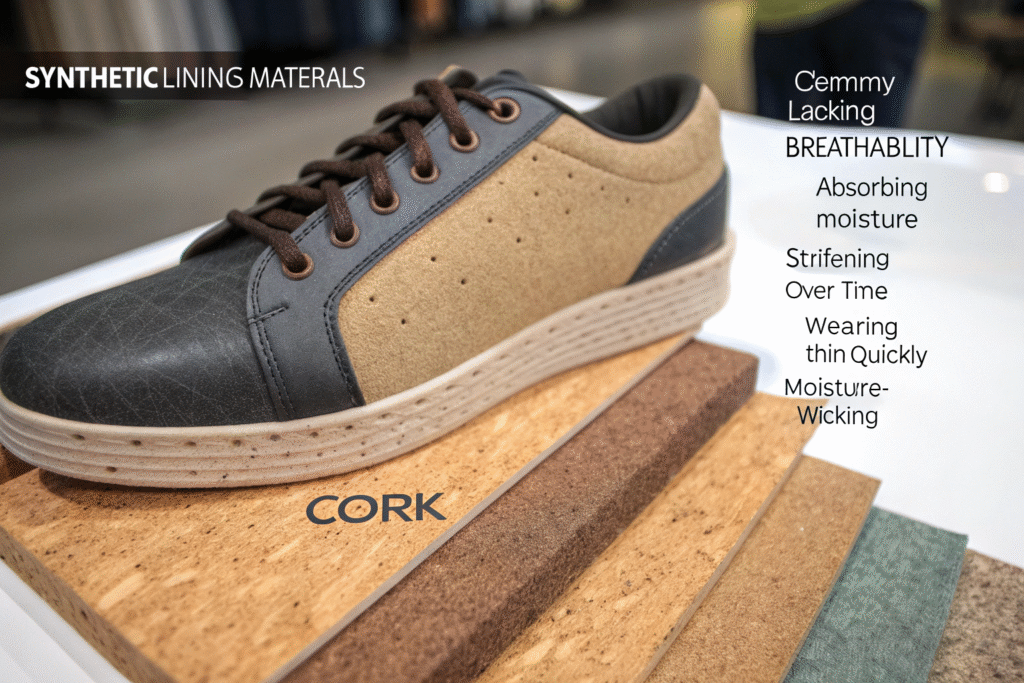
Why Choose Cork Over Synthetic Moisture-Wicking Fabrics?
Synthetic moisture-wicking fabrics rely on chemical treatments and specialized weaving patterns to move moisture. However, these treatments wash out over time, and the fabrics typically lack cork's natural breathability. Cork maintains its moisture-wicking properties indefinitely since they're inherent to the material's structure, not applied coatings.
The environmental comparison is equally important. Cork is harvested sustainably from cork oak trees without damaging them, while synthetic linings derive from petroleum products. This sustainable material sourcing appeals to environmentally conscious consumers. Additionally, cork's natural appearance and texture convey quality that synthetic linings struggle to match, supporting premium pricing and brand positioning.
How Does Cork Outperform Standard Leather Linings?
While both materials are natural, cork and leather handle moisture completely differently. Leather acts like a sponge, absorbing moisture that can lead to staining, shape distortion, and salt damage from sweat. Cork repels moisture while directing it away from the leather shell, protecting the belt's structural integrity and appearance.
The durability difference is significant. Moisture-compromised leather becomes brittle and may crack, while cork maintains flexibility and resilience even with repeated moisture exposure. This protective function extends the belt's lifespan substantially, making cork-lined belts more cost-effective over time despite higher initial investment. For retailers, this means fewer returns and higher customer satisfaction.
What Are the Practical Benefits for Consumers and Retailers?
Beyond technical specifications, cork-lined belts deliver tangible advantages that drive purchasing decisions and build brand loyalty. These benefits span immediate comfort, long-term value, and retail performance metrics that matter to business buyers.
Consumers experience immediate comfort improvement, particularly in warm climates or during extended wear. The reduction in skin irritation and odor development makes these belts suitable for travel, outdoor events, and professional settings where appearance matters. The natural aesthetic appeals to consumers seeking authentic, eco-friendly materials in their accessories.
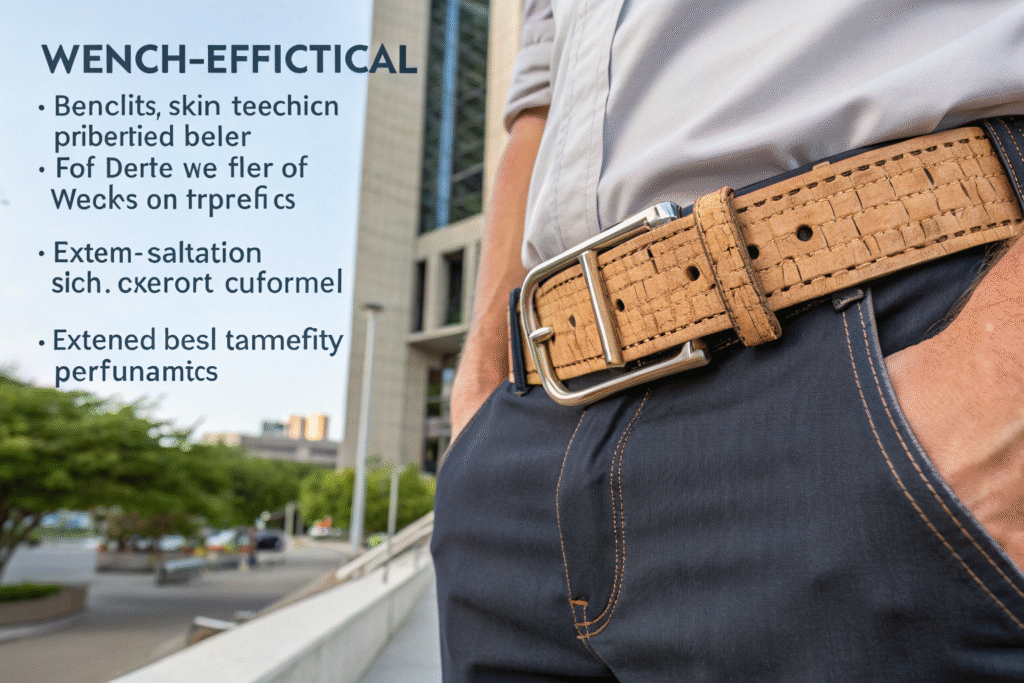
How Does Cork Lining Extend Belt Lifespan?
By preventing moisture absorption into the leather shell, cork lining protects against multiple failure points. The outer leather maintains its original shape and flexibility since it isn't subjected to repeated wet-dry cycles that cause cracking and distortion. Stitching remains secure because the leather edges don't become brittle from moisture exposure.
The protective barrier significantly reduces salt stain formation from sweat, which typically ruins leather belts prematurely. This preservation of materials means cork-lined belts maintain their appearance years longer than conventional options. For retailers, this translates to higher customer satisfaction, repeat purchases, and reduced warranty claims - all crucial metrics for successful accessory collections.
Why Do Cork-Lined Belts Command Premium Pricing?
The natural scarcity of quality cork and specialized manufacturing process justify higher price points. Cork harvesting is labor-intensive, requiring skilled workers to carefully strip bark from cork oak trees without damaging them. The lining process demands precise cutting and attachment methods different from standard belt production.
Consumer perception aligns with the premium nature of innovative materials. Market data shows willingness to pay 20-30% more for genuine performance benefits in accessories. This value proposition is particularly strong in the growing segment of consumers seeking natural alternatives to synthetic products. For retailers, the higher margin potential combined with unique market positioning makes cork-lined belts a strategically valuable addition to their offerings.
How is Manufacturing Cork-Lined Belts Different?
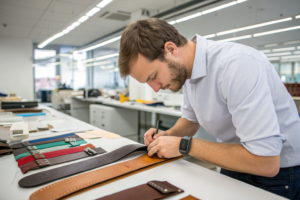
Producing quality cork-lined belts requires specialized expertise and equipment beyond standard belt manufacturing. The process demands careful material handling, specific adhesives, and quality control measures unique to working with cork substrates.
The cork must be precisely sliced to consistent thickness while maintaining its natural grain pattern. Bonding cork to leather requires flexible adhesives that accommodate both materials' natural movement while creating a permanent bond. Edge finishing becomes more complex with the additional layer, requiring precise sanding and staining techniques.
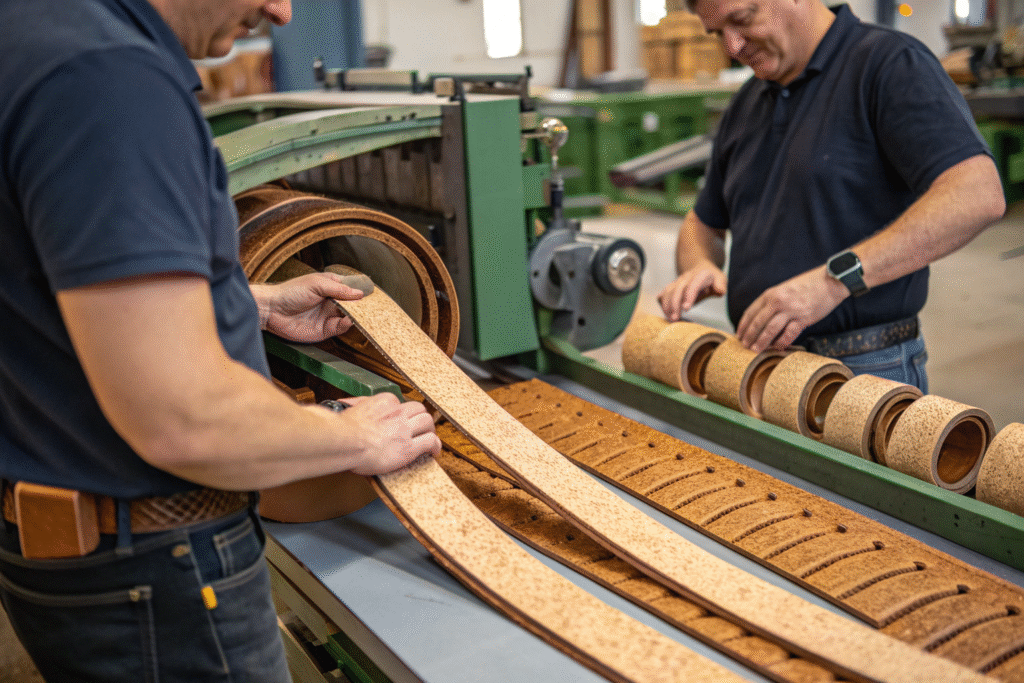
What Technical Challenges Does Cork Present in Production?
Cork's natural variability requires careful sorting and grading to ensure consistent performance. Unlike synthetic materials with uniform properties, each cork sheet has unique grain patterns and density variations. Production teams must account for these natural variations while maintaining quality standards across production runs.
The bonding process demands specific environmental conditions and adhesive formulations. Standard leather glues can stain cork or create rigid bonds that crack with flexing. We've developed specialized adhesive application techniques that maintain the flexibility of both materials while ensuring permanent attachment. This expertise comes from years of specialized production experience that few belt manufacturers possess.
How Does Quality Control Differ for Cork-Lined Products?
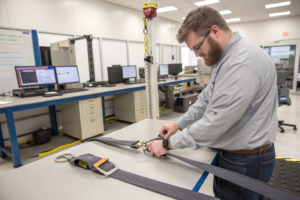
Additional inspection points focus on the cork-leather interface and edge treatment integrity. Each belt undergoes flex testing to ensure the bond remains secure through normal wearing movements. Moisture resistance testing verifies that the cork lining performs to specifications before products ship to customers.
We implement more rigorous raw material inspection for cork than standard lining materials. Each cork sheet is examined for consistent thickness, surface quality, and structural integrity before cutting. This quality assurance process ensures every cork-lined belt meets our performance standards and delivers the sweat control benefits customers expect from premium accessories.
Conclusion
Cork-lined leather belts represent a significant advancement in accessory functionality, combining natural materials science with practical everyday benefits. The superior sweat control, odor resistance, and leather protection qualities make them an intelligent choice for consumers and a valuable addition for retailers seeking differentiated products.
The combination of performance benefits and sustainable sourcing creates a compelling product story that resonates with modern consumers. As awareness grows, cork-lined belts are positioned to become the new standard in quality leather accessories.
Ready to offer your customers the superior sweat control of cork-lined leather belts? Contact our Business Director, Elaine, at elaine@fumaoclothing.com to discuss incorporating this innovative technology into your belt collection.