Workplace safety has evolved significantly beyond basic protective equipment to encompass comprehensive visibility solutions that protect workers in low-light conditions. Among these innovations, glow-in-dark belts have emerged as particularly valuable safety components that bridge the gap between mandatory protection and practical wearability. These specialized belts address critical visibility challenges while maintaining the functionality and comfort workers need.
Glow-in-dark belts are crucial for safety apparel because they provide continuous 360-degree visibility without requiring external light sources, maintain effectiveness during power failures or equipment malfunctions, and integrate seamlessly with existing safety gear while ensuring worker compliance through comfort and convenience.
The importance of these illumination solutions extends beyond simple visibility to encompass psychological safety, emergency response capability, and regulatory compliance in increasingly stringent workplace safety environments. Understanding their full value requires examining both their technical capabilities and their practical implementation.
What Technical Properties Make Photoluminescent Belts Effective?
The effectiveness of glow-in-dark belts in safety applications depends on specific technical properties that determine their luminosity, duration, and reliability. Modern photoluminescent technology has advanced significantly from earlier glow-in-dark products that offered limited duration and faint illumination.
Today's safety belts utilize sophisticated phosphorescent compounds that absorb and store light energy, then release it gradually as visible light. This process creates sustained visibility without external power sources, making them exceptionally reliable for safety applications.

How do photoluminescent materials achieve long-lasting glow?
Advanced photoluminescent belts incorporate several technical innovations:
- Strontium aluminate pigments that provide 10-15 times brighter and longer-lasting glow compared to traditional zinc sulfide formulations
- Charging efficiency allowing brief exposure to natural or artificial light (15-30 minutes) to provide 8-12 hours of usable illumination
- Weather resistance maintaining performance through rain, humidity, and temperature extremes from -20°C to 60°C
- Durability integration with belt materials to withstand abrasion, flexing, and cleaning without significant degradation of luminous properties
According to safety standards research, high-quality photoluminescent safety materials should maintain a luminance level of at least 7.0 mcd/m² after 60 minutes of darkness to meet international safety requirements. The best performing belts exceed this standard by 300-500% in their first hours of use.
What performance standards govern safety illumination?
Glow-in-dark belts for safety applications must meet specific regulatory requirements:
- ANSI/ISEA 107-2020 standards for high-visibility safety apparel classification and performance
- ISO 20471:2013 requirements for photoluminescent materials in protective clothing
- ASTM E2072 standard specification for photoluminescent safety markings
- OSHA 29 CFR 1910.132 requirements for personal protective equipment in hazardous environments
Compliance with these regulatory frameworks ensures the belts provide reliable protection that meets workplace safety obligations. Manufacturers typically provide independent certification documents verifying their products meet or exceed these critical standards.
How Do Glow-in-Dark Belts Enhance Workplace Safety?
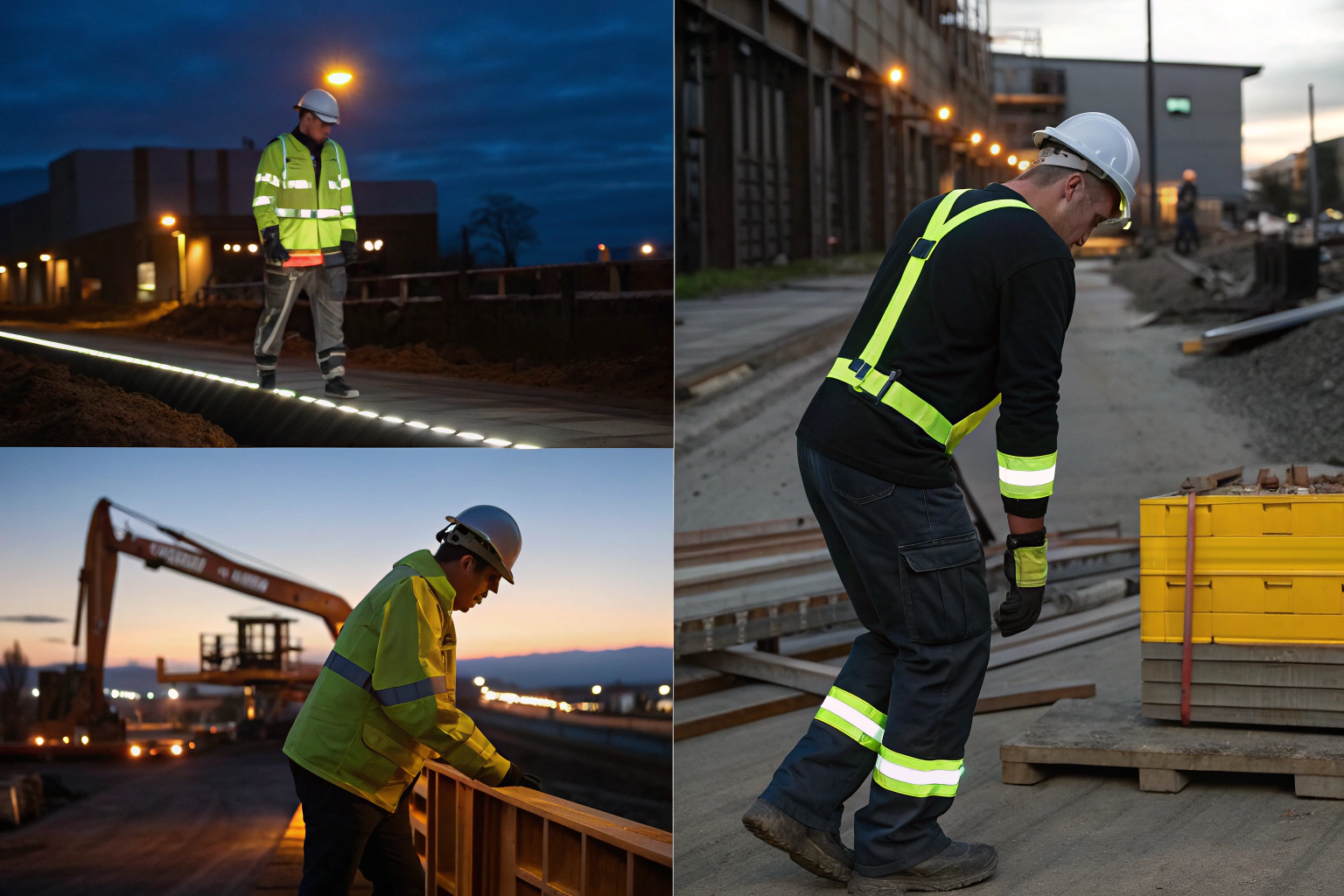
The safety benefits of photoluminescent belts extend far beyond simple visibility to encompass multiple aspects of worker protection and operational safety. Their strategic placement on the body's core makes them particularly effective for overall visibility and identification.
The waist-level positioning creates a highly visible reference point that helps others judge distance and movement direction, while the continuous circumferential glow provides visibility from all angles—a crucial advantage over front-only reflective materials.

What specific hazards do photoluminescent belts address?
Glow-in-dark belts mitigate numerous workplace dangers:
- Vehicle interaction risks in warehouses, airports, and road work zones where equipment operators need clear worker visibility
- Low-light evacuation scenarios providing guidance when emergency lighting fails or is insufficient
- Worker location identification enabling quick accounting of all personnel during emergencies
- Motion detection helping equipment operators detect worker movement in peripheral vision
- Trip and fall prevention marking pathways and hazard zones in limited visibility conditions
Studies by the National Institute for Occupational Safety and Health indicate that high-visibility interventions like photolumescent belts can reduce struck-by incidents by 45-60% in low-light conditions. The constant illumination without power requirements makes them particularly valuable during power outages or equipment failures.
How does 360-degree visibility improve safety outcomes?
The circumferential illumination provides unique safety advantages:
- Approach direction clarity allowing others to understand which way a worker is facing
- Consistent identification regardless of viewing angle or worker orientation
- Group movement tracking making coordinated team movements safer in limited visibility
- Peripheral vision activation triggering earlier awareness in observers' visual fields
- Emergency response facilitation helping rescuers locate and assess workers quickly
This comprehensive visibility is particularly valuable in complex work environments where workers frequently change direction and interact with moving equipment from multiple angles. The always-on nature of photoluminescent belts ensures protection is continuous rather than dependent on specific positioning relative to light sources.
What Integration Capabilities Enhance Practical Utility?
The effectiveness of safety solutions depends heavily on their integration with existing equipment and work practices. Glow-in-dark belts excel in this regard by complementing rather than replacing existing safety gear while adding minimal bulk or complexity to workers' ensembles.
Successful integration encompasses physical compatibility, practical functionality, and psychological acceptance by workers who must wear the equipment consistently for it to provide protection.
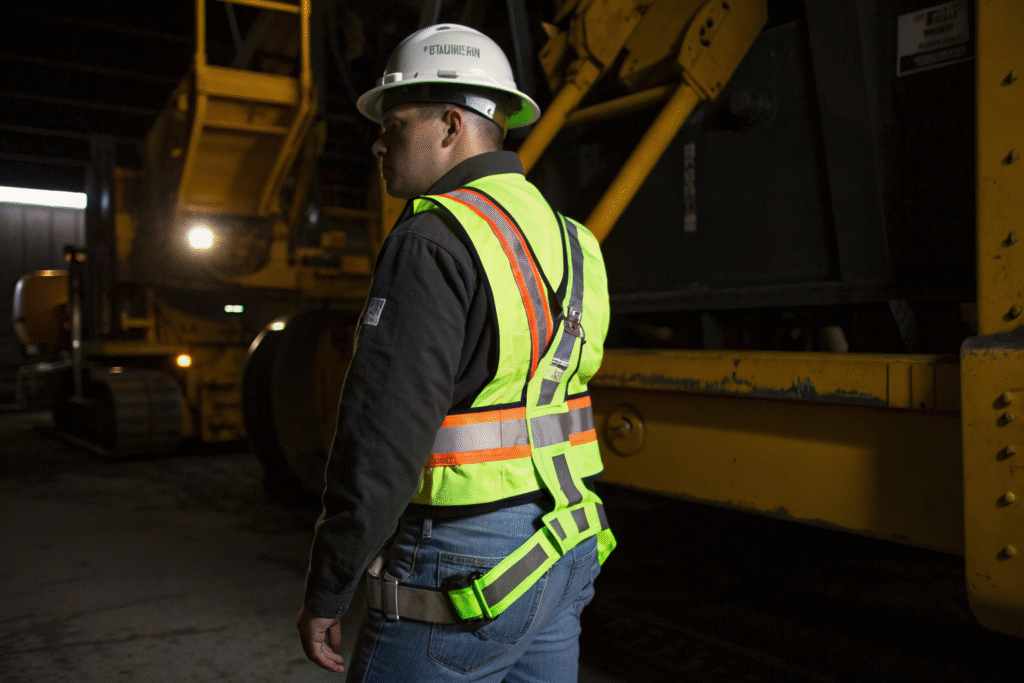
How do glow-in-dark belts work with existing safety equipment?
Photoluminescent belts enhance overall safety systems through:
- Tool belt compatibility designed to integrate with existing pouches, holsters, and equipment carriers
- Harness integration compatible with fall protection systems without compromising safety ratings
- Layering capability functioning effectively over or under other protective garments
- Radio and equipment attachment providing secure points for essential communication gear
- Reflective material enhancement working synergistically with existing reflective strips rather than replacing them
This compatibility ensures the belts complement comprehensive safety programs rather than creating additional complexity. Workers are more likely to adopt safety solutions that integrate seamlessly with their existing tools and workflows.
What design features ensure worker compliance?
Comfort and practicality significantly influence safety equipment usage:
- Adjustable sizing accommodating various body types and seasonal clothing changes
- Breathable materials preventing overheating during physical work
- Quick-release mechanisms allowing rapid removal if caught on equipment
- Moisture management maintaining comfort during extended wear in various conditions
- Durability withstanding rough treatment and industrial cleaning processes
These practical considerations are crucial because safety equipment only protects when worn, and uncomfortable gear often gets discarded despite its protective value. The best designs balance safety performance with all-day wearability.
How Do Photoluminescent Belts Support Emergency Preparedness?
Beyond daily protection, glow-in-dark belts provide critical capabilities during emergency situations when conventional safety systems may fail. Their passive operation makes them exceptionally reliable when power systems, lighting, or other active safety mechanisms become compromised.
The emergency value extends beyond individual protection to encompass group safety, wayfinding, and coordination when standard communication channels may be disrupted.
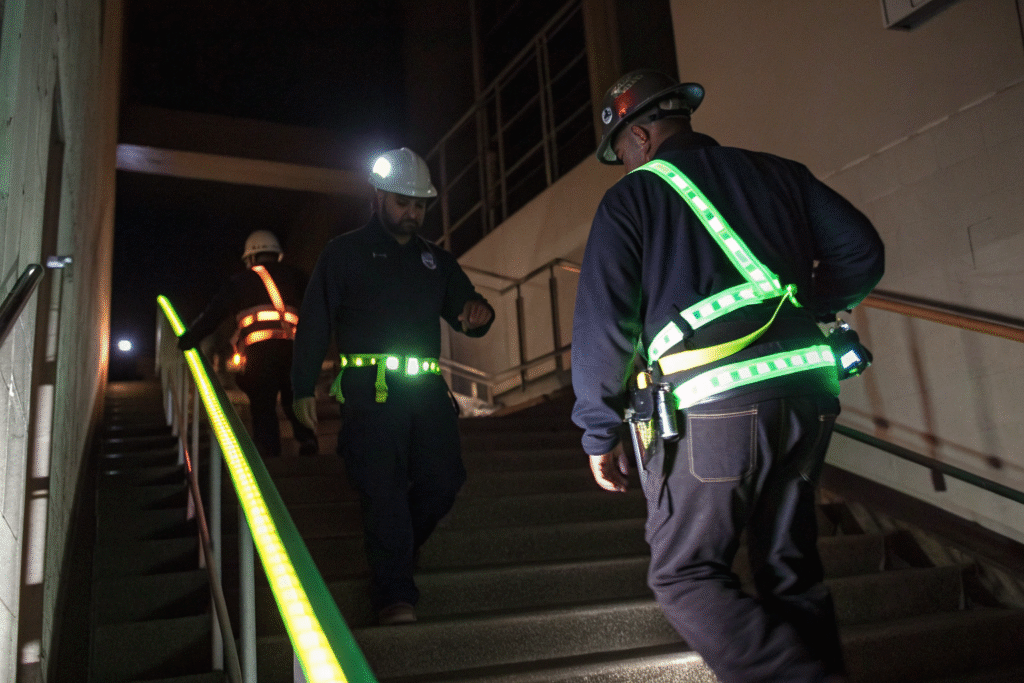
What emergency scenarios benefit from photoluminescent belts?
Several critical situations demonstrate their emergency value:
- Power outage response providing immediate visibility without waiting for emergency lighting or generator activation
- Evacuation guidance creating visible pathways and assembly point markers in smoke or darkness
- Rescue operations helping emergency responders quickly locate and assess individuals
- Communication backup enabling basic visual signals when verbal communication is impossible
- Team coordination allowing workers to maintain visual contact when separated in low visibility
According to emergency preparedness research, passive safety systems like photoluminescent markers reduce evacuation times by 25-40% in low-visibility conditions because they provide immediate orientation cues without activation delays.
How does the technology support emergency planning?
Photolumescent belts contribute to comprehensive emergency preparedness:
- No maintenance requirement ensuring reliability during extended storage
- Instant activation working immediately when needed without setup or power
- Predictable performance providing consistent illumination duration based on prior light exposure
- Group identification helping distinguish different teams or roles during complex emergencies
- Backup functionality operating when electronic safety systems fail due to power loss or damage
These characteristics make them valuable components of defense-in-depth safety strategies where multiple overlapping systems ensure protection even if individual components fail. Their simplicity and reliability provide assurance in unpredictable emergency scenarios.
Conclusion
Glow-in-dark belts represent a crucial advancement in safety apparel by providing reliable, continuous visibility without power requirements while integrating seamlessly with existing protective equipment. Their photoluminescent technology offers unique advantages in both daily safety and emergency response situations, addressing critical visibility challenges that conventional reflective materials cannot solve. For organizations committed to comprehensive worker protection, these belts provide a practical, effective solution that enhances safety outcomes while maintaining worker comfort and compliance.
If your safety program requires glow-in-dark belts that meet regulatory standards while providing practical comfort for workers, our factory specializes in photoluminescent safety products with proven performance in demanding environments. Contact our Business Director, Elaine, at elaine@fumaoclothing.com to discuss how we can help integrate glow-in-dark belts into your safety apparel program.