Imagine a winter hike where the metal buckle on your belt doesn't freeze to the touch, or a summer festival where your statement belt's clasp doesn't become uncomfortably hot. This isn't science fiction; it's the practical application of advanced material science in fashion accessories. The integration of graphene—a Nobel Prize-winning material—into belt buckle coatings is beginning to address a long-standing, if often unspoken, user discomfort: the extreme temperature transfer of metal. For buyers and brands in the outdoor, luxury, and tech-fashion spaces, this represents a frontier in functional differentiation that goes beyond aesthetics.
Graphene-coated buckles regulate temperature because graphene is an extraordinary thermal conductor. It doesn't generate heat or cold but rapidly equalizes its temperature with the surrounding environment and distributes it evenly across its surface. This prevents the buckle from feeling drastically colder than ambient air in winter or absorbing and concentrating heat in summer, creating a more comfortable and consistent user experience.
This innovation moves the buckle from a passive fastener to an active comfort component. It’s a subtle but profound upgrade, aligning with the growing demand for performance-integrated apparel and accessories. Let's explore the science and sourcing implications behind this smart application of nanotechnology.
What is graphene and how does its thermal conductivity work?
To understand why graphene is revolutionary for temperature regulation, we must first demystify the material itself. Often hailed as a "wonder material," graphene is a single layer of carbon atoms arranged in a two-dimensional hexagonal lattice. This simple yet profound structure gives it a unique set of properties that are now being harnessed beyond laboratories.
Graphene is the world's best conductor of heat. Its thermal conductivity works at the atomic level: the strong covalent bonds between carbon atoms and the free-flowing π-electrons in its structure allow phonons (heat-carrying particles) to travel with extremely low resistance. When applied as a coating to a metal buckle, this property enables graphene to quickly absorb, dissipate, or distribute thermal energy, preventing localized hot or cold spots.
Unlike a heating element or a phase-change material, graphene itself doesn't store thermal energy. It acts as a superhighway for heat transfer, effectively buffering the wearer from the metal's natural tendency to rapidly reach thermal equilibrium with its environment (e.g., becoming ice-cold in winter).

How does graphene coating compare to traditional metal temperature behavior?
Traditional metal buckles, whether stainless steel, brass, or zinc alloy, have high thermal conductivity but lack the nuanced distribution capability of graphene. Their behavior is straightforward: they quickly assume the temperature of their environment. A cowboy belt buckle left in a cold car will feel painfully cold immediately upon touch because the metal rapidly draws heat from your skin.
A graphene-enhanced coating alters this interaction. Due to graphene's two-dimensional structure and its even distribution of thermal energy, the surface temperature of the coated buckle will moderate faster. It will feel closer to ambient temperature upon initial touch and will not "pull" heat from the skin as aggressively. In summer, it will dissipate absorbed sunlight heat more evenly, avoiding a scalding-hot focal point. This creates a more forgiving, comfortable interaction, which is a significant upgrade for everyday belt wear and critical for outdoor adventure belts.
Is the graphene coating durable on wearable accessories?
This is the crucial question for manufacturers and buyers. Pure graphene is a nanomaterial, so it is applied as part of a composite coating—bonded with polymers or resins—to create a durable, wearable finish. The durability depends entirely on the application method.
Advanced techniques like chemical vapor deposition (CVD) or optimized spray coating followed by curing create a layer that is highly resistant to scratching, corrosion, and wear. A high-quality graphene coating should pass standard abrasion tests (like the Martindale test) and adhesion tests relevant to hardware accessories. It should not flake or discolor with normal use. When sourcing, demand test reports for coating longevity and ensure the finish aligns with the product's intended use—a fashion belt may have different requirements than a tactical belt.
Why is this technology relevant for outdoor and performance belts?
The value proposition of temperature regulation is most acute in environments where users face extreme temperatures. For outdoor enthusiasts, athletes, and workers in field conditions, comfort and functionality are paramount, and every piece of gear is evaluated for its performance contribution.
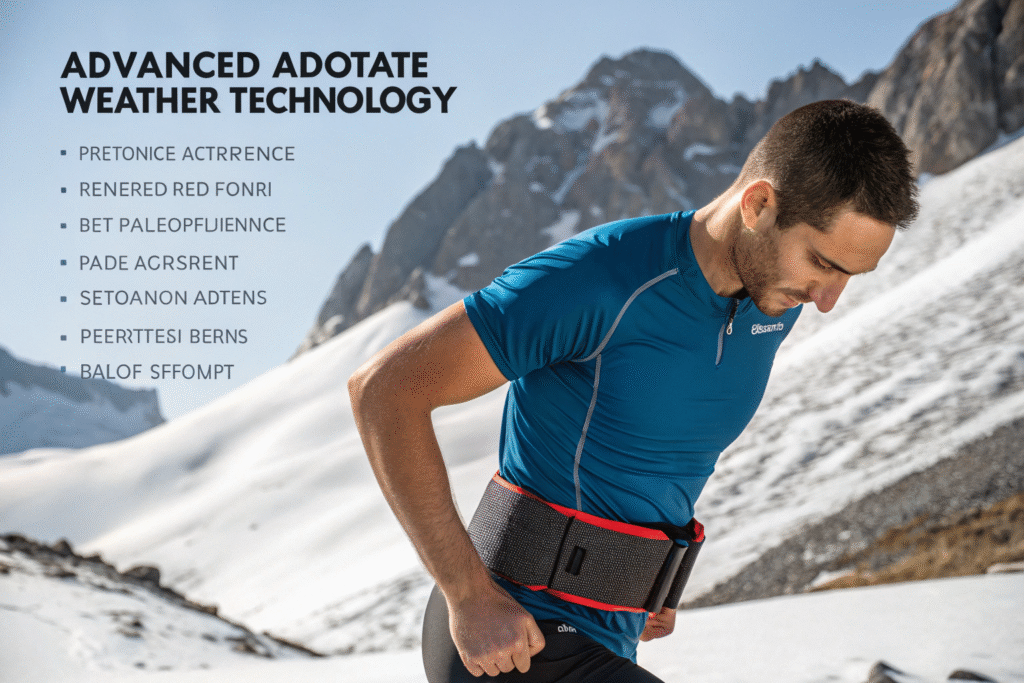
This technology is critically relevant for outdoor and performance belts because it directly enhances user comfort and safety in extreme environments. It prevents cold metal from causing skin discomfort or even frostbite in sub-zero conditions, and reduces the risk of heat burns from buckles exposed to direct sun. This allows the wearer to focus on their activity without distraction from their gear, a key tenet of performance design.
It represents a move from "weather-resistant" to "weather-adaptive" accessories. For brands, it provides a tangible, technologically advanced feature to market, moving beyond subjective style claims to objective performance benefits.
Can it prevent frostbite or burns in extreme environments?
While not a standalone solution for preventing medical emergencies, it is a meaningful preventive layer. Frostbite requires prolonged exposure to cold. A traditional metal buckle can instantly drop to temperatures far below freezing and maintain that cold, creating a direct, concentrated point of heat loss on the body (often on the abdomen, a core area).
A graphene-coated buckle will moderate this temperature differential. It will still get cold, but it will feel less extreme on contact and will equalize heat from the body and surrounding clothing more effectively, reducing the risk of localized cold injury. Similarly, for burns, a dark metal buckle in direct desert sun can exceed 150°F (65°C). The graphene coating helps dissipate that heat across the entire buckle surface and into the air more rapidly, lowering the peak surface temperature upon contact. This aligns with the broader safety gear principle of reducing foreseeable hazards.
How does it integrate with other performance materials like MOLLE webbing?
The true power of innovation is in synergy. A graphene-coated buckle is most effective when integrated into a holistically designed performance system. For example, on a belt using MOLLE webbing or high-strength nylon, the buckle's temperature regulation complements the webbing's durability and modularity.
Consider a tactical or hiking belt: the user may be wearing it over layers in variable conditions. A comfortable, temperature-regulated buckle eliminates a point of failure in the comfort equation. The buckle works in concert with wicking linings, waterproof treatments on the webbing, and ergonomic padding. Sourcing from a manufacturer that understands this systems-based approach to product development ensures the graphene feature isn't a gimmick but a coherent part of a high-performance product.
What should buyers look for when sourcing graphene-coated hardware?
Sourcing this advanced component requires a shift from commodity purchasing to technical partnership. Not all "graphene" claims are equal, and verification is key. Buyers must become educated on the specifications and proofs required to ensure they are getting a genuine, functional product.
Buyers should look for: 1) Technical Data Sheets specifying the graphene concentration and coating thickness, 2) Independent lab reports verifying thermal conductivity improvement compared to an uncoated sample, 3) Durability and adhesion test results, 4) Compliance certificates (e.g., REACH, RoHS for coatings), and 5) Samples for real-world feel and performance testing.
The goal is to move from a marketing claim ("contains graphene") to a measurable performance specification ("coating improves surface temperature moderation by X% under Y conditions"). This protects your investment and your brand's credibility.

How to verify the authenticity and concentration of the graphene coating?
"Greenwashing" with minimal graphene content is a risk. Verification starts with supplier transparency. Reputable suppliers will provide:
- Raman Spectroscopy Reports: This is a key test that produces a fingerprint of the material, confirming the presence of graphene's characteristic signature peaks and assessing layer quality.
- SEM/TEM Imagery: Scanning or Transmission Electron Microscope images can visually show the graphene layers within the coating matrix.
- Coating Weight/Thickness Analysis: This quantifies how much functional material is actually being applied.
As a buyer, you do not need to be a scientist, but you should require this documentation from your supplier and, for large orders, consider third-party verification. Partnering with a factory that actively collaborates with nanomaterial research institutes or reputable chemical suppliers adds a layer of assurance to their development capacity.
What are the cost implications and minimum order quantities?
Incorporating advanced nanomaterials inevitably carries a cost premium. The price increase is not just for the raw material—which is becoming more affordable—but for the specialized application processes, quality control, and testing required.
Expect a cost increase of 15-30% for the buckle component compared to a standard high-quality metal buckle. Minimum Order Quantities (MOQs) may also be higher initially, as coating processes are often batch-based and require setup. However, as the technology scales, these barriers decrease. For brands, this cost should be framed as an investment in a demonstrably superior product that can command a higher price point and strengthen brand positioning as an innovator in functional fashion accessories.
Conclusion
Graphene-coated buckles regulating temperature is a compelling example of how cutting-edge material science can solve a simple, universal discomfort in wearable accessories. By leveraging graphene's superlative thermal conductivity, manufacturers can create hardware that feels more comfortable and performs more consistently across a wide range of environments. This is not just an incremental improvement; it's a redefinition of user expectations for how a fundamental component like a buckle should behave.
For forward-thinking brands and buyers, this technology offers a clear path to product differentiation in crowded markets like outdoor gear, premium fashion, and performance wear. The key to success lies in diligent sourcing—prioritizing verifiable technical specifications, durable application methods, and suppliers who understand the integration of tech into wearables. If you are looking to explore the integration of graphene or other advanced materials into your next belt line, partnering with an innovative manufacturer is crucial. For a technical consultation on developing temperature-regulated hardware, contact our Business Director, Elaine, at elaine@fumaoclothing.com. Let's build the next generation of smart accessories.