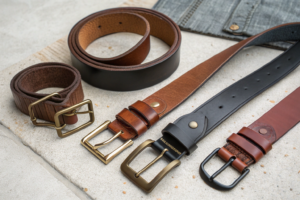
Workers and athletes face visibility challenges in low-light conditions every day. Whether it's construction crews working at dawn, cyclists commuting at dusk, or joggers exercising after dark, being seen can mean the difference between safety and serious injury. Traditional safety vests are effective but often bulky and impractical for continuous wear.
Light-reflective belts are essential for safety gear because they provide 360-degree visibility without restricting movement or comfort. Unlike solid safety vests that can be hot and restrictive, reflective belts offer targeted visibility at the body's core—where movement is most easily detected by drivers. This strategic positioning, combined with modern reflective technologies, makes them indispensable for anyone working or exercising near traffic or in low-light environments.
The global personal protective equipment market is projected to reach $92.3 billion by 2028, with high-visibility clothing representing the fastest-growing segment. Understanding why reflective belts deliver superior protection—and how to source them effectively—helps businesses provide better safety solutions for their teams and customers.
How Does Retroreflection Technology Work in Safety Belts?
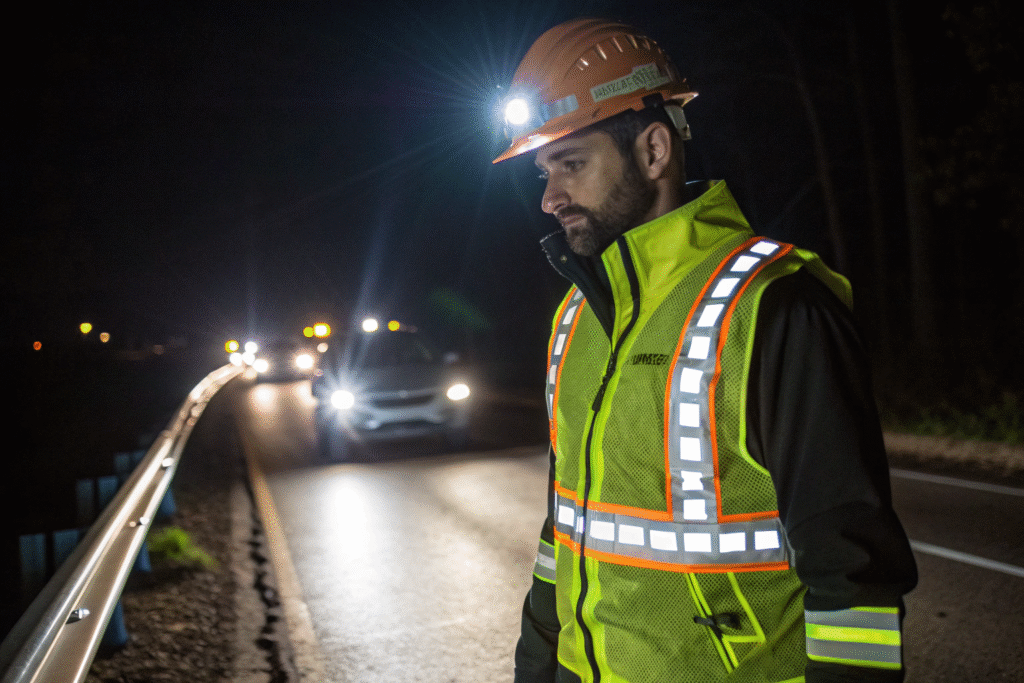
Retroreflection represents the scientific breakthrough that makes modern reflective safety gear possible. Unlike regular reflection that scatters light in all directions, retroreflection sends light directly back toward its source. This principle explains why reflective materials appear to "glow" when illuminated by headlights but seem ordinary in daylight.
The technology typically involves millions of microscopic glass beads or prismatic structures embedded in or applied to belt materials. When light hits these elements, it bounces through internal reflections and returns along the same path it came from. This creates the intense brightness that makes wearers visible from remarkable distances—up to 1,000 feet with vehicle high beams.
What Materials Create the Most Effective Reflective Surfaces?
Microprismatic sheeting delivers the highest reflectivity, making it ideal for professional safety applications. This material uses precisely engineered geometric patterns to achieve reflectivity levels up to 1,000 candelas per lux per square meter. Glass bead technology, while slightly less reflective, offers better flexibility and durability for curved belt surfaces.
The substrate material significantly impacts performance. PVC-backed reflective tapes provide excellent weather resistance but can stiffen in cold temperatures. Polyurethane-backed options maintain flexibility across temperature extremes while offering superior abrasion resistance. Understanding these material science principles helps evaluate supplier claims about reflective performance and durability.
How Do Certification Standards Verify Reflective Performance?
ANSI/ISEA 107 (American National Standards Institute) classifies high-visibility apparel into three performance levels based on the amount of reflective material and background fabric. For belts used alone, they typically qualify as supplemental equipment, while when combined with other high-visibility garments, they contribute to overall visibility.
The ISO 20471 standard provides international requirements for high-visibility clothing, including specific measurements for the width and placement of reflective materials. Reputable manufacturers test their reflective belts according to these standards and provide certification documentation. This verification is crucial for safety applications where performance cannot be compromised.
What Visibility Advantages Do Reflective Belts Provide?
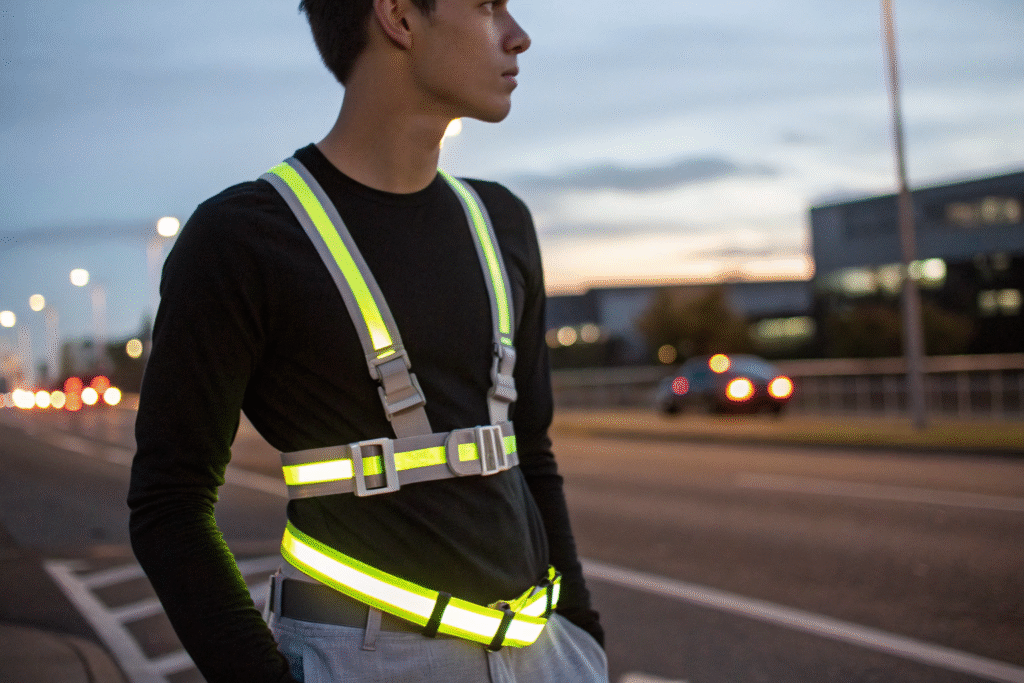
The strategic placement of reflective belts around the waist creates critical visibility advantages that other safety gear cannot match. The human torso's movement generates attention-catching motion that stationary reflectors lack. This dynamic visibility proves particularly effective at catching drivers' attention during the crucial moments when collision avoidance is still possible.
Research from the National Highway Traffic Safety Administration shows that pedestrians wearing reflective materials are detected 3-5 seconds earlier than those without reflectors at night. This additional detection time translates to approximately 300-500 feet at highway speeds—often the difference between a near-miss and a tragic accident.
How Does Waist-Level Positioning Enhance Detection?
The waist's central positioning on the human body creates a recognizable human silhouette when illuminated. Drivers' brains process this familiar shape more quickly than isolated points of light on extremities. The swinging motion of arms and legs relative to the stable waist position further enhances this recognizability.
Studies in human factors engineering demonstrate that observers identify human forms 40% faster when reflective elements appear at both the core and extremities. This explains why reflective belts work particularly well when combined with reflective wristbands or ankle straps, creating multiple reference points that the brain quickly assembles into a recognizable human form.
What Environmental Conditions Maximize Reflective Effectiveness?
Reflective belts prove most valuable during dawn, dusk, and nighttime hours when natural light is limited but vehicle traffic remains significant. They're particularly effective in rain, fog, or snow conditions where visual contrast is reduced and stopping distances increase dramatically.
Urban environments with complex lighting backgrounds represent another ideal application. The concentrated brightness of reflective materials cuts through the "visual noise" of streetlights, signs, and building illumination that can camouflage unmarked pedestrians. Understanding these environmental visibility factors helps position reflective belts as essential equipment rather than optional accessories.
How Do Reflective Belts Compare to Other Safety Options?
Reflective belts occupy a unique position in the personal protective equipment ecosystem. They complement rather than replace other safety gear, offering specific advantages that make them suitable for continuous wear where bulkier options would be impractical.
Compared to safety vests, reflective belts provide greater comfort and mobility while still delivering core visibility. They can be worn comfortably throughout a shift rather than just during high-risk activities. This continuous protection addresses the common compliance issue of workers removing bulky safety gear when supervisors aren't present.

What Are the Limitations of Alternative Visibility Solutions?
LED safety lights provide excellent visibility but depend on battery power and can fail at critical moments. Reflective materials require no power source and maintain their effectiveness indefinitely. Safety vests offer extensive coverage but can be hot, restrictive, and easily forgotten when moving between vehicles and work areas.
Fluorescent background materials (the colorful orange, yellow, or lime portions of safety gear) require ambient light to work effectively. In contrast, reflective elements create their own light through retroreflection, making them far more effective in truly dark conditions. Understanding these comparative advantages helps businesses select the right combination of safety equipment for specific working conditions.
How Do Reflective Belts Integrate with Existing Safety Programs?
Reflective belts serve as perfect introductory or supplemental safety equipment because they're inexpensive, comfortable, and easily adopted. Workers who resist wearing full safety vests often accept reflective belts as a reasonable compromise. This makes them valuable tools for gradually building a stronger safety culture.
The Hierarchy of Controls framework positions reflective belts as administrative and personal protective equipment controls that complement more fundamental safety measures. They work particularly well in situations where engineering controls (like better lighting) aren't feasible and where eliminating hazards entirely isn't possible.
What Manufacturing Standards Ensure Reliability?
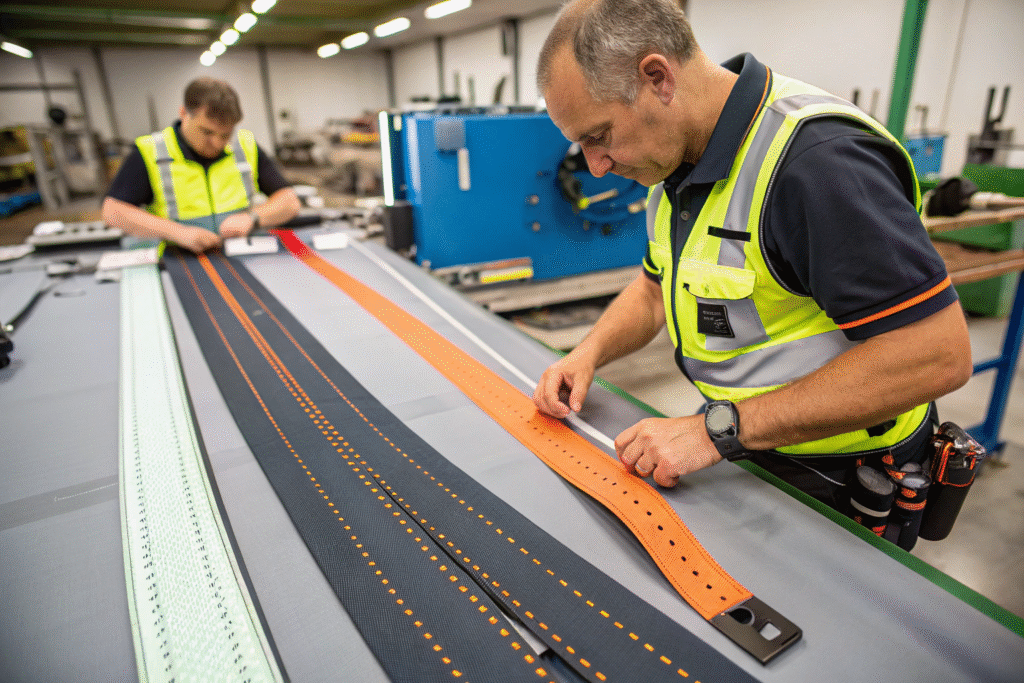
Not all reflective belts perform equally under real-world conditions. Manufacturing quality determines whether reflective materials maintain their effectiveness through cleaning, weathering, and flexing. Understanding production standards helps identify suppliers who deliver consistent performance rather than just initial reflectivity.
The bonding method between reflective materials and belt substrates significantly impacts durability. Sewn-on reflective tapes withstand repeated flexing but create needle holes that can admit moisture. Heat-activated adhesive bonding creates seamless protection but requires precise temperature control during application to prevent damaging the reflective elements.
What Testing Protocols Verify Long-Term Performance?
Accelerated weathering tests simulate years of sun exposure in weeks using specialized chambers that cycle through UV radiation, moisture, and temperature extremes. The ASTM G155 standard specifies methods for non-metallic materials, helping predict how reflective belts will perform after extended outdoor use.
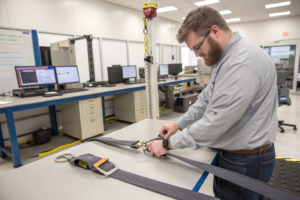
Abrasion resistance testing measures how well reflective surfaces withstand rubbing and wear. The Martindale test rubs materials against standard abradants until failure, with high-quality reflective belts typically surviving 50,000+ cycles. Flex testing repeatedly bends belts to simulate the stress of normal wear, ensuring reflective materials won't crack or delaminate during use.
How Does Quality Control Maintain Consistent Safety Performance?
Batch testing of incoming reflective materials ensures consistency before production begins. Spectrophotometers measure the color consistency of fluorescent background materials, while retroreflectometers quantitatively measure reflective performance against established standards.
During production, inspection protocols verify proper alignment, complete bonding, and absence of defects. Final audit testing randomly selects finished belts for performance verification before shipment. These quality assurance processes separate professional safety equipment manufacturers from fashion accessory producers making similar-looking but less reliable products.
Conclusion
Light-reflective belts deliver essential visibility protection through sophisticated retroreflection technology, strategic positioning, and reliable manufacturing. They fill a critical gap in personal protective equipment by providing continuous, comfortable visibility enhancement where bulkier alternatives would be impractical.
The evidence clearly demonstrates that reflective belts save lives by dramatically improving detection distances and recognition times. Their relatively low cost and high comfort drive better compliance than many alternative safety solutions. As workforce mobility increases and more people exercise during low-light hours, reflective belts represent one of the most cost-effective safety investments available.
Ready to incorporate light-reflective belts into your safety gear offerings? Contact our Business Director, Elaine, at elaine@fumaoclothing.com to discuss our certified reflective belt manufacturing capabilities and how we can help protect your team or customers through enhanced visibility.