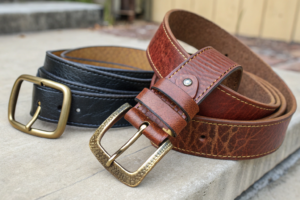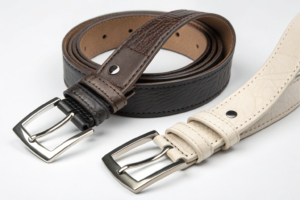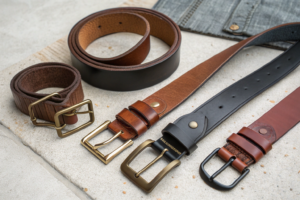
You're trying to help an elderly relative with arthritis get dressed. Their fingers fumble with a traditional belt buckle, frustration mounting with each failed attempt. Or perhaps you're a occupational therapist working with a stroke survivor who has use of only one hand. The simple act of fastening a belt becomes an impossible challenge. This daily struggle is why magnetic closure belts are transforming adaptive clothing from a niche category into an essential solution.
Magnetic closure belts are essential for adaptive clothing because they eliminate the fine motor skills, bilateral coordination, and strength requirements of traditional buckles. They provide independence, dignity, and safety for people with arthritis, Parkinson's disease, stroke recovery, mobility limitations, and developmental disabilities. These innovative closures represent a fundamental shift from clothing that disables to clothing that enables.
This guide will explore the transformative impact of magnetic closure belts in adaptive wear. We'll examine how they restore dressing independence, why their safety features are crucial for vulnerable users, how they accommodate various physical limitations, and why their psychological benefits are as important as their physical ones.
How Do Magnetic Closures Restore Dressing Independence?
Traditional belt buckles require precise pincer grasp, bilateral hand coordination, and the strength to push a prong through stiff leather. For millions of people with conditions like arthritis, Parkinson's, or post-stroke weakness, these actions range from difficult to impossible. The result is dependence on caregivers for a basic daily activity.
Magnetic closure belts operate on a simple principle: bring two magnetic ends close together, and they fasten automatically. This eliminates the need for precise alignment, finger strength, or coordinated two-handed action. The user experience shifts from struggle to seamless operation, restoring control over a fundamental aspect of self-care.
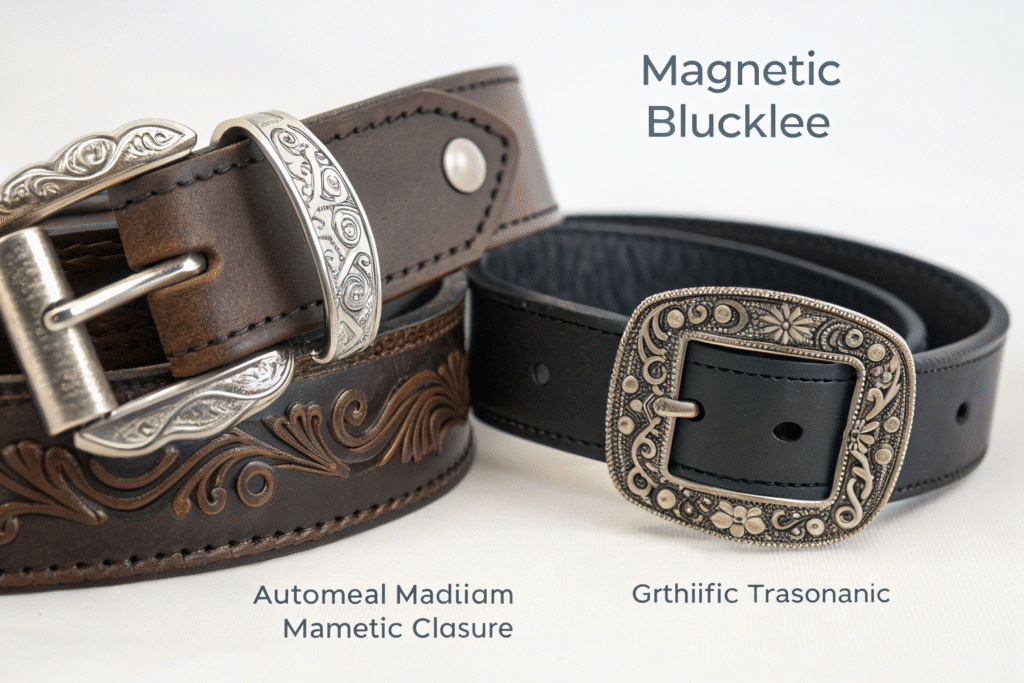
What Specific Conditions Benefit Most?
The independence benefits extend across numerous conditions:
- Arthritis: Eliminates painful gripping and pushing motions that aggravate swollen joints
- Parkinson's Disease: Compensates for tremors and rigidity that make small manipulations difficult
- Stroke Recovery: Enables one-handed operation for people with hemiplegia or hemiparesis
- Spinal Cord Injuries: Accommodates limited hand function and reach
- Developmental Disabilities: Simplifies the learning process for self-dressing skills
This functionality makes magnetic belts crucial for adaptive clothing lines serving diverse needs while maintaining a mainstream appearance.
How Does the Simple Mechanism Work?
The engineering is elegantly straightforward yet profoundly effective:
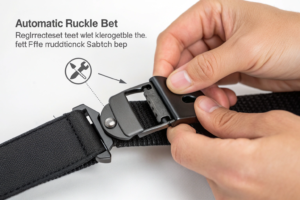
- Approach: Bring the magnetic ends within proximity
- Attract: The magnets pull together automatically
- Secure: A secondary locking mechanism ensures they stay fastened
This process requires no visual monitoring, minimal force, and can be accomplished with fists, the heels of hands, or even forearms for those with severe hand limitations. The learning curve is virtually nonexistent—most users succeed on their first attempt.
Why Are Safety Features Crucial for Adaptive Clothing?
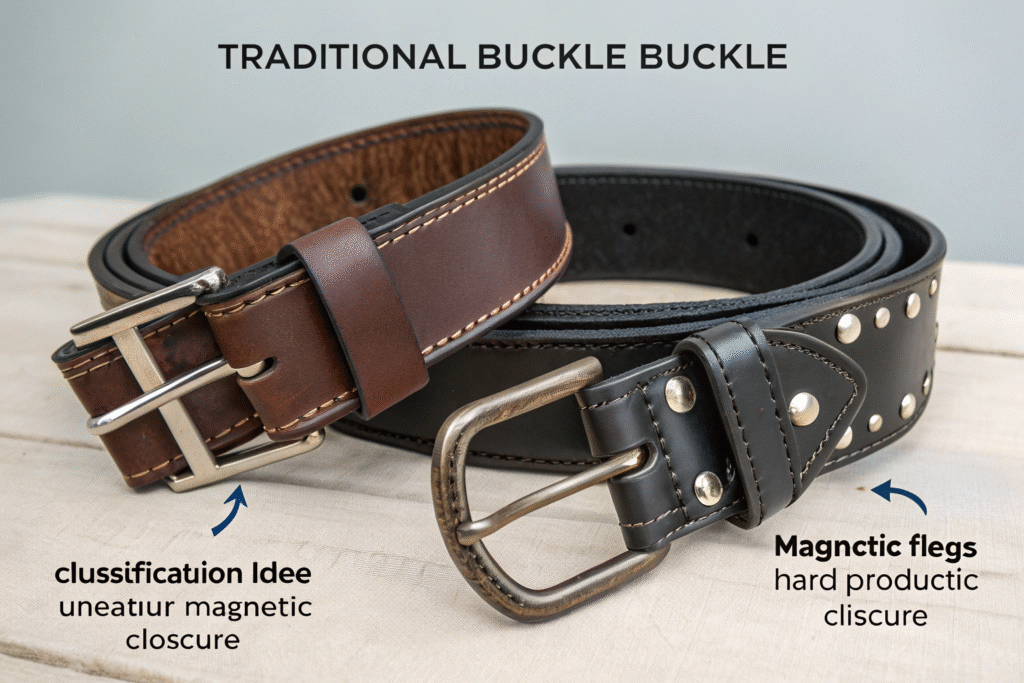
Adaptive clothing users often have increased vulnerability to injuries. Traditional buckles present multiple hazards: protruding prongs that can scratch sensitive skin, hard edges that create pressure points, and rigid structures that don't yield during falls or entanglements.
Magnetic closure belts are designed with safety as a core principle. Their smooth, flat surfaces eliminate pressure points and scratching risks. More importantly, most quality magnetic closures are designed to separate under significant force, preventing strangulation or entanglement hazards that can occur if the belt gets caught.
What Makes the Break-Away Feature Vital?
The break-away safety feature functions as a crucial protection mechanism:
- Controlled Release: Designed to separate before injury occurs during falls or entanglements
- Sufficient Strength: Maintains secure fastening during normal activities
- Predictable Performance: Engineers specific release thresholds
This safety aspect is particularly important for elderly users with fragile skin and reduced balance, as well as for individuals with cognitive conditions who might not recognize hazardous situations.
How Do Material Choices Enhance Safety?
Beyond the magnetic mechanism itself, material selection further enhances safety:
- Hypoallergenic Metals: Nickel-free magnetic components prevent skin reactions
- Smooth Edges: Rounded, polished surfaces eliminate abrasion risks
- Non-Toxic Coatings: Food-grade coatings ensure safety even if mouthed
- Flush Mounting: Magnets embedded within leather or fabric prevent direct skin contact
These considerations make magnetic closure belts suitable even for users with the most sensitive skin or complex medical needs.
How Do They Accommodate Various Physical Limitations?
Adaptive clothing must serve people with dramatically different abilities and limitations. A solution that works for someone with arthritis may not help a person with spinal cord injury. Magnetic closure belts succeed because they address multiple limitation types through their versatile design.
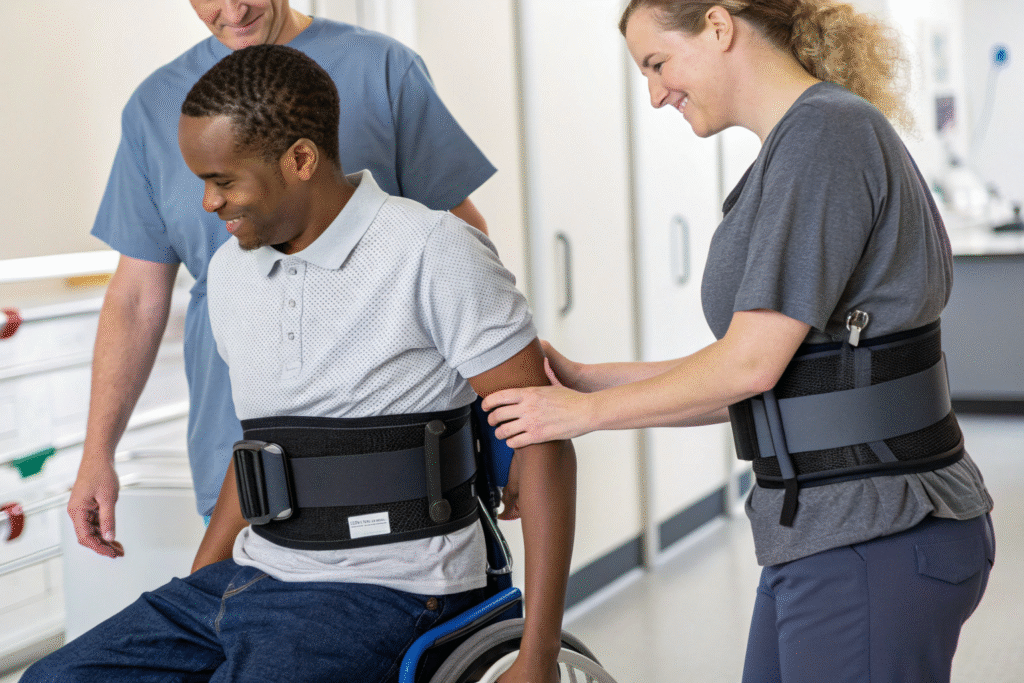
The fundamental advantage is that magnetic closures don't require a specific type of grip or hand function. They can be operated with closed fists, the sides of hands, or even between wrists for those without functional finger use. This flexibility makes them universally accessible across a wide spectrum of physical challenges.
What Adaptations Serve Different Needs?
While the basic magnetic principle serves everyone, specific design variations enhance functionality for particular needs:
- Larger Magnetic Surfaces: Better for users with limited dexterity or tremors
- Audible Click: Provides confirmation for users with visual impairments
- Tactile Markings: Helps with alignment for users who cannot see the closure
- One-Handed Operation: Essential for stroke survivors and amputees
These thoughtful design elements demonstrate how inclusive design principles create products that work better for everyone, regardless of ability.
How Do They Integrate with Other Adaptive Features?
Magnetic belts often work in concert with other adaptive clothing elements:
- Side-Opening Pants: Allow dressing without standing up
- Adjustable Waistbands: Accommodate fluctuating swelling or weight changes
- Pull-On Styles: Provide alternatives for different ability levels
This integration creates comprehensive dressing solutions that address the entire dressing process rather than isolated challenges.
Why Are Psychological Benefits as Important as Physical Ones?
The impact of clothing fastenings extends far beyond physical function. The inability to dress oneself represents a loss of independence that affects self-esteem, dignity, and overall quality of life. Magnetic closure belts restore not just function but also the psychological benefits of self-reliance.
When someone who has struggled with traditional fastenings successfully operates a magnetic closure, the emotional impact is immediate and profound. This small victory in daily living can significantly improve mood, self-confidence, and overall outlook. The psychological benefits ripple outward, affecting social engagement and mental health.

How Does Maintained Dignity Impact Quality of Life?
The dignity preservation aspect manifests in several crucial ways:
- Reduced Caregiver Dependence: Minimizes need for assistance with intimate dressing tasks
- Discreet Operation: The magnetic function isn't visibly different from traditional buckles
- Maintained Style Options: Available in fashionable designs rather than clinical-looking alternatives
- Social Confidence: Enables worry-free participation in activities away from home
These factors explain why magnetic closure belts have become essential in progressive care facilities and rehabilitation centers where maintaining resident dignity is a core value.
What is the Caregiver Impact?
The benefits extend to caregivers and family members:
- Reduced Physical Strain: Less need to manipulate small fasteners
- Time Savings: Faster dressing processes
- Reduced Conflict: Eliminates struggles over difficult fastenings
- Emotional Relief: Seeing loved ones maintain independence
This comprehensive impact on both users and caregivers makes magnetic closure belts a transformative innovation in adaptive clothing that serves entire care ecosystems.
Conclusion
Magnetic closure belts are essential for adaptive clothing because they address the full spectrum of user needs: physical accessibility through their effortless operation, safety through their break-away design and smooth surfaces, practical accommodation of various limitations through their versatile operation methods, and psychological well-being through restored independence and maintained dignity. They transform a daily struggle into a simple, successful task, providing both functional solutions and emotional benefits that significantly enhance quality of life for people with diverse abilities and their caregivers.
If you're developing adaptive clothing lines and recognize the transformative potential of magnetic closure belts, our factory specializes in creating stylish, functional solutions that maintain dignity while solving real-world dressing challenges. Contact our Business Director, Elaine, at elaine@fumaoclothing.com to discuss incorporating magnetic closure technology into your adaptive wear collections.