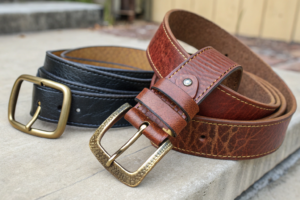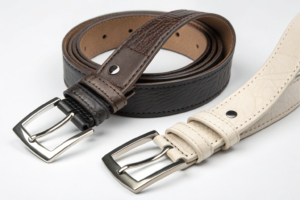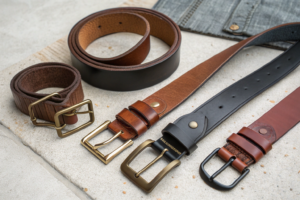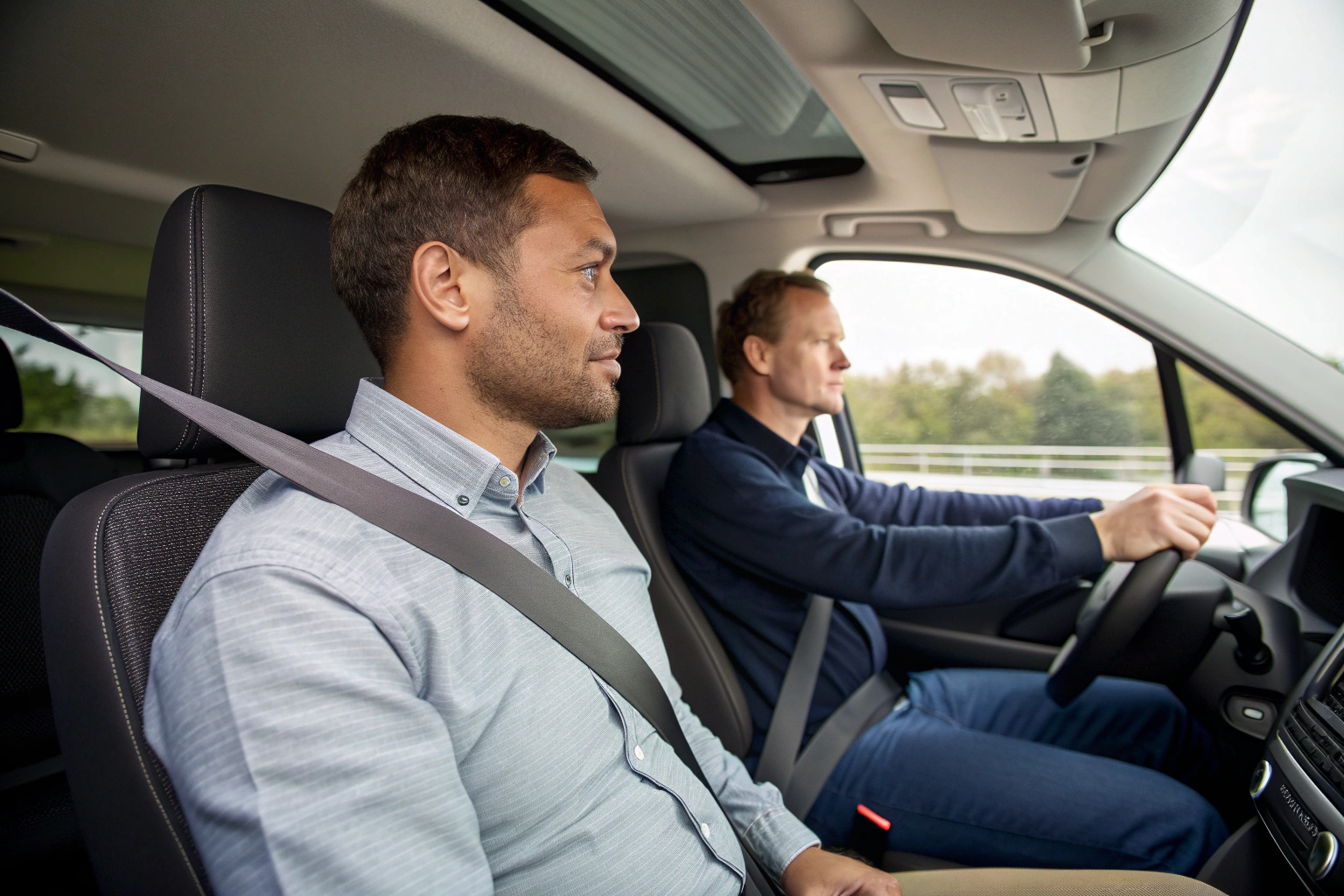
Long hours behind the wheel can cause significant discomfort, particularly around the waist and lower back where seat belts and traditional belts create pressure points. Drivers, especially commercial operators and frequent travelers, often experience fatigue, restricted circulation, and back pain from rigid belt designs that don't accommodate seated positions.
Memory foam-backed belts are ideal for driving because they distribute pressure evenly across the waist, reduce pressure points from seat belt contact, and maintain comfort during extended sitting. The viscoelastic properties of memory foam conform to the body's shape while providing consistent support that adapts to movement and position changes throughout long drives.
The unique requirements of seated comfort have driven innovation in belt design specifically for automotive use. This analysis explores how memory foam technology transforms belt comfort for drivers and why these designs are becoming essential for professional drivers and commuters alike.
How Does Memory Foam Technology Enhance Seated Comfort?
Traditional belt materials remain rigid against the body, creating concentrated pressure points that become increasingly uncomfortable during prolonged sitting. The unique properties of memory foam address these specific discomfort sources through advanced material science.
Memory foam's viscoelastic properties allow it to conform precisely to body contours while evenly distributing pressure across the entire contact surface. This adaptation eliminates the focused pressure points that develop where traditional belts press against the abdomen and hip bones during seated positions.

What Makes Viscoelastic Materials Ideal for Driving Positions?
Memory foam contains open-cell polyurethane with additional chemicals that increase its viscosity and density. This composition creates a slow-response material that gradually molds to body shape under heat and pressure, then slowly returns to its original shape when pressure is removed. For drivers, this means the belt continuously adapts to subtle position changes without creating new pressure points.
How Does Pressure Distribution Prevent Driving Fatigue?
By spreading contact pressure across a larger surface area, memory foam-backed belts reduce localized pressure points by up to 70% compared to traditional leather or webbed belts. This improved distribution prevents restricted blood flow and nerve compression that contribute to driving fatigue. The result is significantly reduced discomfort during journeys exceeding two hours, making these belts particularly valuable for commercial drivers.
What Design Features Optimize Belts for Automotive Use?
Driving-specific belt designs incorporate elements that address the unique challenges of seated positions and interaction with vehicle seat belts. These specialized features differentiate driving-optimized belts from general-purpose accessories.
Extended foam coverage, strategic thickness variation, and breathable interface materials work together to create belts that perform specifically well in automotive environments. Each element addresses particular discomfort sources common to traditional belts during driving.
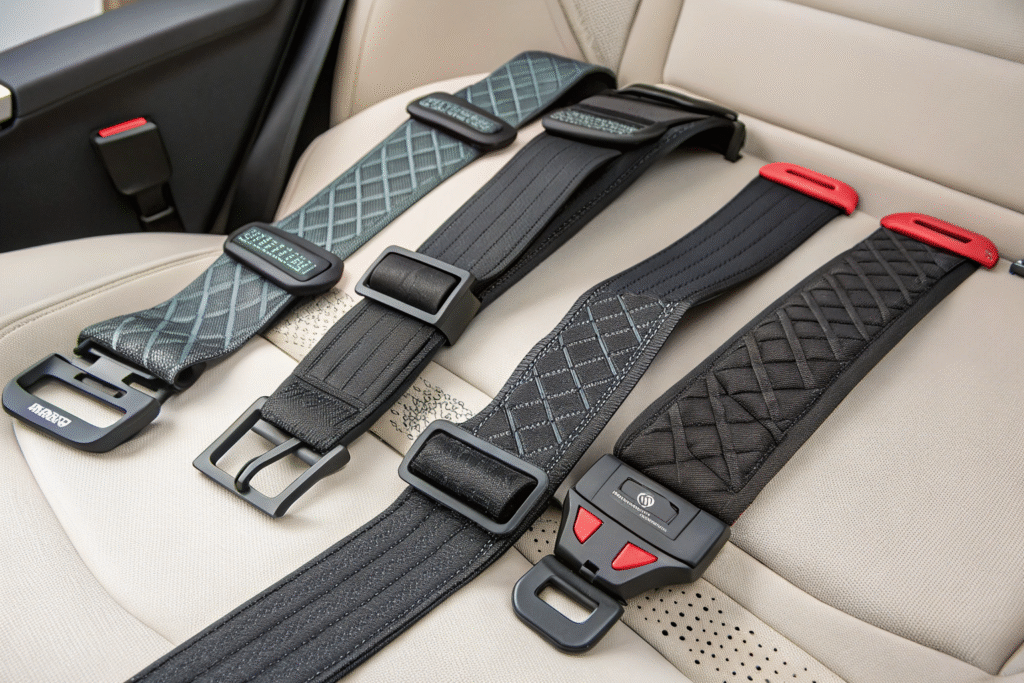
Why Does Extended Back Coverage Matter for Drivers?
Unlike traditional belts with minimal backing, driving-optimized designs feature extended memory foam panels that cover the entire contact area between the body and vehicle seat belt. This comprehensive coverage creates a cushioned barrier that prevents the seat belt from digging into the shoulder, chest, and waist during normal driving motions and sudden maneuvers.
How Does Strategic Thickness Variation Enhance Comfort?
Driving belts utilize graduated foam thickness with increased depth at common pressure points like the hip bones and abdomen. This targeted approach provides extra cushioning where it's most needed while maintaining a streamlined profile that doesn't interfere with normal movement. The strategic design ensures comfort without adding unnecessary bulk.
How Do Memory Foam Belts Interact with Vehicle Safety Systems?
Vehicle safety depends on proper seat belt function, raising valid concerns about how additional padding might affect protection during collisions. Understanding this interaction is crucial for both manufacturers and consumers.
Properly designed memory foam belts complement rather than compromise vehicle safety systems. The key lies in maintaining seat belt functionality while enhancing comfort through materials and designs that don't interfere with crash protection mechanisms.
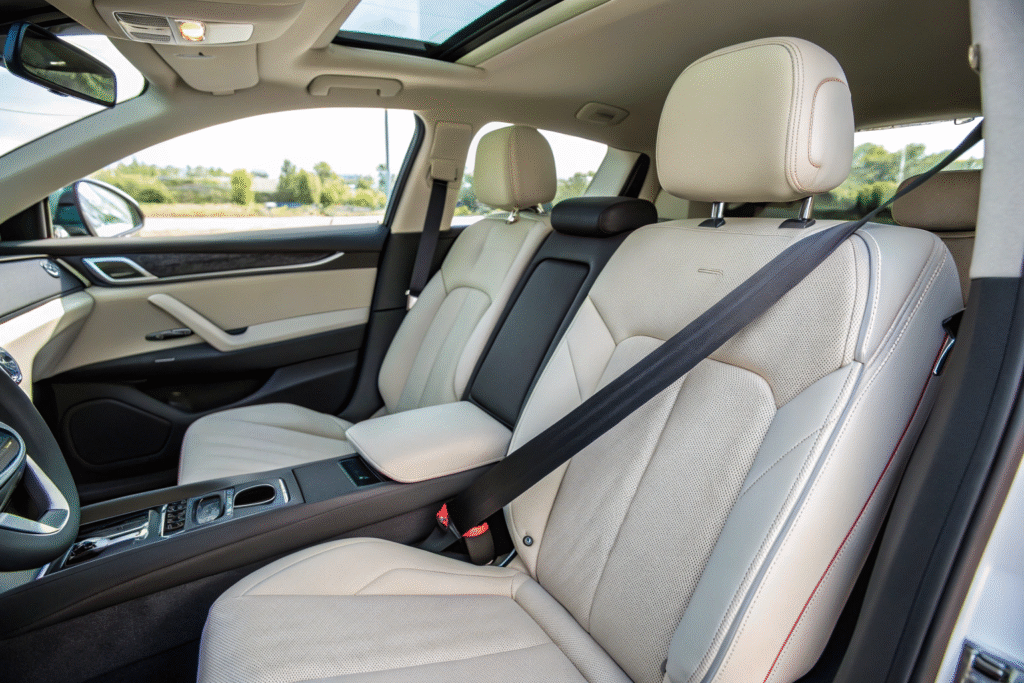
Does Added Padding Affect Seat Belt Effectiveness?
When correctly designed, memory foam backing does not compromise seat belt performance because it doesn't significantly alter the belt's routing or retention characteristics. The foam compresses under sudden force, allowing the seat belt to function as engineered during collisions. However, excessively thick or rigid padding could potentially interfere with proper seat belt operation, making design balance crucial.
How Should Driving Belts Accommodate Airbag Systems?
Modern driving belts feature strategic segmentation that allows airbags to deploy unobstructed while maintaining comfort coverage in non-critical areas. This design consideration ensures that safety systems function as intended while still providing the comfort benefits of memory foam technology. Manufacturers conduct compatibility testing to verify their designs don't interfere with vehicle safety features.
| Feature | Driving Benefit | Design Consideration |
|---|---|---|
| Viscoelastic Conformation | Continuous comfort adaptation | Density optimization for body heat response |
| Extended Back Panel | Complete seat belt cushioning | Coverage without movement restriction |
| Breathable Interface | Moisture management during long drives | Airflow maintenance in seated position |
| Low-Profile Buckle | Prevents seat pressure points | Security without comfort compromise |
What Performance Characteristics Define Quality Driving Belts?
Not all memory foam products perform equally in automotive environments. Specific performance characteristics determine how effectively a belt will maintain comfort and functionality through extended driving periods.
Temperature sensitivity, recovery time, and durability under compression are key factors that separate high-performance driving belts from basic comfort products. Understanding these characteristics helps identify products that will deliver lasting value.
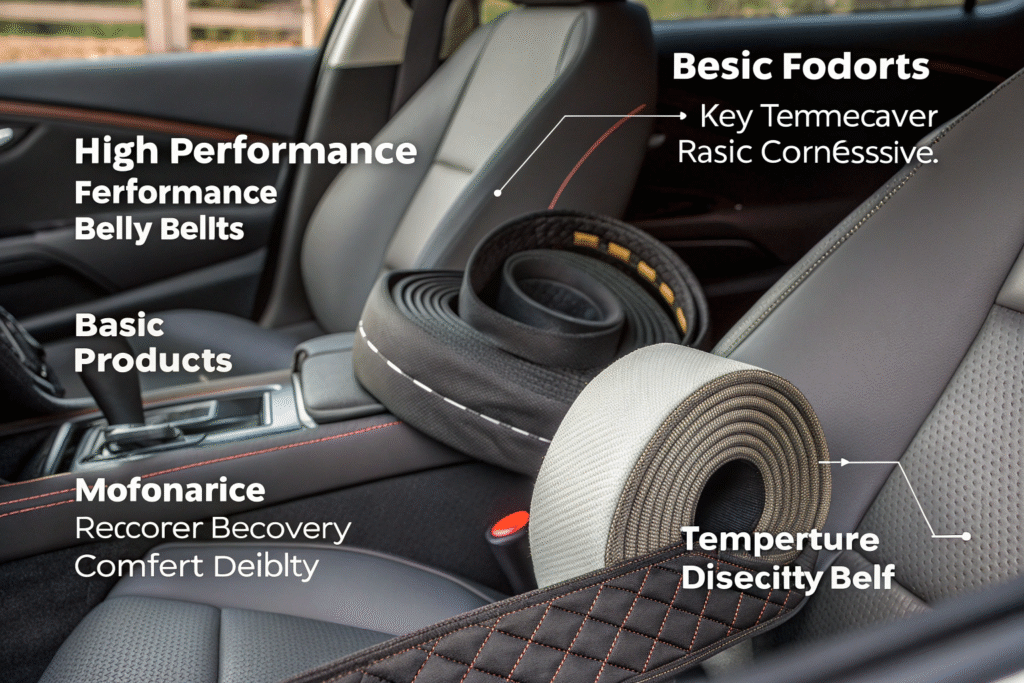
Why Does Temperature Response Matter in Vehicles?
Vehicle interiors experience significant temperature fluctuations that affect memory foam performance. High-quality driving belts use temperature-neutral memory foam that maintains its comfort properties across typical automotive temperature ranges (50-90°F). This consistency ensures the belt performs equally during cold morning commutes and warm afternoon drives without becoming too firm or too soft.
How Does Compression Recovery Impact Long-Term Use?
Cheap memory foam can develop permanent indentations that reduce comfort over time. Quality driving belts utilize high-resilience memory foam that recovers completely between uses, maintaining consistent performance through years of daily driving. This durability is particularly important for commercial drivers who spend extended periods in their vehicles.
Conclusion
Memory foam-backed belts represent a significant advancement in driving comfort, specifically addressing the unique pressure points and discomfort sources that develop during extended time behind the wheel. By combining advanced material science with driving-specific design, these belts provide measurable comfort improvements that reduce fatigue and enhance the driving experience. The technology demonstrates how specialized accessories can solve specific problems for particular use cases, creating value for both professional drivers and daily commuters.
Ready to develop driving-optimized belt collections with memory foam technology? At StylishBelts, we specialize in ergonomic designs that address specific comfort challenges. Contact our Business Director Elaine today at elaine@fumaoclothing.com to discuss how our memory foam-backed belts can enhance comfort for your driving-focused customers.