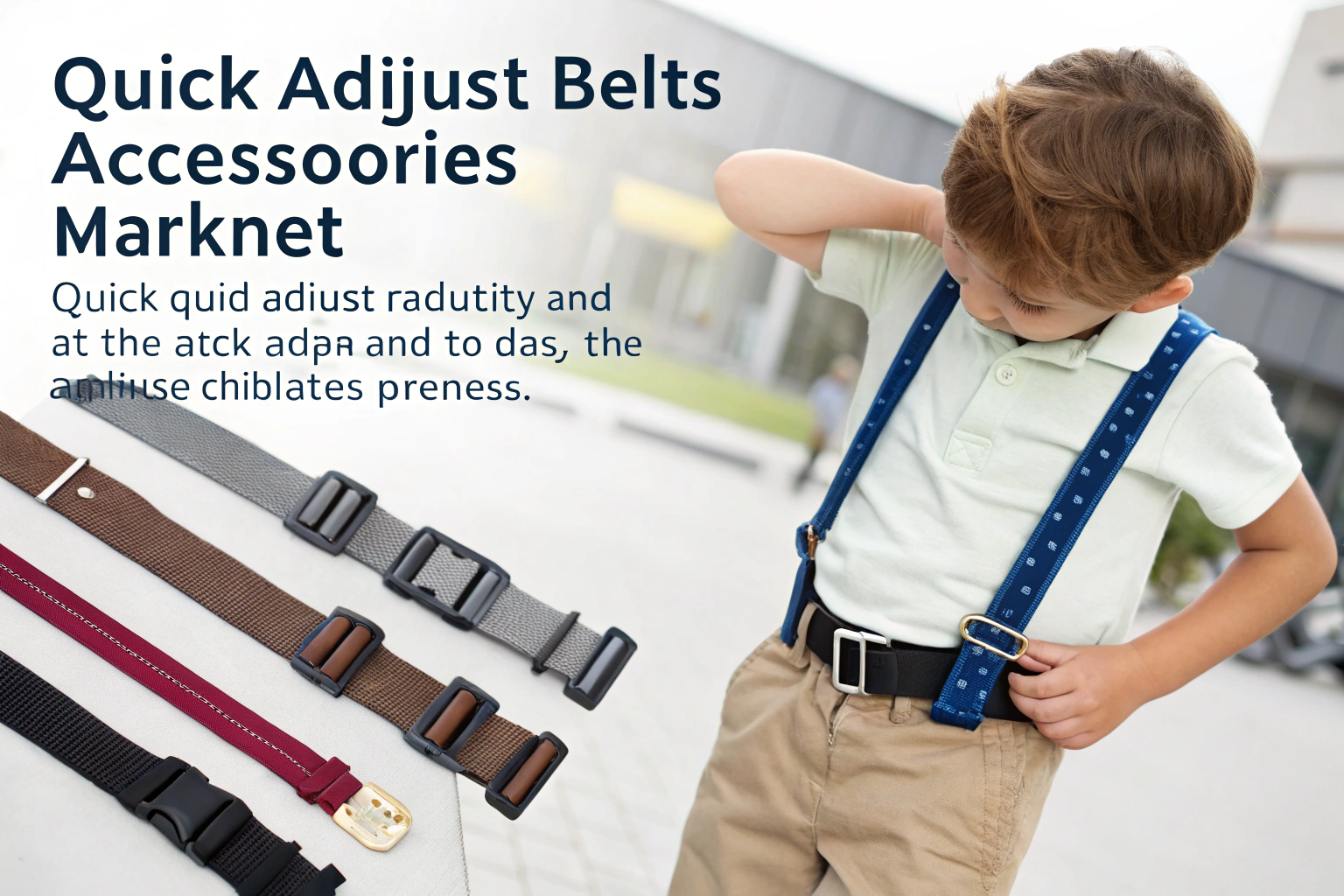
The children's accessories market has undergone a significant transformation, with quick-adjust belts emerging as the dominant choice for parents, schools, and young consumers alike. This shift represents more than just a fashion trend—it addresses fundamental challenges in dressing children that have existed for generations. The traditional belt with fixed holes and buckles simply doesn't meet the practical needs of growing, active children or the convenience demands of modern parents.
Quick-adjust belts are dominating kids' markets because they solve critical problems of fit fluctuation, dressing independence, safety concerns, and maintenance simplicity. These innovative designs allow children to achieve perfect fit themselves, accommodate growth spurts and daily comfort changes, eliminate choking hazards associated with traditional buckles, and withstand the rigorous demands of childhood use. The combination of practical benefits for parents and functional empowerment for children creates a compelling value proposition that transcends style considerations.
Understanding why quick-adjust mechanisms have revolutionized children's belts reveals important insights about evolving parenting approaches, children's growing autonomy, and how practical innovation can transform entire product categories.
What Practical Benefits Drive Parental Preference?
Parents drive purchasing decisions in the children's market, and quick-adjust belts deliver tangible advantages that align perfectly with modern parenting challenges.
How Do Quick-Adjust Belts Solve Growth Accommodation?
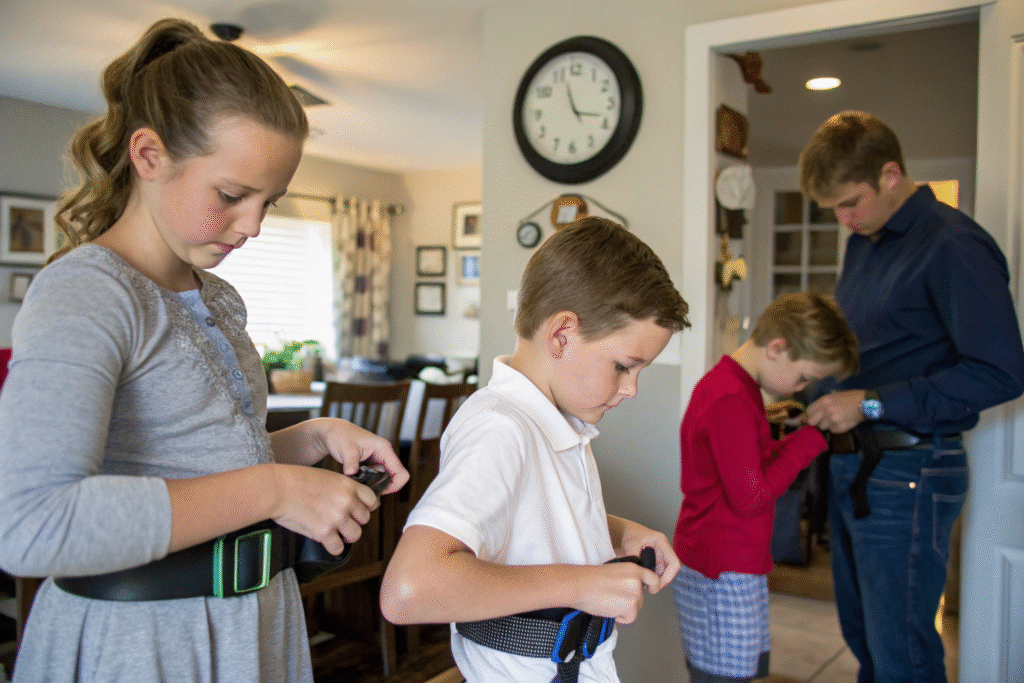
Children's bodies change rapidly, with growth spurts often rendering properly fitting clothing uncomfortably tight within months. Quick-adjust belts with continuous sizing accommodate these changes seamlessly, typically providing 6-8 inches of size range compared to the 2-3 inch range of traditional hole-and-pin belts. This extended adjustability means a single belt can last through multiple growth phases, delivering exceptional value by reducing replacement frequency.
The growth accommodation extends beyond simple length to encompass changing body proportions. As children grow, their waist-to-hip ratios change, affecting how belts fit and function. Quick-adjust systems maintain consistent comfort and security across these anatomical changes, unlike fixed-hole belts that might fit at the waist but gap at the hips or vice versa. This comprehensive fit adaptation represents a fundamental improvement over traditional approaches that required compromise at different developmental stages.
What Safety Advantages Reduce Parental Anxiety?
Quick-adjust mechanisms eliminate the small parts hazards associated with traditional belt buckles, particularly important for younger children. The absence of removable components, pinch points, and protruding elements addresses key safety concerns that have long made traditional belts problematic for school environments and active play. Many quick-adjust designs use magnetic, friction, or ratchet systems that secure without dangerous moving parts.
The safety benefits extend beyond physical hazards to encompass practical security. Traditional belts can loosen unexpectedly during activity, potentially causing tripping hazards or requiring constant adjustment. Quick-adjust systems typically maintain their setting more reliably during vigorous movement, preventing the "belt drag" that plagues children wearing loose traditional belts. This consistent security gives parents confidence that belts will function properly throughout the day without teacher or caregiver intervention.
How Do Quick-Adjust Belts Support Child Development?
Beyond practical benefits for parents, these belts positively impact children's development by fostering independence and body awareness.
How Do They Promote Dressing Independence?
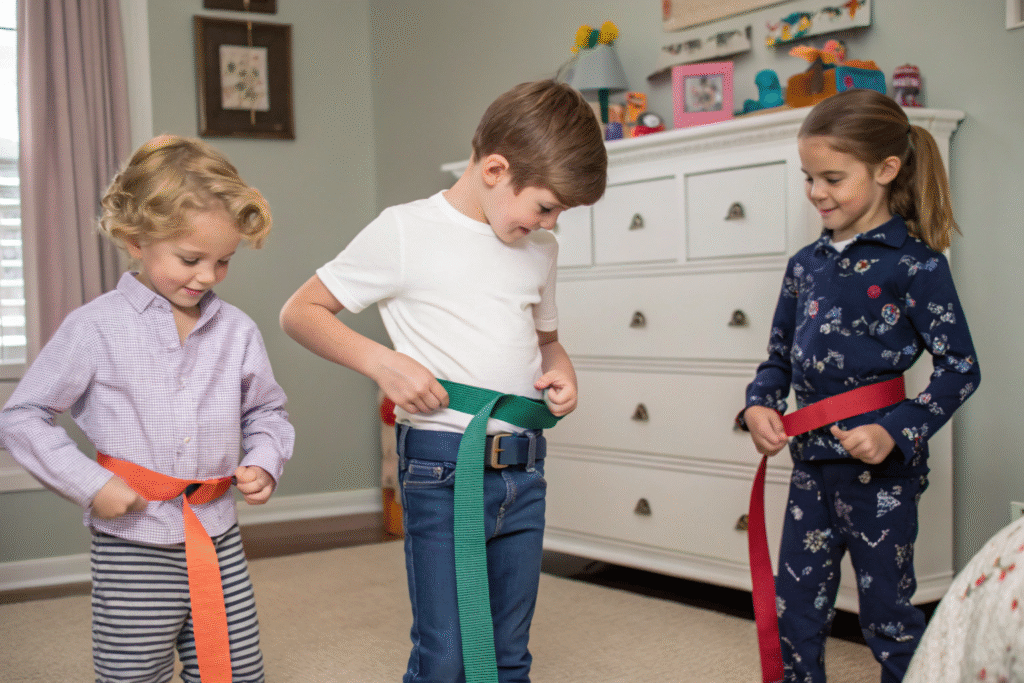
The development of self-dressing skills represents an important milestone in childhood independence, and quick-adjust belts make this achievement accessible at younger ages. Traditional belts require fine motor skills and coordination that typically don't develop until age 6-8, but simplified quick-adjust mechanisms can be mastered by children as young as 3-4. This earlier success builds confidence that transfers to other self-care tasks, creating positive reinforcement cycles.
The independence advantage proves particularly valuable in school settings where teachers cannot assist every child with clothing adjustments. Quick-adjust belts allow children to manage their own comfort after meals, during temperature changes, or following bathroom visits without adult help. This self-sufficiency aligns with educational approaches that encourage personal responsibility while reducing interruptions to classroom activities for minor clothing issues.
What Role Do They Play in Body Awareness Development?
Quick-adjust belts facilitate developing body awareness by allowing children to easily modify fit based on comfort feedback. Unlike fixed-hole belts that offer limited options, continuous adjustment lets children experiment with different tension levels to discover personal preferences. This experimentation helps them understand how clothing should feel when properly fitted, knowledge that transfers to other wardrobe elements.
The immediate feedback of quick-adjust systems—where children feel the results of their adjustments instantly—creates learning opportunities about cause and effect. This hands-on experience with achieving personal comfort helps develop decision-making skills and bodily autonomy in age-appropriate ways. The ability to make independent comfort choices represents an important step in developing self-advocacy skills that serve children throughout their lives.
What Market Factors Support Category Dominance?
Several converging trends in retail, education, and consumer behavior have created ideal conditions for quick-adjust belt adoption.
| Market Factor | Impact on Quick-Adjust Adoption | Commercial Implication |
|---|---|---|
| School Uniform Requirements | Mandates for functional, safe belts | Bulk purchasing by schools and parents |
| Parental Time Scarcity | Preference for low-maintenance solutions | Willingness to pay premium for convenience |
| Child Influence on Purchasing | Kids prefer easy-to-use products | Marketing directly to children effective |
| Safety Regulation Trends | Increasing scrutiny of children's products | Proactive safety features become competitive advantage |
| Digital Native Expectations | Preference for "smart" mechanical solutions | Innovation perception justifies price premiums |
How Have School Requirements Influenced Design?
The standardization of school uniforms has created massive demand for functional, compliant accessories that work within educational environments. Quick-adjust belts meet school requirements for safety, uniformity, and practicality better than traditional options. Their ability to maintain consistent appearance throughout size adjustments ensures children remain in compliance during growth periods, eliminating the need for multiple belt purchases within a single school year.
The educational market has driven specific design innovations tailored to institutional needs. Many schools require quick-adjust belts in specific colors with limited branding visibility, creating specialized product lines. The most successful implementations offer bulk packaging, volume pricing, and customization options that accommodate school identity systems while maintaining the practical benefits that make quick-adjust mechanisms preferable for educational use.
What Retail Dynamics Accelerate Market Penetration?
The children's apparel market has increasingly prioritized functionality and longevity as consumers seek value beyond fashion. Quick-adjust belts align perfectly with this trend by offering extended usability that justifies premium positioning. Retailers benefit from reduced returns (since size miscalculations are eliminated) and increased customer satisfaction that drives repeat business across product categories.
The retail advantage extends to inventory management, where the extended size range of quick-adjust belts reduces SKU complexity. Instead of stocking multiple sizes of the same style, retailers can offer fewer options that serve more customers, improving inventory turnover while reducing out-of-stock situations. This operational efficiency makes quick-adjust belts particularly attractive for retailers operating with lean inventory models in competitive markets.
How Do Design Innovations Continue Evolving?
The quick-adjust belt category continues refining its approach through material advances, mechanical improvements, and expanded functionality.

What Material Advances Enhance Performance?
Modern quick-adjust belts utilize advanced materials that outperform traditional leather and metals in children's applications. Polymer composites provide durability without excessive weight, while technical fabrics offer stretch recovery that maintains tension through activity. These material innovations address common failure points in children's products while maintaining the aesthetic appeal that makes belts acceptable for formal occasions.
The most sophisticated material implementations combine multiple elements—flexible cores for comfort, abrasion-resistant surfaces for durability, and hypoallergenic contact layers for sensitive skin. This multi-material approach creates products that withstand rough treatment while remaining comfortable for all-day wear. The material selection also considers cleaning requirements, with many quick-adjust belts offering machine-washable convenience that traditional leather belts cannot match.
How Are Mechanisms Becoming More Child-Friendly?
The evolution of adjustment mechanisms has focused on simplifying operation while improving reliability. Early quick-adjust systems often required strength or dexterity that challenged younger children, but contemporary designs use magnetic assistance, leveraged actions, and intuitive interfaces that make adjustment effortless. These improvements have expanded the accessible age range while reducing frustration that could discourage usage.
The most child-friendly mechanisms incorporate visual and tactile feedback that confirms proper engagement. Audible clicks, color indicators, or haptic responses help children understand when their belts are securely fastened, building confidence in their ability to dress themselves correctly. This feedback loop is particularly important for children with sensory processing differences who might struggle with subtle physical cues about proper fastening.
Conclusion
Quick-adjust belts dominate the children's market because they solve fundamental problems for both parents and children through thoughtful design that aligns with modern lifestyles. The combination of practical benefits—growth accommodation, safety improvements, independence fostering, and maintenance simplicity—creates compelling value that transcends traditional belt offerings.
As the category continues evolving with material advances and mechanical refinements, quick-adjust systems are likely to become the standard rather than the exception in children's accessories. The demonstrated advantages across cost, convenience, and child development suggest that this technology represents a permanent improvement in how children experience and interact with their clothing.
Ready to develop quick-adjust belts for your children's collection? Contact our Business Director, Elaine, at elaine@fumaoclothing.com to discuss our specialized designs that combine child-friendly functionality with quality construction for the growing kids' market.