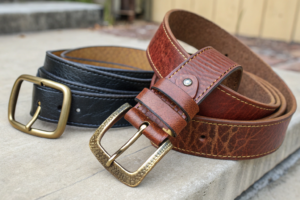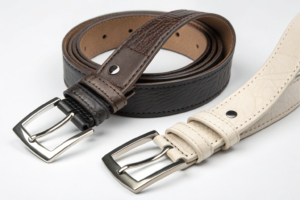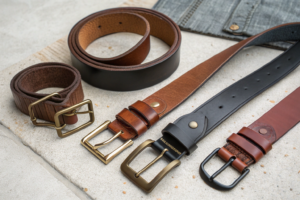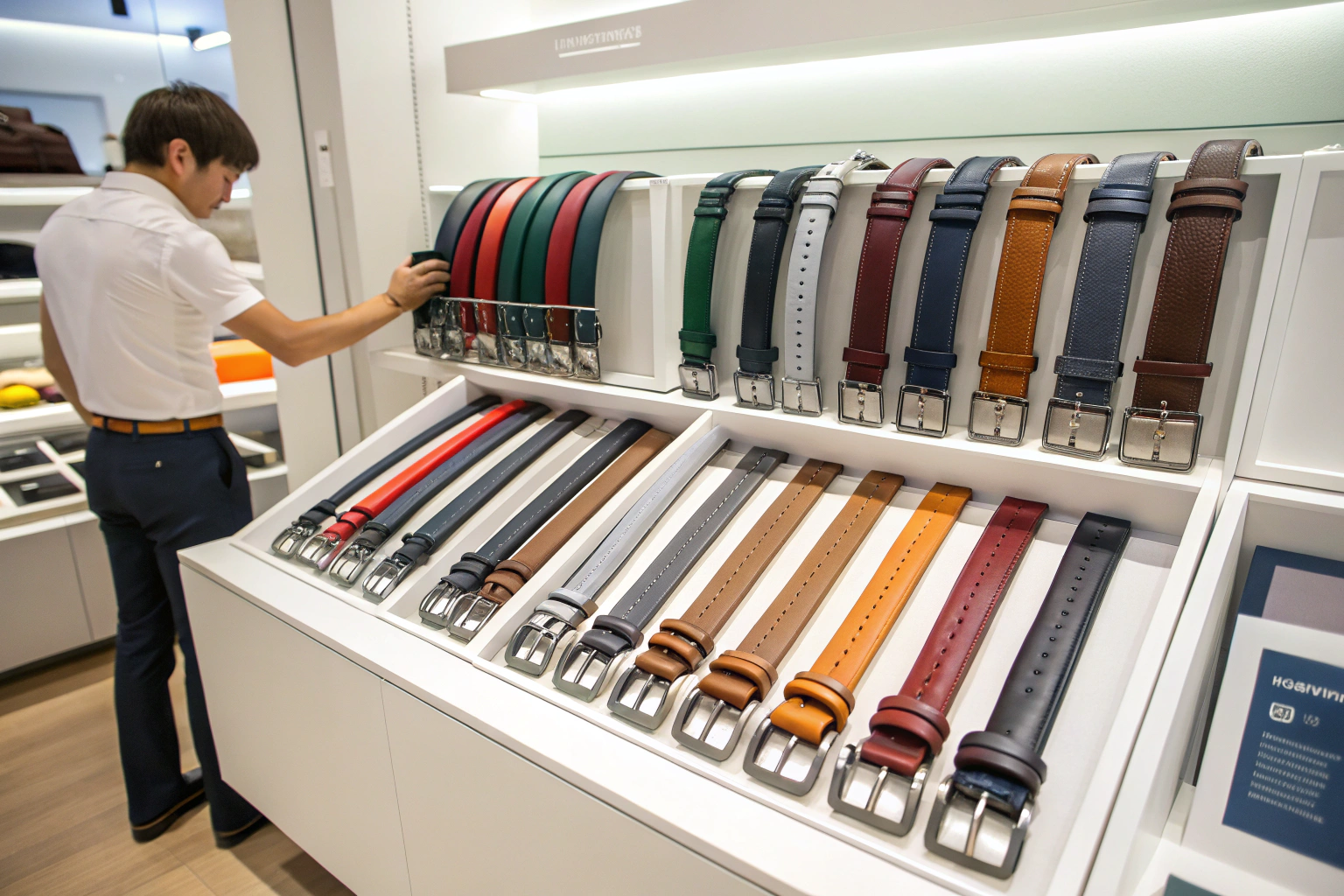
You walk through your store's accessory section and see the same problem every season: stacks of single-color belts gathering dust while customers ask for colors you've already sold out. You ordered equal quantities of black and brown belts, but black outsold brown 3:1. Now you're stuck with excess brown inventory that won't move until you discount it below cost. This frustrating overstock situation is why smart retailers are shifting to reversible belts.
Reversible belts are reducing overstock for retailers because they consolidate multiple SKUs into single products that serve broader customer bases. One reversible belt replacing two single-color belts means less inventory complexity, reduced storage requirements, and dramatically lower risk of color-specific dead stock. This inventory efficiency translates directly to improved turns, higher full-price sell-through, and better return on inventory investment.
This guide will explore how reversible belt technology transforms retail inventory management. We'll examine the SKU consolidation mathematics, the space and cost savings, the enhanced customer value proposition, and the data-driven ordering advantages that make reversible belts a strategic inventory solution.
How Does SKU Consolidation Transform Inventory Management?
Traditional belt retailing requires maintaining multiple SKUs for each style in different colors and sizes. This creates exponential complexity in inventory planning, forecasting, and management. A single belt style in 3 colors and 5 sizes means 15 distinct SKUs to manage and balance.
Reversible belts collapse this complexity by combining two colors into one product. The inventory mathematics are compelling: replacing two single-color belts with one reversible belt immediately cuts your SKU count in half while maintaining the same color availability for customers.

What's the Actual Inventory Reduction Impact?
The numbers tell a powerful story:
| Scenario | Single-Color Belts | Reversible Belts | Reduction |
|---|---|---|---|
| Styles | 5 styles | 5 styles | - |
| Colors per Style | 3 colors each | 3 reversible combinations | - |
| Sizes | 5 sizes each | 5 sizes each | - |
| Total SKUs | 75 SKUs | 25 SKUs | 67% Reduction |
| Inventory Units | 4 units per SKU = 300 units | 4 units per SKU = 100 units | 67% Fewer Units |
| Storage Space | 10 boxes | 3.3 boxes | 67% Space Saving |
This consolidation means retailers can offer the same color variety while carrying significantly less inventory. Our reversible belt collections typically help retailers reduce their belt SKU count by 50-70% while maintaining customer choice.
How Does This Simplify Purchasing and Forecasting?
Fewer SKUs means simpler decision-making:
- Reduced Forecasting Complexity: Predicting demand for 25 SKUs versus 75 SKUs
- Larger Order Quantities: Fewer SKUs means deeper inventory per remaining SKU
- Reduced Stockout Risk: Each SKU serves multiple color preferences
- Easier Replenishment: Simpler automated replenishment systems
This simplification is particularly valuable for large retail operations where inventory complexity directly correlates with administrative costs.
What Space and Cost Savings Do Reversible Belts Deliver?
Physical retail space is expensive, and every square foot must generate maximum revenue. Traditional belt displays require significant linear footage to showcase multiple color options, creating space inefficiency and limiting overall assortment breadth.
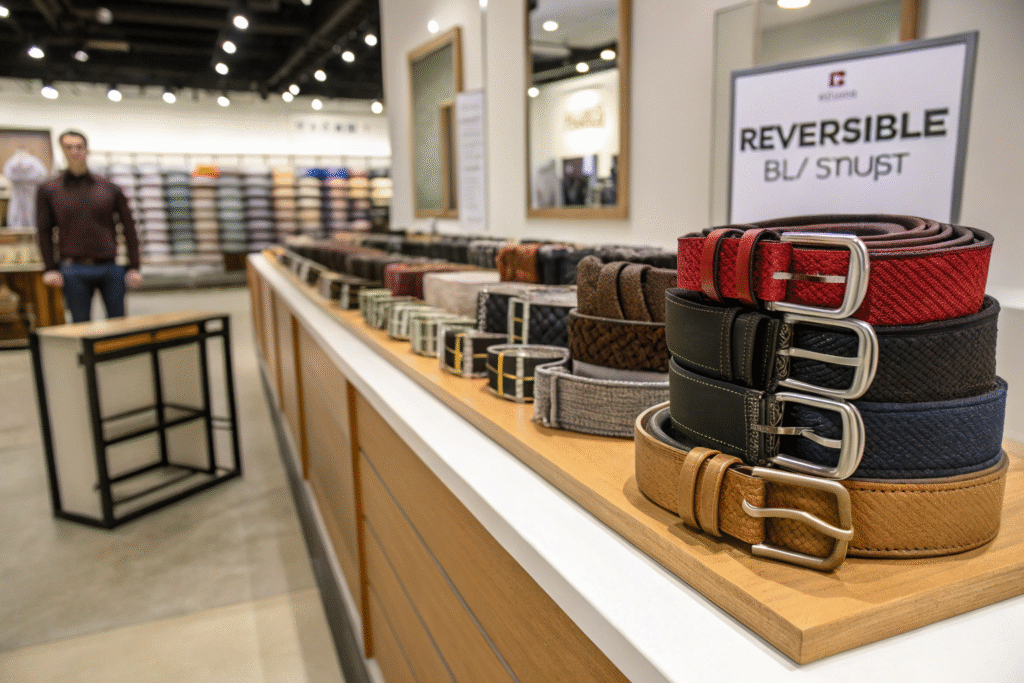
Reversible belts deliver more color options in less space. The compact nature of reversible displays means retailers can offer the same color variety in 30-50% less space, or use the saved space to expand into additional styles or categories.
How Much Physical Space Do Retailers Actually Save?
Space savings come from multiple factors:
- Reduced Inventory Depth: Fewer units needed to maintain color availability
- Compact Displays: Reversible belts require less display space per color option
- Storage Efficiency: 67% fewer boxes in backstock (from our earlier example)
- Merchandising Flexibility: Ability to showcase more styles in same footprint
For a typical department store belt department, this can free up 20-40 square feet of valuable selling space for more productive use.
What Are the Hidden Cost Reductions?
Beyond obvious space savings, reversible belts reduce multiple cost centers:
- Inventory Carrying Costs: Fewer units means lower capital commitment
- Handling Costs: Receiving, ticketing, and managing fewer SKUs
- Markdown Costs: Reduced color-specific overstock means fewer deep discounts
- Administrative Costs: Simplified purchasing and inventory management
These savings typically add 3-5% to the bottom line for belt departments, making reversible belts a profitable innovation for forward-thinking retailers.
How Does the Customer Value Proposition Move Inventory?
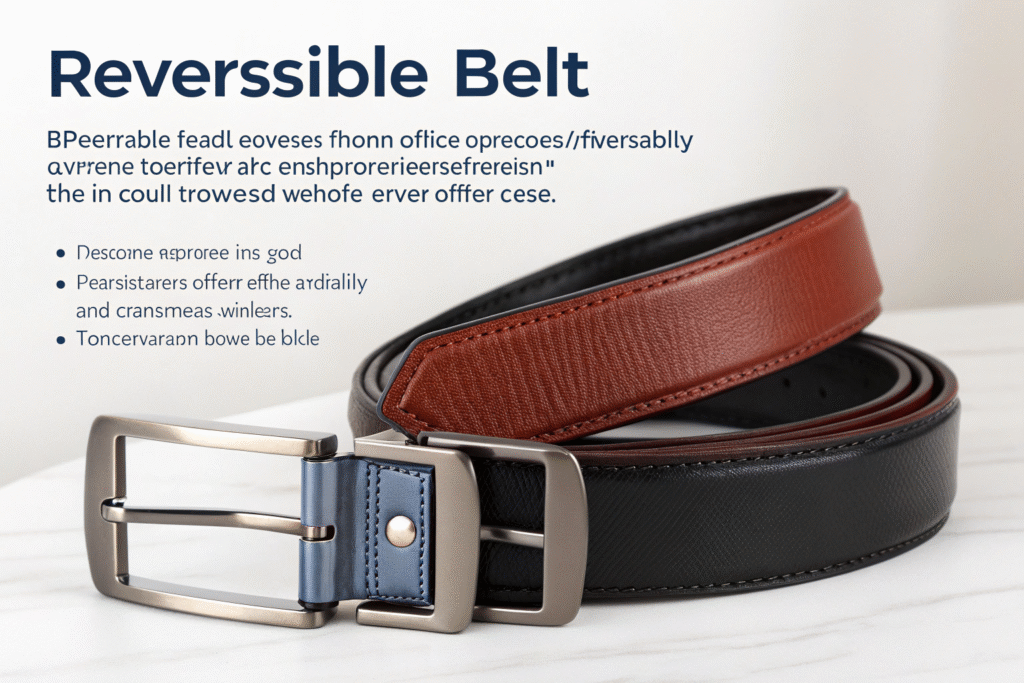
From the consumer perspective, reversible belts offer compelling value: two belts for the price of one (plus a small premium). This perceived value drives faster sell-through at full price, reducing the need for promotional markdowns that erode margins.
The practical benefits for customers are equally important. Travelers appreciate packing one belt instead of two. Office workers value having both formal colors available for different outfits. This utility creates stronger purchase justification and higher conversion rates.
What Consumer Benefits Drive Purchase Decisions?
Reversible belts address several consumer needs:
- Travel Convenience: One belt serves multiple outfits while packing light
- Style Flexibility: Instant color change for different occasions
- Space Saving: Less closet space required for belt collection
- Cost Efficiency: Better value than purchasing two separate belts
These benefits are particularly appealing to frequent travelers and urban professionals with limited storage space.
How Does This Impact Sales Conversion and Velocity?
The value proposition translates to tangible sales benefits:
- Higher Conversion Rates: Stronger value proposition closes more sales
- Fighter Full-Price Sell-Through: Less price sensitivity means fewer markdowns
- Increased Units Per Transaction: Customers often buy multiple reversible belts
- Better Customer Satisfaction: Practical utility leads to repeat purchases
Retailers typically see 20-30% faster inventory turns with reversible belts compared to traditional single-color equivalents.
What Data-Driven Advantages Improve Assortment Planning?
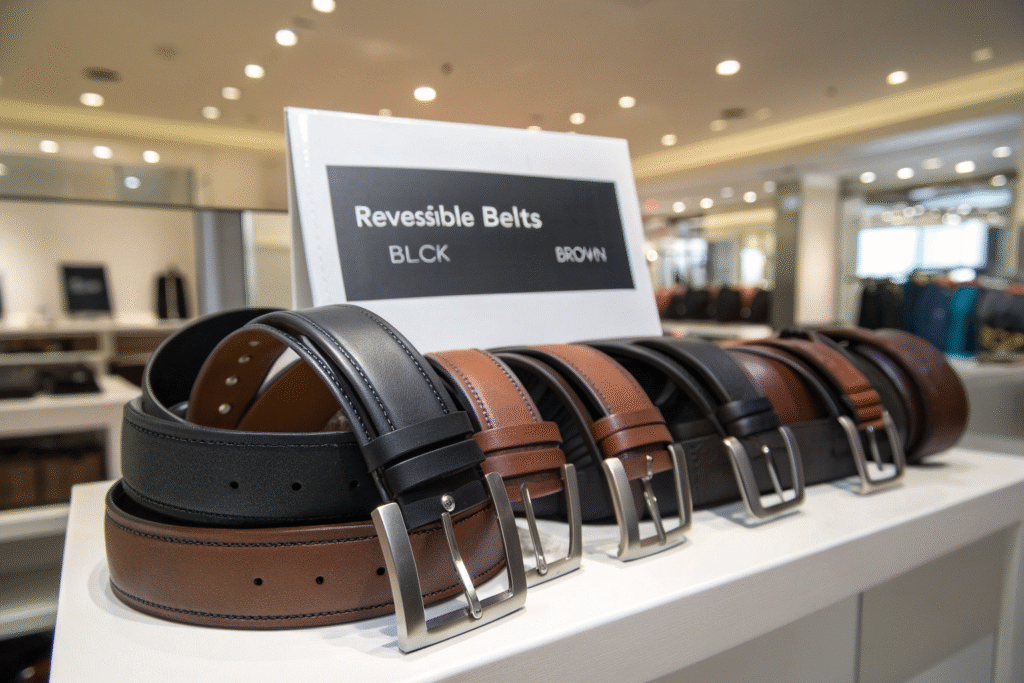
Traditional belt buying requires guessing color demand ratios months in advance. Get the black-to-brown ratio wrong, and you're stuck with dead stock. Reversible belts eliminate this forecasting gamble by letting customers choose their preferred color in real-time.
The reversible format provides valuable sell-through data without the risk of single-color overstock. Retailers can track which color combinations move fastest and adjust future orders accordingly, creating a data-driven feedback loop for continuous assortment optimization.
How Does This Simplify Color Planning?
Color forecasting becomes dramatically easier:
- No Color Ratio Guessing: Customers self-select their preferred colors
- Real-Time Demand Data: Immediate feedback on color preference trends
- Reduced Fashion Risk: Less exposure to color trend miscalculations
- Seasonal Flexibility: Same belt works across multiple seasons
This data advantage helps retailers build more profitable assortments with less guesswork and risk.
What Are the Long-Term Buying Advantages?
The data collected from reversible belt sales creates lasting competitive advantages:
- Accurate Color Forecasting: Historical data informs future color planning
- Reduced Markdowns: Better selling colors identified before deep ordering
- Assortment Optimization: Data-driven decisions on which combinations to carry
- Vendor Collaboration: Better information for manufacturing planning
This continuous improvement cycle means each season's buying decisions become more precise and profitable than the last.
Conclusion
Reversible belts are reducing overstock for retailers by collapsing multiple SKUs into single products, delivering significant space and cost savings, offering compelling customer value that drives full-price sell-through, and providing data-driven advantages for smarter assortment planning. By transforming inventory management from a color-ratio guessing game into an efficient, customer-driven system, reversible belts help retailers achieve higher inventory turns, lower carrying costs, reduced markdowns, and improved overall profitability. This innovative approach to belt merchandising represents a strategic solution to the chronic overstock problems that have plagued fashion accessories retailing for decades.
If you're ready to transform your belt department with reversible technology that reduces overstock while maintaining customer choice, our factory specializes in high-quality reversible belt manufacturing. Contact our Business Director, Elaine, at elaine@fumaoclothing.com to discuss how reversible belts can optimize your inventory and boost your profitability.