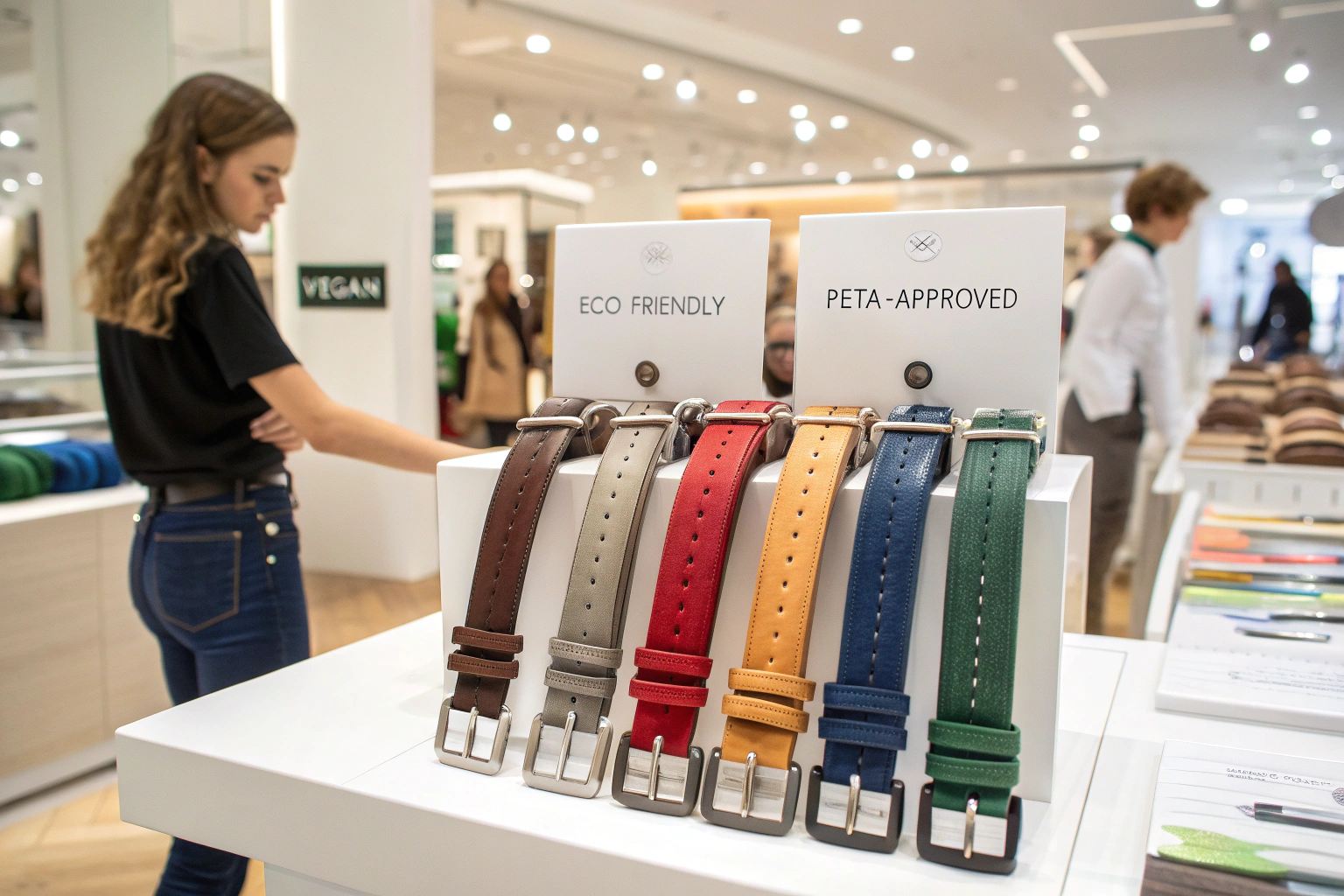
A retail buyer for a major eco-conscious brand faces a dilemma. They want to offer a cruelty-free belt, but their customers reject traditional leather. They need an affordable product, but their brand values prohibit cheap, environmentally damaging PVC. This exact dilemma is playing out across the global retail landscape, and it's creating the perfect conditions for sustainable PU (polyurethane) belts to thrive.
Sustainable PU belts are dominating eco-conscious retail because they offer a powerful trifecta: a compelling animal-free narrative, a significantly reduced environmental footprint compared to both leather and PVC, and the aesthetic versatility and affordability that retailers need. They represent a viable, scalable, and market-ready solution that aligns perfectly with the values-driven purchasing decisions of the modern consumer.
This article will break down the key drivers behind the rise of sustainable PU. We will explore how they deliver on the promise of ethical fashion, their superior environmental credentials, their performance and design advantages, and why they are a commercial winner for forward-thinking retailers.
How Do Sustainable PU Belts Deliver on Ethical Fashion Promises?
The modern consumer is increasingly aware of the ethical implications of their purchases. The traditional leather industry, with its ties to animal agriculture and the associated concerns over animal welfare and resource intensity, is a significant point of contention for a growing segment of shoppers.
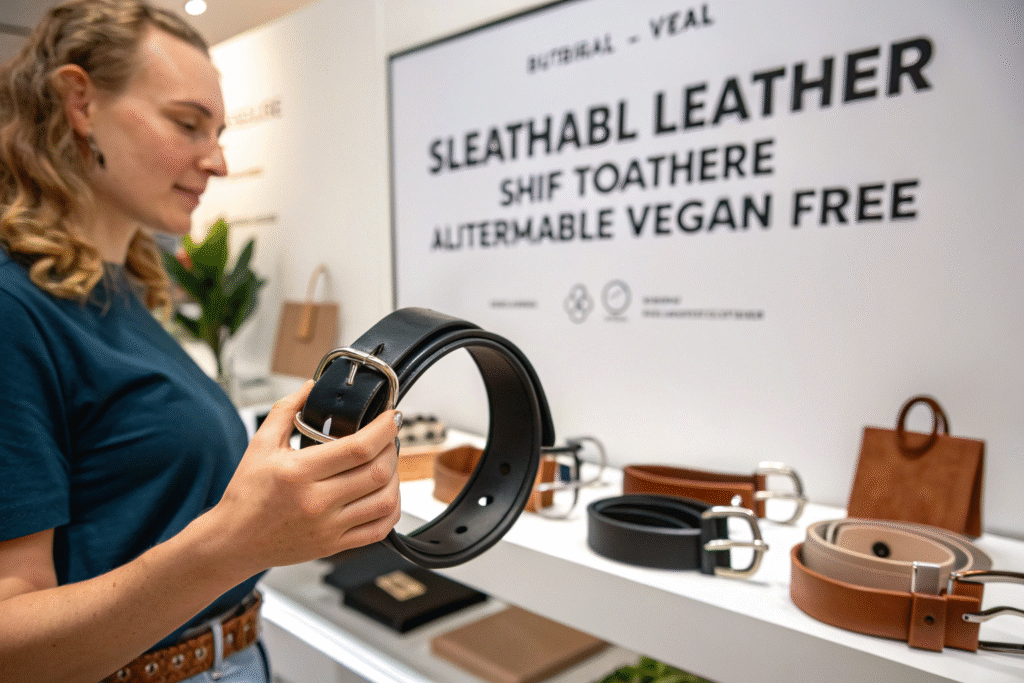
Sustainable PU belts provide a clear, guilt-free alternative. As a vegan material, they completely avoid the animal welfare issues associated with leather. This allows retailers and brands to tap into the rapidly expanding vegan and cruelty-free market with a product that is ethically unambiguous from the start.
What is the Vegan Market's Purchasing Power?
The vegan fashion market is no longer a niche. It's a multi-billion dollar industry driven by Millennials and Gen Z. These consumers are not just vegetarians; they are flexitarians, environmentalists, and ethical shoppers who actively seek out products that align with their values.
For a retailer, offering a high-quality, vegan belt collection is no longer a "nice-to-have" but a strategic necessity to capture this powerful demographic. It allows them to make a clear values-based statement that resonates deeply and drives loyalty.
How Do Certifications Build Trust?
To combat greenwashing, credible third-party certifications are crucial. Look for belts that are certified by organizations like PETA-Approved Vegan or The Vegan Society. These labels provide independent verification of the product's animal-free status, giving retailers and consumers confidence in the ethical claims. This transparent certification is a key part of building a trusted sustainable brand.
What Are the Environmental Credentials of Sustainable PU?
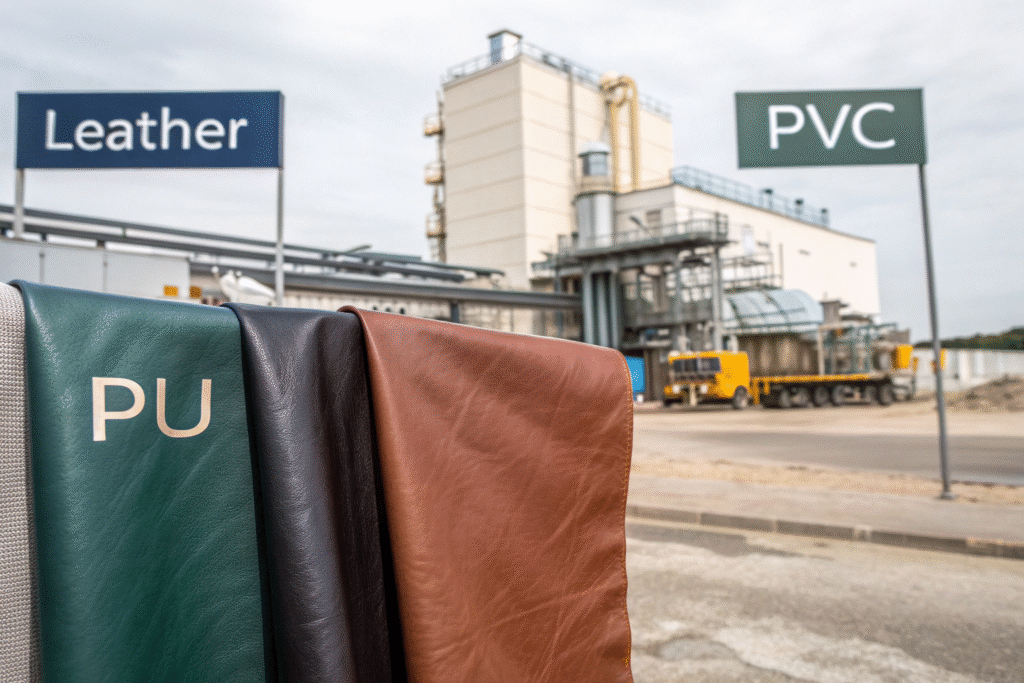
The term "PU" often gets lumped together with the notoriously harmful PVC (polyvinyl chloride). However, high-quality, sustainable PU is a fundamentally different material with a much-improved environmental profile. The key differentiator is the absence of chlorine and phthalates, which are major toxins in PVC production and disposal.
When produced responsibly, sustainable PU offers a lower environmental impact across its entire lifecycle compared to both conventional leather and virgin PVC. This makes it a smarter choice for retailers looking to reduce their overall ecological footprint.
How Does it Compare to Leather's Footprint?
The environmental argument against leather is robust. The livestock industry is a major contributor to greenhouse gas emissions, deforestation, and water consumption. The tanning process itself is highly polluting, often involving toxic chemicals like chromium.
A sustainable PU belt bypasses this entire resource-intensive chain. While not impact-free, its production generally requires less water, less land, and generates fewer greenhouse gases than bovine leather production. For retailers promoting a circular economy, this is a compelling narrative.
What Makes PU "Sustainable"?
The sustainability of a PU belt hinges on several factors:
- Water-Based Polyurethane: The most significant advancement. Traditional PU uses toxic solvents. Water-based PU formulations eliminate these hazardous solvents, making the production process safer for workers and the environment.
- Recycled Backing: The fabric backing for the PU layer can be made from recycled PET bottles, further enhancing the product's green credentials.
- End-of-Life Options: While not always biodegradable, high-quality PU is a thermoplastic that can be more easily recycled than the complex composite of leather, which is treated with chemicals and dyes.
How Do Performance and Design Drive Commercial Success?
Ethics and sustainability mean little if the product fails in the marketplace. A belt must be durable, stylish, and versatile. Early generations of vegan leather were often criticized for being plastic-like, stiff, and prone to cracking. Modern sustainable PU has overcome these limitations.
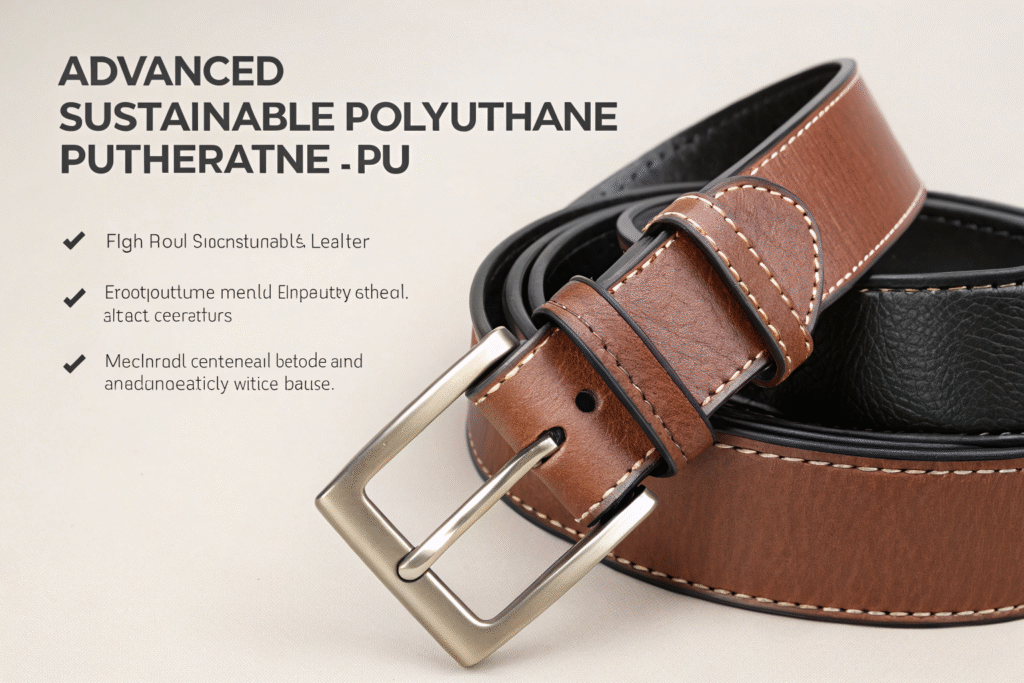
Advanced manufacturing techniques have created PU materials that are soft, supple, and highly durable. They can be embossed with incredibly realistic grains that are virtually indistinguishable from high-quality animal leather, or finished with modern, uniform textures that appeal to contemporary tastes.
What Are the Key Performance Advantages?
For the end-consumer, sustainable PU belts offer tangible benefits:
- Consistency and Uniformity: Unlike natural leather, which has scars and variations, PU offers a consistent appearance, which is crucial for brand control and large-scale fashion production.
- Lightweight and Comfort: PU is typically lighter than comparable leather, adding to wearing comfort.
- Water and Stain Resistance: The non-porous surface of PU makes it naturally resistant to water and stains, a practical advantage for everyday wear.
These performance characteristics make it an reliable and high-performing product for a casual belt collection.
Why is Design Versatility a Retailer's Dream?
From a merchandising perspective, sustainable PU is a dream material. It can be produced in a virtually limitless color palette without the dye lot variations of leather. It can be easily embossed with custom patterns or logos, allowing for high levels of brand customization.
This versatility allows retailers to quickly respond to fashion trends with a sustainable product, offering everything from classic black and brown belts to vibrant, on-tone colors without the lead time and cost associated with leather dyeing.
Why Are They a Commercial Winner for Retailers?
Ultimately, a product must make commercial sense. Sustainable PU belts hit the sweet spot for retailers by offering strong margins, meeting consumer demand, and future-proofing the assortment against tightening environmental regulations.
The combination of lower raw material costs compared to premium leather and high consumer demand for ethical products creates a favorable margin structure. This allows retailers to offer a product that feels premium and aligns with values, at an accessible price point.

How Do They Align with a Retailer's ESG Goals?
For large retailers, Environmental, Social, and Governance (ESG) metrics are increasingly important to investors and stakeholders. Sourcing products with a lower environmental impact and a clear ethical stance directly contributes to positive ESG reporting.
By building a supplier base that includes manufacturers of sustainable PU, retailers can demonstrate progress toward their sustainability targets, making their entire operation more resilient and attractive in the modern marketplace. Partnering with a factory that has a strong quality and sustainability protocol is key to this.
Conclusion
Sustainable PU belts are dominating eco-conscious retail because they represent a perfect alignment of ethics, environment, and commerce. They deliver a verified vegan and cruelty-free product, a significantly reduced environmental footprint compared to leather and PVC, and a high-performance, versatile, and commercially attractive accessory that meets the demands of both retailers and consumers. In a retail world increasingly defined by values-based purchasing, they are not just an alternative, but a superior choice for building a responsible and profitable accessories assortment.
If you are a retailer looking to lead in the eco-conscious space with a high-quality, sustainable PU belt collection, our factory specializes in advanced, water-based PU materials and ethical production. Contact our Business Director, Elaine, at elaine@fumaoclothing.com to explore how we can help you build a best-selling, future-proof assortment.