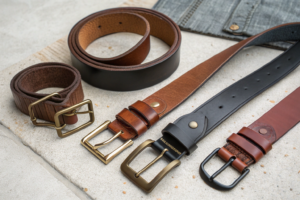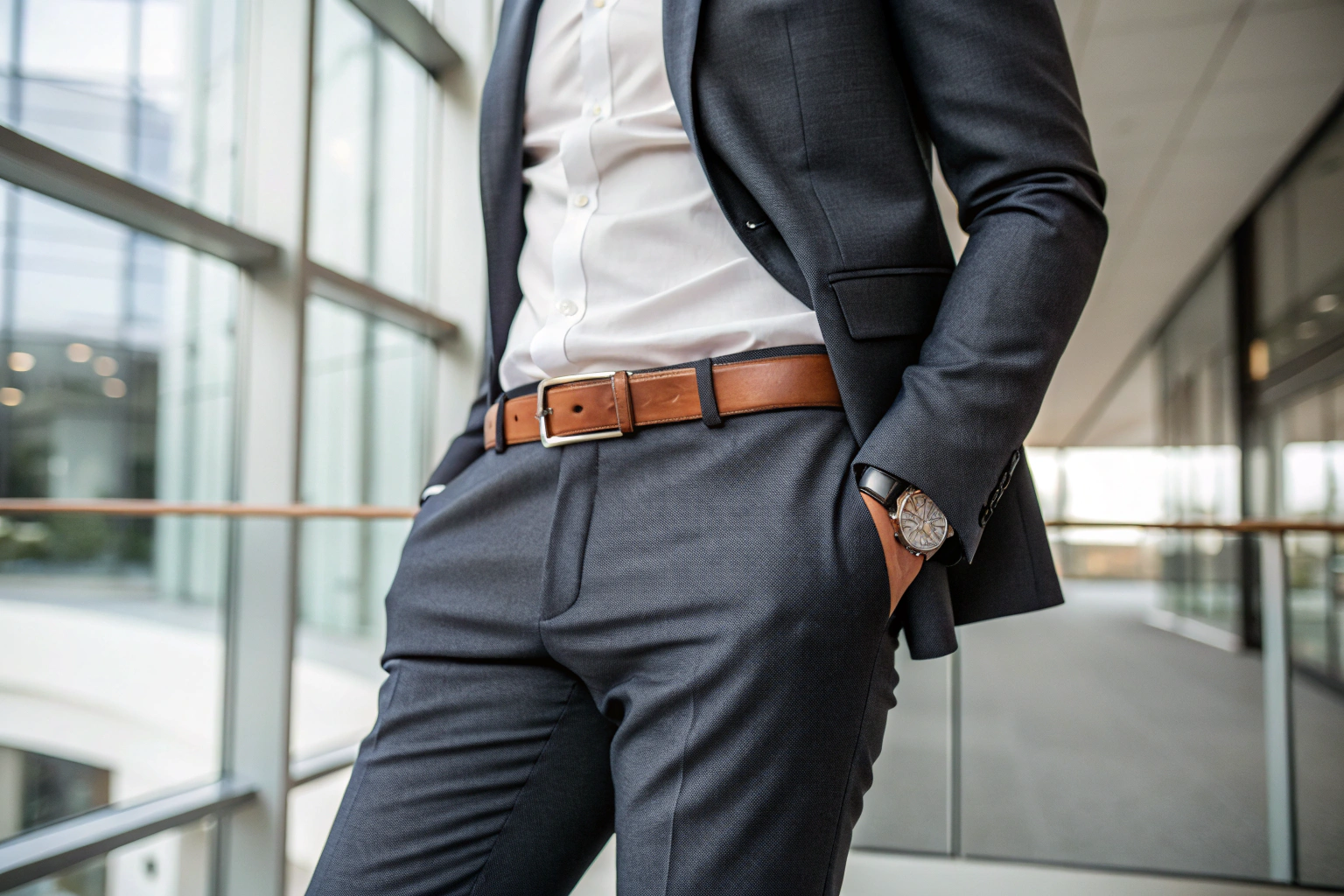
Are your customers complaining that their belts ruin the sleek silhouette of their tailored suits? This is a common frustration in menswear and womenswear. A bulky belt can disrupt the clean lines of a perfectly tailored suit, undermining the entire aesthetic. As a manufacturer specializing in both formal belts and fashion accessories, we understand this delicate balance intimately.
Ultra-thin belts are essential for tailored suiting because they provide necessary waist definition without adding visual bulk, preserve the suit's clean lines and silhouette, and offer a refined, polished finish that complements high-quality tailoring. Their slim profile ensures they function as a subtle accessory rather than a dominant, disruptive element.
The right belt should enhance, not compete with, a custom-tailored suit. We will explore the specific reasons why a thin belt is a critical component of formal wear. You will learn how this subtle detail can elevate your customers' entire appearance, ensuring their suit looks as sharp and intentional as it should.
How Do Ultra-Thin Belts Preserve a Suit's Silhouette?
A suit's most valuable asset is its silhouette. A thick, heavy belt acts like a visual barrier, cutting the body in half and destroying the long, lean line that tailoring aims to create. This is the primary pain point for style-conscious consumers.
Ultra-thin belts preserve a suit's silhouette by minimizing visual interruption at the waistline. They provide just enough definition without creating a horizontal "block" that shortens the torso and breaks the elegant vertical flow of the suit. This is crucial for both men's dress belts and slender women's fashion belts designed for suiting.

Why Does Belt Thickness Matter for Proportion?
In formal wear, proportion is everything. A belt that is too wide can look clumsy and disproportionate with the fine lapels and precise stitching of a well-made suit. An ultra-thin belt, typically between 1.1 to 1.5 inches wide, maintains a harmonious scale with other suit accessories like ties and pocket squares. It frames the body in a way that is subtle and sophisticated, not overt and utilitarian.
How Does a Thin Belt Complement Tailored Trousers?
Tailored trousers are often constructed with a smooth, continuous drape from waist to hem. A bulky belt buckle and thick leather can cause unsightly pulling and bunching of the fabric at the waistband. A thin, supple leather belt lies flat against the body, allowing the trousers to hang naturally and maintain their intended line, which is a key marker of quality in formal attire.
What Are the Aesthetic Advantages of a Slim Belt?
Beyond mere silhouette, the aesthetic of the belt itself contributes significantly to the overall look. A thin belt communicates refinement and attention to detail, signaling that the wearer understands the nuances of classic style.
The aesthetic advantages include a more elegant and less utilitarian appearance, the ability to feature finer, more delicate buckles, and a profile that looks intentional rather than overly casual. This makes a skinny belt the definitive choice for business and formal occasions.
How Does a Slim Belt Enhance Perceived Quality?
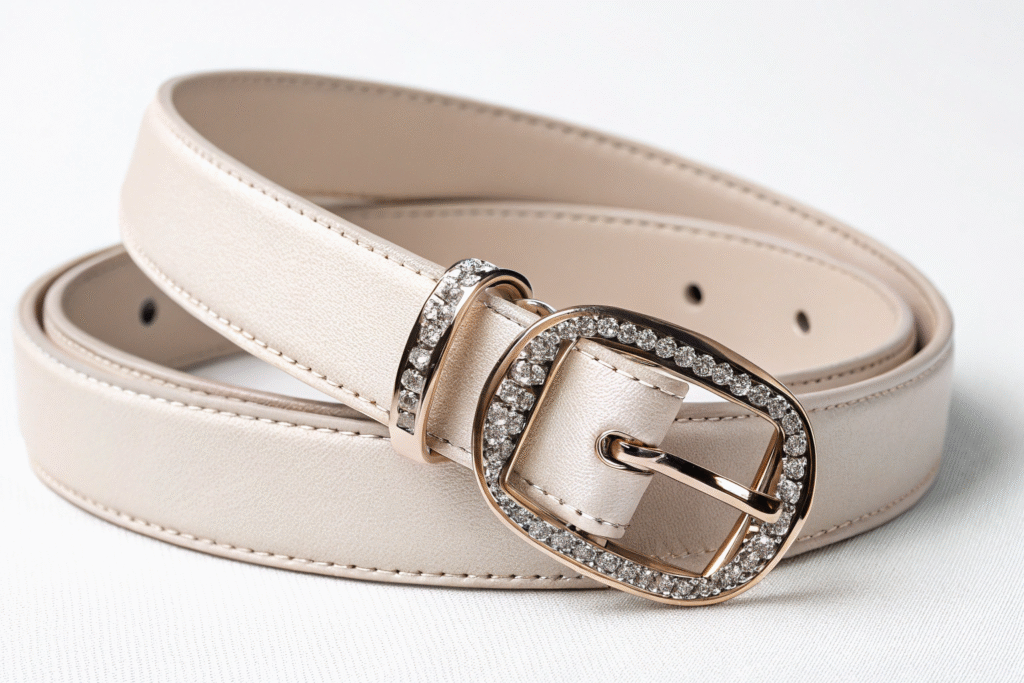
A thin belt often requires superior craftsmanship. The leather must be of high quality to remain durable despite its slender cut, and the hardware must be perfectly scaled. This focus on precise quality control in manufacturing results in an accessory that feels inherently more luxurious. For your customers, offering a genuine leather belt in a slim profile positions your brand as a purveyor of refined goods.
What Role Does the Buckle Play?
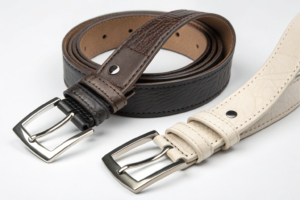
The buckle on an ultra-thin belt is typically a simple, elegant pin buckle or a slim plate buckle. This avoids the large, flashy logos and heavy mechanisms common on casual belts. A discreet, polished buckle adds a touch of metallic accent without becoming the focal point, ensuring it complements other metal elements like cufflinks or a watch, which is essential for a cohesive professional look.
Are There Functional Benefits to Thin Belts for Suits?
While aesthetics are primary, functionality cannot be ignored. Some may assume that a thinner belt is less durable or functional, but this is a misconception when the product is well-made.
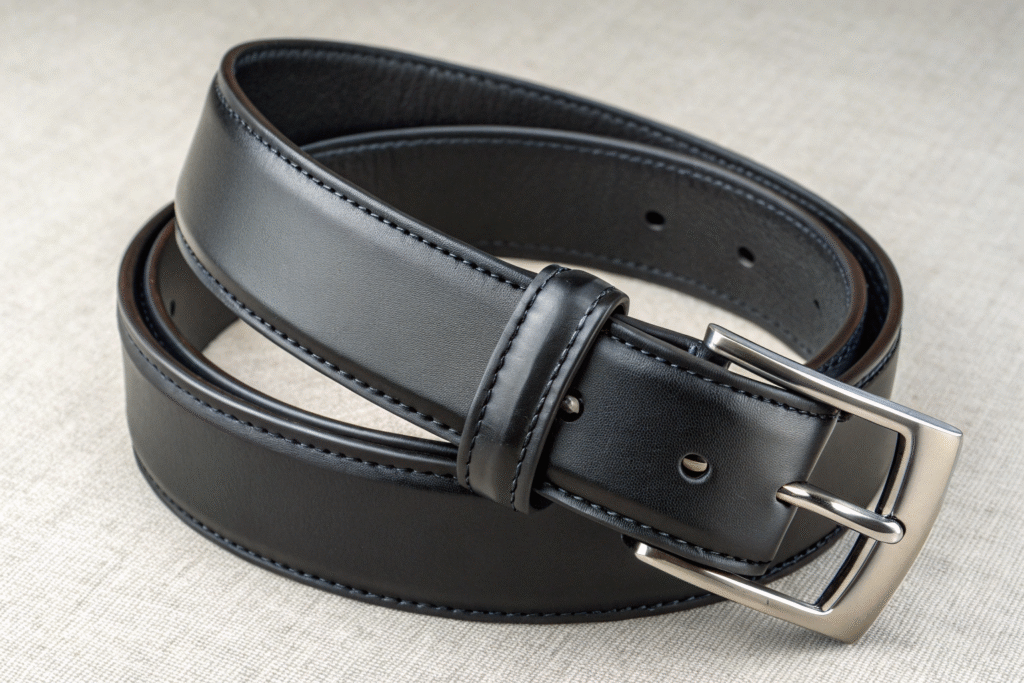
The functional benefits are substantial: reduced break-in time, superior comfort when sitting, and less wear and tear on the suit's belt loops. A well-constructed thin dress belt made from high-grade calfskin leather or other fine materials offers both flexibility and long-lasting performance.
Does a Thin Belt Offer Better Comfort?
Comfort is a significant functional advantage. A thick, rigid belt can dig into the abdomen when the wearer is seated—a common position in meetings and dinners. A slim, pliable belt bends and moves with the body, providing consistent comfort throughout the day. This enhanced comfort is a key selling point for customers who wear tailored clothing for long hours.
How Does It Affect Suit Longevity?
A thick belt with a large buckle can prematurely stretch and wear out the delicate belt loops on tailored trousers. An ultra-thin belt puts minimal stress on these loops, preserving the integrity of the garment. This is a critical consideration for customers investing in high-end, durable menswear and womenswear, as it protects their primary investment—the suit itself.
How to Style Ultra-Thin Belts with Different Suits?
The versatility of the ultra-thin belt is one of its greatest strengths. It is not a one-note accessory but can be styled effectively across a range of suit types and colors.
Styling involves matching the belt's color and material to the suit and occasion. A classic black or brown leather belt pairs with charcoal and navy suits, while a reversible belt offers flexibility. The goal is to create a harmonious look where the belt is an integrated element, not a standalone statement.

What are the Rules for Color Matching?
The safest rule is to match your belt to your shoes. A rich brown leather belt with brown Oxfords and a navy or grey suit is a timeless combination. A black belt is essential with black shoes. For the most formal events, the belt should be a subtle complement, not a contrast. This simple guidance helps your customers achieve a polished look effortlessly, making your accessory line an easy choice.
Can a Thin Belt Be Worn with Patterned Suits?
Absolutely. In fact, a thin belt is even more critical with patterned suits like pinstripes or checks. A bulky belt would clash with the pattern and create visual chaos. A slim, solid-colored belt provides a quiet, grounding element that allows the suit's pattern to remain the star. This makes it an indispensable wardrobe essential for the modern professional.
Conclusion
Ultra-thin belts are not merely a trend but a fundamental component of sophisticated tailored suiting. They are essential because they protect the suit's silhouette, offer unmatched aesthetic refinement, provide practical comfort, and ensure versatility across a wardrobe. By choosing a slim, well-crafted belt, the wearer demonstrates a mastery of formal style details that separates a good outfit from a great one.
If you are looking to source high-quality ultra-thin belts that will perfectly complement your tailored clothing offerings, we are here to assist. Our factory specializes in creating elegant, slim-profile belts for discerning brands. Contact our Business Director, Elaine, to discuss your specific needs and request samples. Reach her at elaine@fumaoclothing.com. Let's collaborate to equip your customers with the definitive finishing touch for their suits.