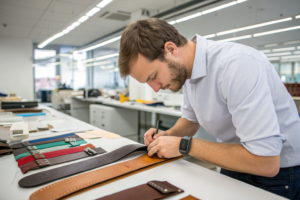
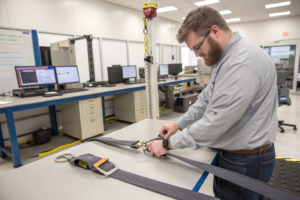
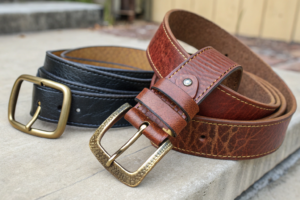
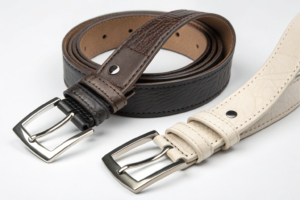
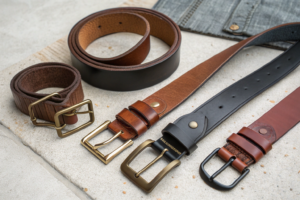
The leather industry faces increasing scrutiny over its environmental impact, particularly regarding chromium tanning processes that have been standard practice for over a century. As consumers and regulators demand more sustainable manufacturing, chromium-free leather emerges as a viable alternative—but does it deliver both environmental benefits and commercial viability for belt manufacturing?
Choosing chromium-free leather for green manufacturing eliminates hazardous waste concerns, improves workplace safety, enables cleaner production cycles, and aligns with circular economy principles while maintaining quality standards suitable for premium belt production. This approach typically uses plant-based tannins, synthetic alternatives, or innovative mineral processes that avoid hexavalent chromium formation—a known carcinogen that represents the most significant environmental liability in traditional leather manufacturing.
The transition to chromium-free leather represents both an environmental imperative and strategic business decision. Let's examine the environmental advantages, performance characteristics, certification frameworks, and commercial considerations that make chromium-free leather increasingly compelling for forward-thinking belt manufacturers.
What Environmental Advantages Does Chromium-Free Leather Offer?
The environmental benefits of chromium-free leather extend beyond eliminating a single chemical to encompass broader manufacturing ecosystem improvements. These advantages address multiple sustainability challenges simultaneously.
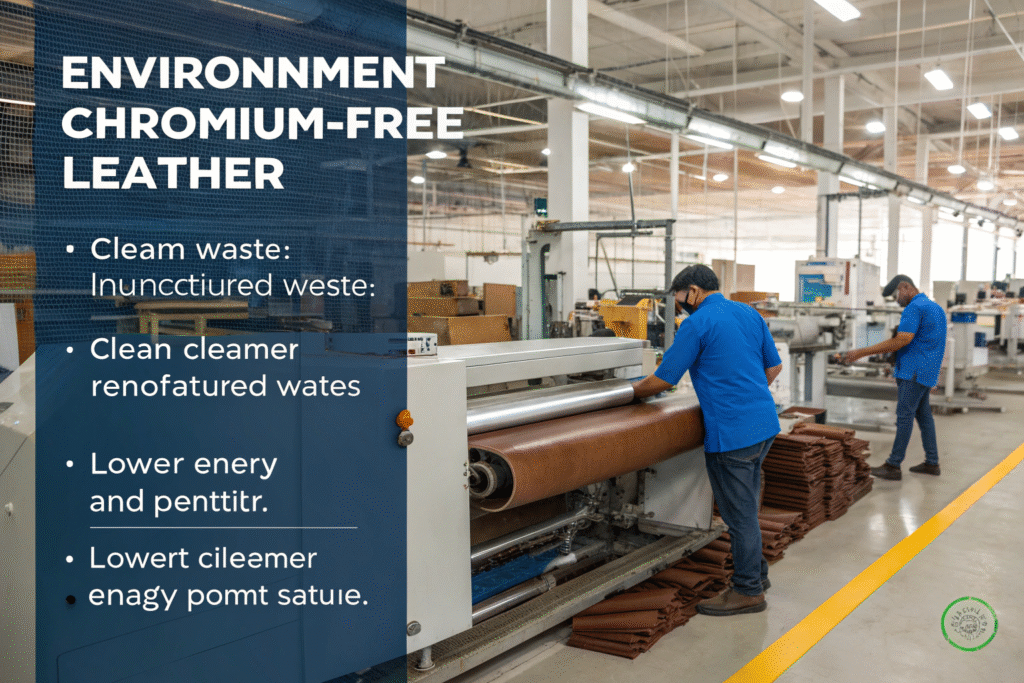
Environmental advantages include eliminated hazardous waste generation, reduced water pollution potential, lower energy requirements, and improved biodegradability. Each factor contributes to a significantly reduced environmental footprint compared to conventional chrome-tanned leather.
How Does Chromium-Free Tanning Reduce Water Pollution?
Chromium-free tanning reduces water pollution by eliminating the risk of hexavalent chromium formation in wastewater—a persistent environmental contaminant that requires specialized treatment in conventional tanneries. Plant-based tannins and alternative mineral processes generate biodegradable waste streams that can be treated through conventional biological systems, significantly reducing the environmental liability associated with tannery operations. Wastewater from chromium-free processes typically shows 85-95% reduction in heavy metal contamination compared to chrome tanning effluent. Water quality standards from the Environmental Protection Agency document the environmental advantages of chromium-free processes.
What Waste Reduction Benefits Come from Alternative Tanning?
Waste reduction benefits include valuable byproduct creation from spent tanning materials, reduced hazardous waste disposal costs, and the ability to compost leather scraps without heavy metal contamination. Chromium-free tanneries often implement circular systems where tanning byproducts become agricultural inputs or other industrial materials, contrasting with chrome tanning waste that requires expensive hazardous waste disposal. The most advanced systems achieve 90%+ material utilization compared to 60-70% in conventional operations. Circular economy metrics from the Ellen MacArthur Foundation demonstrate the waste reduction potential.
What Performance Characteristics Make It Viable for Belts?
Beyond environmental benefits, chromium-free leather must meet practical performance requirements for belt applications. Understanding its functional characteristics ensures appropriate implementation.
Performance characteristics include durability under stress, consistency across production runs, aesthetic qualities, and maintenance requirements. These factors determine whether chromium-free leather delivers satisfactory performance in belt applications.
How Does Chromium-Free Leather Durability Compare?
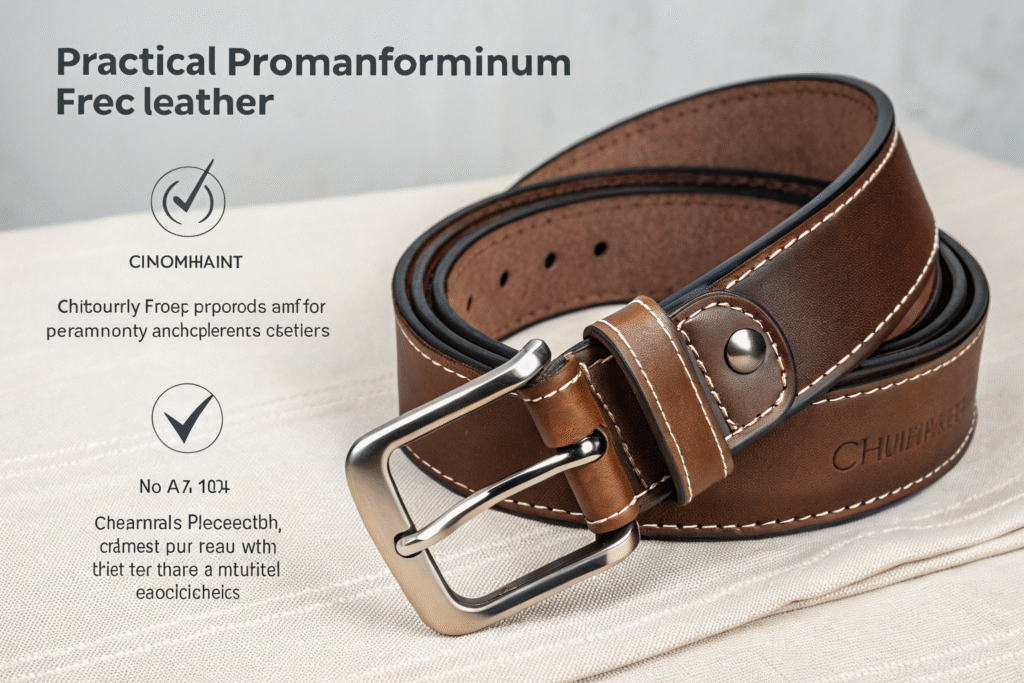
Chromium-free leather durability compares favorably with chrome-tanned alternatives, typically achieving 85-95% of the tensile strength and tear resistance while offering superior aging characteristics. Vegetable-tanned leather develops a protective patina over time rather than deteriorating, often outlasting chrome-tanned leather in long-term use. For belt applications specifically, chromium-free options demonstrate excellent resistance to buckle stress and repeated flexing when properly manufactured. Testing standards from ASTM International provide comparative durability metrics for different tanning methods.
What Aesthetic Advantages Does Chromium-Free Leather Offer?
Chromium-free leather offers aesthetic advantages including richer natural coloring, unique character development through patina formation, and the ability to achieve vintage appearances that chrome-tanned leather cannot replicate. The material accepts natural dyes more effectively, resulting in deeper color penetration and more complex visual depth. For fashion belts, these characteristics create products with storytelling potential and artisanal appeal that mass-produced chrome-tanned leather lacks. Market research from The Luxury Institute shows consumers perceive vegetable-tanned leather as higher quality despite similar production costs.
What Certification Frameworks Verify Authentic Green Manufacturing?
The growing demand for sustainable leather has spawned various certification systems, but not all provide equivalent verification of environmental claims. Understanding these frameworks ensures genuine green manufacturing.
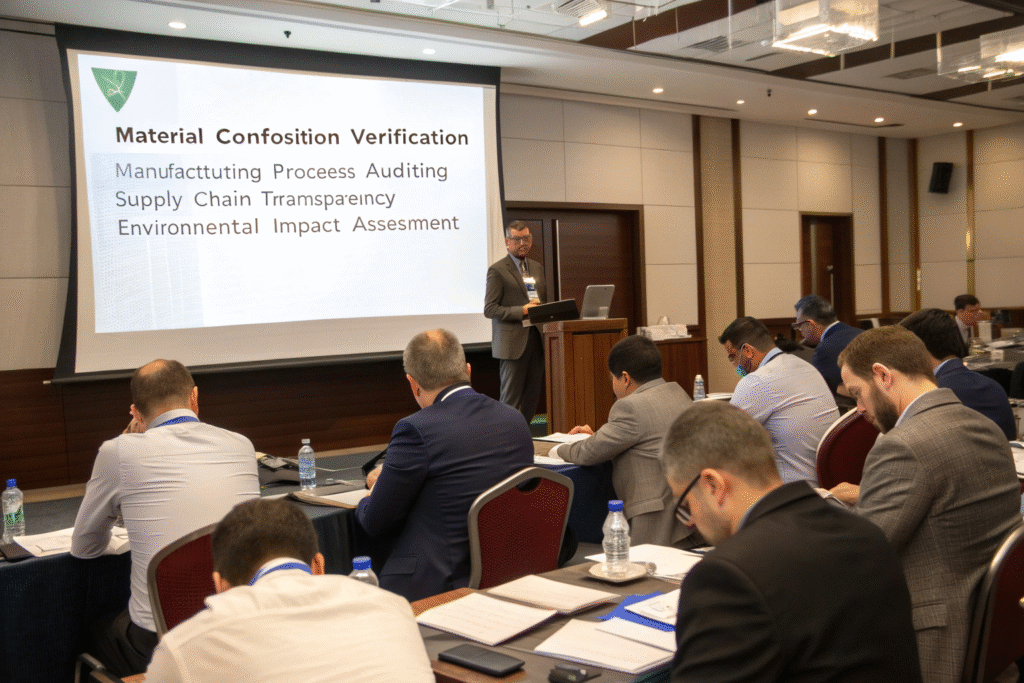
Certification frameworks include material composition verification, manufacturing process auditing, supply chain transparency, and environmental impact assessment. Each element contributes to credible sustainability claims.
What Certifications Authentically Verify Chromium-Free Claims?
Certifications that authentically verify chromium-free claims include the Leather Working Group environmental audit protocol, OEKO-TEX Standard 100 for harmful substance testing, and Cradle to Cradle Certified for material health assessment. These certifications require independent laboratory testing to verify the absence of chromium and other restricted substances while auditing manufacturing conditions. The most rigorous standards include supply chain verification to ensure raw materials originate from responsible sources. Certification requirements from Global Organic Textile Standard provide frameworks for comprehensive environmental verification.
How Do Lifecycle Assessments Support Sustainability Claims?
Lifecycle assessments support sustainability claims by quantifying environmental impacts across the complete product lifecycle—from raw material extraction through manufacturing, use, and end-of-life. For chromium-free leather, these assessments typically show 40-60% reduction in aquatic toxicity potential, 25-35% reduction in fossil resource scarcity, and significantly improved biodegradability compared to chrome-tanned alternatives. The most credible assessments follow ISO 14044 standards and undergo critical review by independent panels. Environmental footprint data from the Sustainable Apparel Coalition's Higg Index provides standardized assessment methodologies.
What Commercial Considerations Support the Transition?
Beyond environmental benefits, chromium-free leather must demonstrate commercial viability through cost management, market positioning, and supply chain stability. Understanding these factors ensures sustainable business implementation.
Commercial considerations include cost structure analysis, premium pricing potential, supply chain reliability, and consumer acceptance. Each factor influences the business case for transitioning to chromium-free leather.

How Does Chromium-Free Leather Cost Structure Compare?
Chromium-free leather cost structure typically shows 15-30% higher material costs but 10-20% lower compliance and waste disposal expenses, creating near-parity with chrome-tanned leather at commercial scales. The higher initial costs primarily reflect smaller production volumes and more expensive tanning materials, while savings come from reduced environmental monitoring, hazardous waste disposal, and regulatory compliance requirements. At production volumes exceeding 50,000 square feet monthly, cost differences typically narrow to 5-15%. Manufacturing cost data from the International Council of Tanners provides detailed cost breakdowns.
What Market Positioning Advantages Does It Offer?
Market positioning advantages include access to sustainability-focused retail channels, ability to command 20-40% price premiums for verified eco-friendly products, and differentiation in increasingly competitive markets. Brands using certified chromium-free leather typically experience higher sell-through rates, increased press coverage, and stronger consumer loyalty. These advantages are particularly valuable for direct-to-consumer brands where storytelling and transparency drive purchasing decisions. Market analysis from Nielsen shows sustainable product growth rates 3-5x higher than conventional alternatives.
Conclusion
Choosing chromium-free leather for green manufacturing represents a strategic decision that balances environmental responsibility with commercial practicality. The approach eliminates significant environmental liabilities while creating products with compelling market differentiation and storytelling potential. As processing technologies advance and production scales increase, chromium-free options are becoming increasingly competitive with conventional chrome-tanned leather across both cost and performance metrics.
The transition to chromium-free leather aligns with broader industry shifts toward transparency, circularity, and reduced environmental impact. If you're committed to sustainable belt manufacturing and seek partners with verified chromium-free capabilities, our production facilities specialize in environmentally responsible leather processing. Contact our Business Director, Elaine, to discuss how we can develop chromium-free leather belts that meet your quality and sustainability standards. Reach out to Elaine at elaine@fumaoclothing.com. Let's create accessories that respect both craftsmanship and environment.