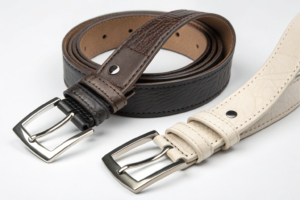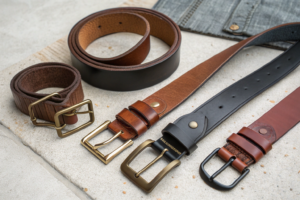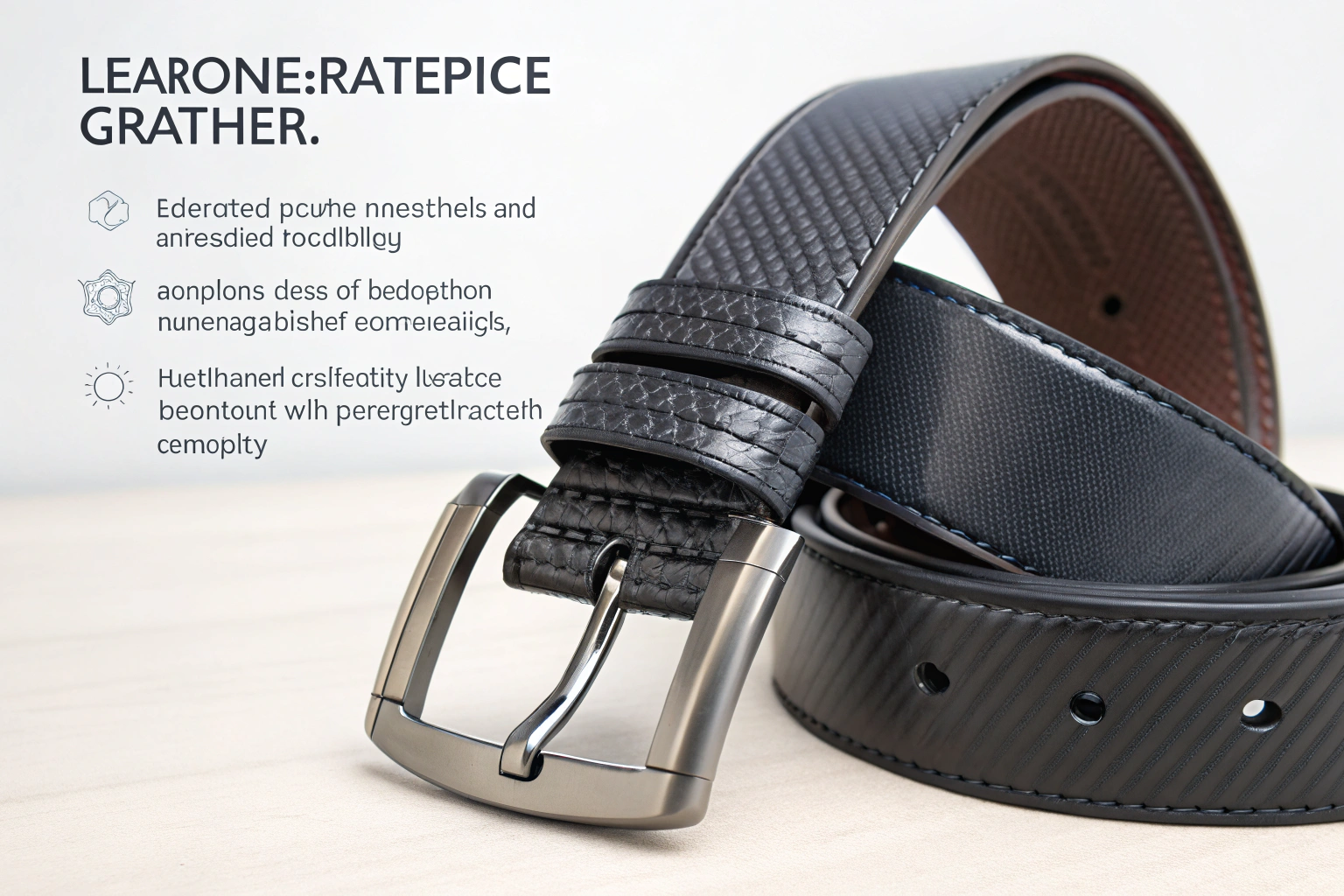
The convergence of advanced materials science and traditional leathercraft is revolutionizing the accessories industry, with graphene-infused leather emerging as a groundbreaking innovation for high-performance belts. This material fusion represents more than incremental improvement—it fundamentally transforms leather's capabilities while preserving its aesthetic and tactile qualities that consumers value.
Graphene-infused leather is chosen for high-tech belts because it combines unprecedented strength-to-weight ratio, natural antimicrobial properties, enhanced thermal regulation, and maintained flexibility with traditional leather aesthetics. This nanocomposite material addresses longstanding limitations of conventional leather while introducing capabilities previously unavailable in natural materials. The resulting belts offer durability far exceeding traditional options while providing practical benefits that align with modern consumer priorities around performance, sustainability, and hygiene.
As the market for performance accessories grows, understanding graphene's transformative impact on leather reveals why this material represents the future of high-tech belts across professional, outdoor, and fashion applications.
What Material Advantages Does Graphene Integration Create?
The incorporation of graphene into leather creates a composite material with properties neither component possesses independently, delivering tangible benefits throughout the product lifecycle.
How Does Graphene Transform Leather's Structural Properties?
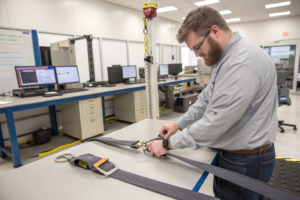
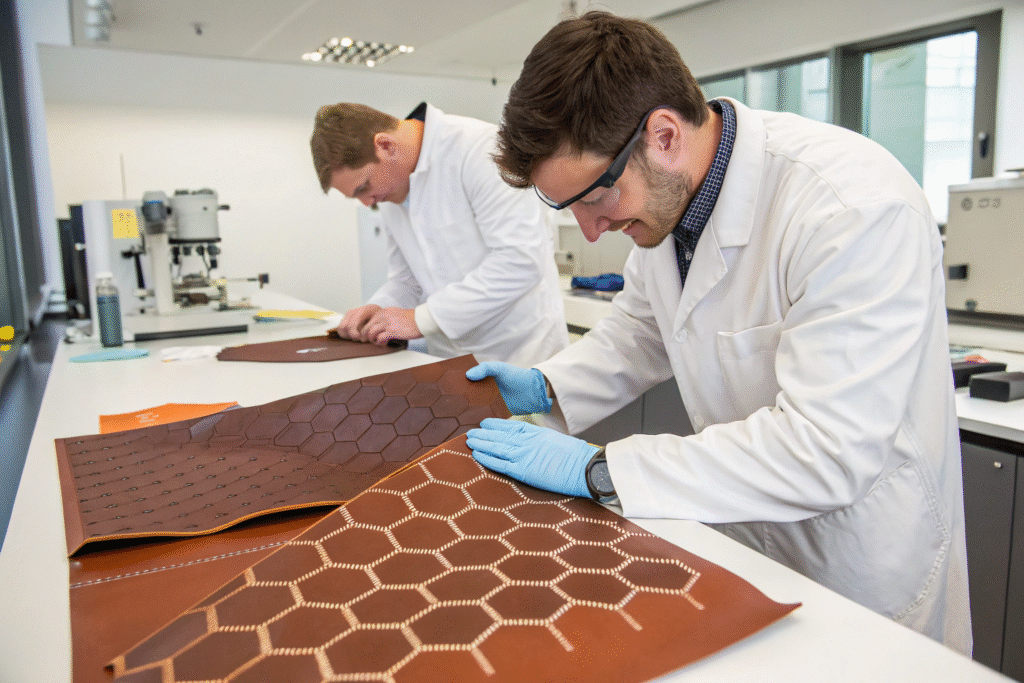
Graphene's incorporation creates a reinforced nanocomposite where the two-dimensional carbon lattice bridges leather's natural collagen fibers, distributing stress across the entire material rather than individual weak points. This nano-reinforcement increases tear resistance by 200-300% while actually reducing material thickness requirements. The resulting belts withstand extraordinary pulling forces without stretching or deforming, particularly valuable for tactical, industrial, or outdoor applications where failure could have serious consequences.
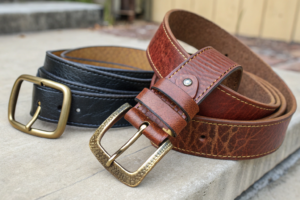
The strength enhancement extends to surface durability where graphene's hardness protects against scratches, abrasion, and surface compression that typically damage leather finishes. This preserved appearance means graphene-infused leather belts maintain their new appearance significantly longer than conventional alternatives, with testing showing 80% less visible wear after equivalent use periods. This durability directly impacts lifetime cost, as products require replacement less frequently despite higher initial investment.
What Performance Characteristics Differentiate Graphene Leather?
Beyond structural improvements, graphene introduces functional capabilities previously unavailable in natural materials. The material's high thermal conductivity helps regulate skin temperature, preventing the heat buildup common with traditional leather belts in warm conditions. This thermal management improves comfort during extended wear while reducing sweat absorption that typically degrades leather over time.
Graphene's electrical conductivity, while not sufficient for data transmission at typical belt thicknesses, provides static dissipation that protects sensitive electronics—a valuable feature for professionals working with computer equipment or electronic components. The most advanced implementations orient graphene flakes to create directional properties, such as enhanced flexibility across the belt width while maintaining stiffness along its length for better load bearing. This engineered anisotropy represents a fundamental advantage over uniformly enhanced materials.
How Do Graphene Belts Address Consumer Pain Points?
The practical benefits of graphene-infused leather directly solve common frustrations that lead consumers to replace belts prematurely.

What Hygiene Advantages Do Graphene Belts Offer?
Graphene's inherent antimicrobial properties address the hygiene concerns associated with traditional leather belts that absorb moisture and develop odors. The material inhibits bacterial growth without chemical treatments that can wear off or cause skin irritation. This natural resistance to microbial colonization keeps belts fresher between cleanings and prevents the deterioration that occurs when bacteria break down leather's organic components.
The hygiene advantage proves particularly valuable for active users, travelers who pack belts between uses, and individuals with skin sensitivities. Unlike antimicrobial coatings that penetrate only surface layers, graphene's integration throughout the material structure provides permanent protection that doesn't diminish with surface wear. This built-in protection represents a significant advancement over treated leathers that lose efficacy as finishes wear through normal use.
How Does Enhanced Longevity Impact Value Proposition?
The extraordinary durability of graphene-infused leather transforms belt ownership from a recurring expense to a long-term investment. Testing demonstrates that graphene-enhanced belts maintain structural integrity and appearance through 3-5 times more wear cycles than premium traditional leather equivalents. This extended lifespan justifies premium pricing while appealing to consumers seeking sustainable options through reduced consumption.
The longevity advantage extends beyond simple product replacement cycles to encompass maintained appearance. Graphene's scratch resistance means belt surfaces don't develop the scuffs and marks that typically make leather belts look "tired" before they actually fail structurally. This preserved appearance allows belts to transition longer between formal and casual contexts, increasing their utility across different wearing situations without appearing worn.
What Manufacturing Innovations Enable Graphene Integration?
Successfully incorporating graphene into leather requires advanced processes that maintain the material's extraordinary properties while preserving leather's workability and aesthetic qualities.
What Processes Successfully Integrate Graphene with Leather?
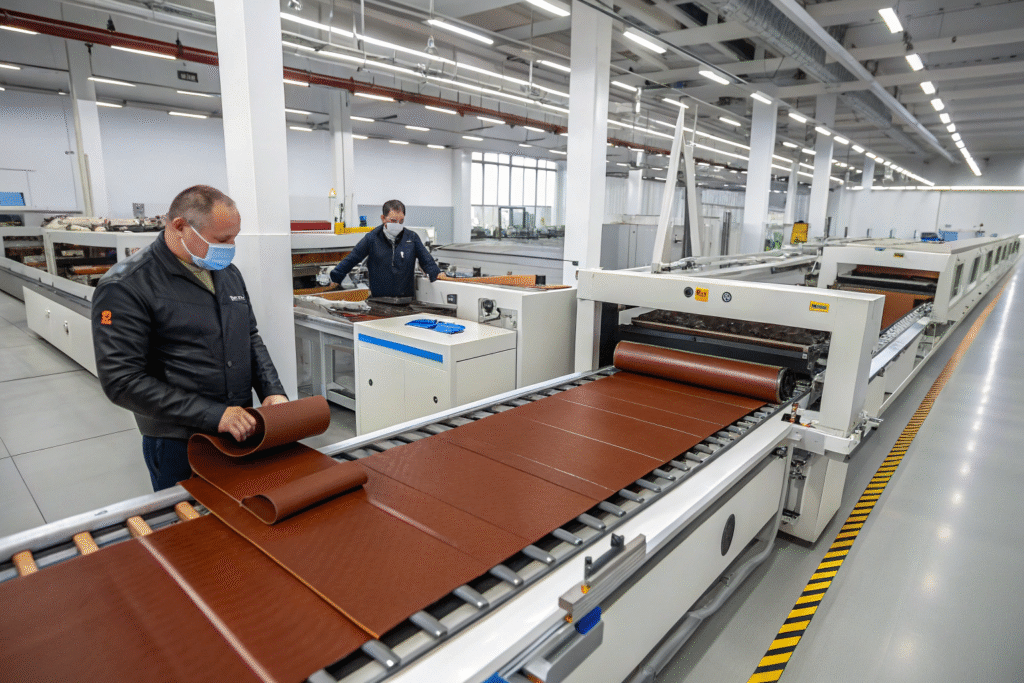
The most effective graphene integration methods use solution-based applications that ensure uniform distribution throughout the leather matrix. Advanced techniques include vacuum-assisted infusion that draws graphene suspensions deep into leather's porous structure, and electrophoretic deposition that uses electrical fields to align graphene flakes for optimal reinforcement. These methods achieve complete penetration rather than surface-only coating, ensuring enhanced properties persist as the surface wears.
The integration process must preserve leather's natural breathing characteristics and flexibility while adding graphene's benefits. The most sophisticated approaches control graphene concentration gradients—higher levels at surfaces subject to greatest wear, lower concentrations in interior regions where flexibility matters most. This graded approach optimizes the balance between durability and comfort, creating belts that feel familiar while performing far beyond conventional materials.
How Does Graphene Enhancement Affect Traditional Leatherworking?
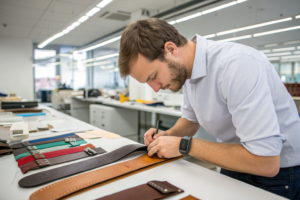
Graphene-infused leather remains fully compatible with traditional leatherworking techniques, accepting dyes, finishes, and tooling similarly to conventional leather. The enhancement actually improves workability in some aspects—increased tear resistance allows thinner skiving for elegant edge work, while reduced stretching provides more precise control during cutting and stitching. These processing benefits enable more refined construction than possible with conventional leather of equivalent durability.
The finishing process benefits particularly from graphene integration. The material's surface hardness allows higher polish levels without compromising grain character, and its stability prevents finish cracking that typically develops along flex lines. These finishing advantages create products with exceptional visual appeal that remains stable through years of use rather than deteriorating with flexing and environmental exposure.
How Does Graphene Alignment Support Sustainability Goals?
The environmental advantages of graphene-enhanced leather extend beyond product longevity to encompass broader sustainability considerations.
| Sustainability Factor | Graphene Leather Advantage | Conventional Leather Limitation |
|---|---|---|
| Product Lifespan | 3-5x longer usable life | Frequent replacement required |
| Chemical Usage | Reduced need for protective treatments | Regular conditioning and protection needed |
| Resource Efficiency | Thinner materials provide equal strength | Thicker cuts required for durability |
| End-of-Life Impact | Potentially recyclable composite | Limited recycling options |
| Production Waste | Enhanced durability reduces defect rates | Higher waste from imperfections |
How Does Extended Product Life Reduce Environmental Impact?
The dramatically extended lifespan of graphene-infused leather belts directly reduces consumption frequency and associated environmental impacts. A single long-lasting belt replaces multiple conventional belts that would otherwise be manufactured, packaged, shipped, and eventually discarded. This reduction in turnover rate decreases the cumulative resource extraction, energy consumption, and waste generation associated with frequent replacement.
The durability advantage proves particularly significant for leather products, where animal husbandry's environmental impact makes extending product life especially valuable. By maximizing utility from each hide through enhanced performance, graphene integration improves the efficiency of converting agricultural resources into long-service-life products. This approach aligns with circular economy principles that prioritize resource productivity through extended use periods.
What Production Efficiencies Does Graphene Enable?
Graphene enhancement allows thinner leather sections to provide equivalent or superior performance to thicker conventional leather, improving yield from each hide. This material efficiency reduces waste in cutting patterns and allows more products to be produced from the same raw material input. The reduced thickness also decreases shipping weight and volume, lowering transportation emissions throughout the supply chain.
The manufacturing process itself benefits from graphene's stability, which reduces production losses from handling damage during cutting, stitching, and finishing. This improved yield further enhances sustainability by ensuring more raw material becomes saleable product rather than waste. The cumulative effect of these efficiencies—from improved hide utilization to reduced transportation impact to decreased production waste—creates a significantly improved environmental profile compared to conventional leather manufacturing.
Conclusion
Graphene-infused leather represents a paradigm shift in belt materials, combining the timeless appeal of natural leather with cutting-edge nanotechnology that addresses both traditional limitations and modern performance requirements. The resulting products deliver unprecedented durability, innovative functionality, and enhanced sustainability that justify their position as premium offerings in the accessories market.
As manufacturing processes mature and costs decrease, graphene-enhanced leather is poised to transition from exotic specialty material to mainstream standard for quality belts. The technology's ability to preserve leather's desirable characteristics while eliminating its weaknesses creates compelling value propositions across consumer segments from fashion-conscious professionals to outdoor enthusiasts to industrial workers.
Ready to explore graphene-infused leather for your high-tech belt collections? Contact our Business Director, Elaine, at elaine@fumaoclothing.com to discuss how our advanced material capabilities can create next-generation belts that combine traditional craftsmanship with revolutionary performance characteristics.