Retailers face mounting challenges with inventory accuracy, theft prevention, and customer experience in an increasingly competitive landscape. Traditional security systems and inventory management methods create operational bottlenecks, false alarms, and customer friction. Meanwhile, consumers expect seamless shopping experiences that blend physical and digital convenience.
RFID-threaded belts are transforming smart retail by enabling seamless inventory tracking, enhanced security, and personalized customer experiences without compromising aesthetics or comfort. These innovative accessories embed tiny RFID chips directly into belt materials, creating a connected platform that bridges physical products and digital systems throughout the retail environment.
The integration of RFID technology into fashion accessories represents a significant advancement in retail technology. This exploration details how RFID-threaded belts solve critical retail challenges while creating new opportunities for customer engagement and operational efficiency.
How Do RFID-Threaded Belts Revolutionize Inventory Management?
Traditional inventory counting requires manual scanning of individual items, a time-consuming process that often results in inaccuracies and stock discrepancies. RFID-threaded belts transform this labor-intensive task into an automated, continuous process that provides real-time visibility into stock levels and product movement.
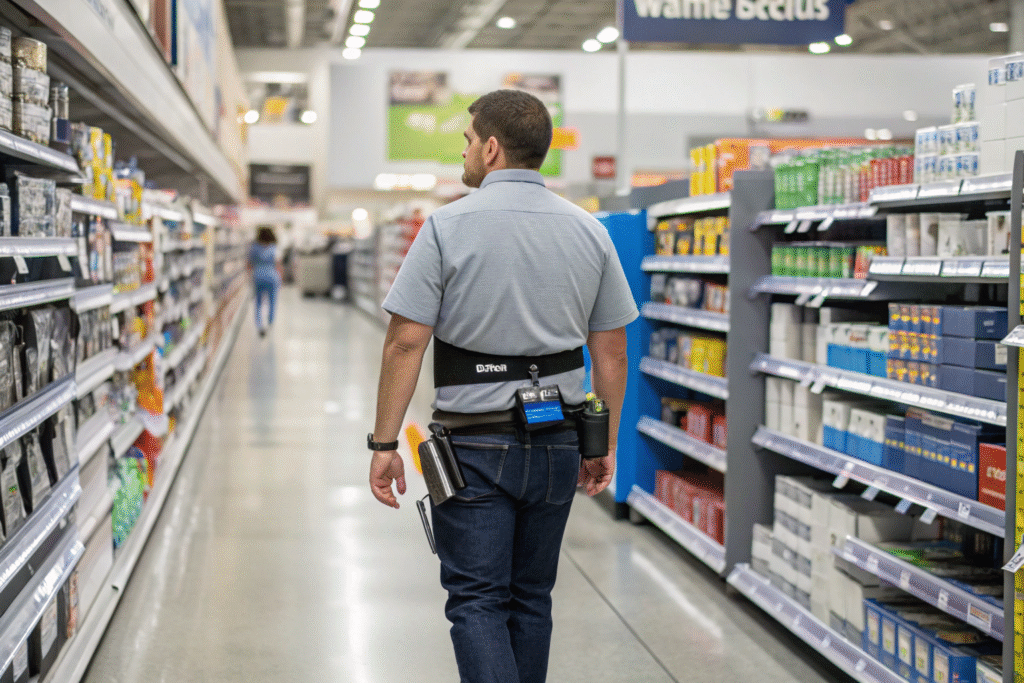
RFID-threaded belts enable staff to conduct inventory counts simply by walking through store aisles, with readers automatically capturing data from both products and the belt itself. This continuous monitoring provides accurate, up-to-the-minute inventory data that supports better purchasing decisions and reduces out-of-stock situations.
What Makes RFID Superior to Traditional Barcode Systems?
Unlike barcodes that require line-of-sight scanning, RFID technology can read multiple items simultaneously through fabrics and other materials. This allows staff wearing RFID-threaded belts to count entire shelves without removing items, reducing inventory time by up to 90% while improving accuracy to nearly 100%. The efficiency gains directly translate to labor cost savings and better inventory management.
How Does Real-Time Inventory Data Prevent Stockouts?
With traditional systems, inventory counts might occur weekly or monthly, creating significant gaps in stock visibility. RFID-threaded belts enable continuous inventory monitoring that immediately flags low stock levels, allowing for proactive replenishment before customers encounter empty shelves. This real-time visibility is particularly valuable for high-turnover items and size-specific products where stockouts directly impact sales.
What Security Advantages Do RFID-Threaded Belts Provide?
Retail shrinkage costs the global industry billions annually, with traditional security systems often creating customer discomfort while failing to prevent sophisticated theft. RFID-threaded belts offer a discreet yet powerful alternative that enhances security without the negative shopping experience associated with visible anti-theft measures.
RFID-threaded belts create an intelligent security network that tracks merchandise movement throughout the store, detecting suspicious patterns and preventing unauthorized removal. The system provides detailed analytics that help identify theft patterns and vulnerable products.

How Do RFID Systems Deter Organized Retail Crime?
Organized retail crime groups often test security systems by removing tags or exploiting blind spots. RFID-enabled security creates an invisible network that tracks items from receiving to sales floor, making it difficult to bypass without triggering alerts. The technology also helps law enforcement identify stolen goods through unique item identification, reducing the resale value of stolen merchandise.
Can RFID Reduce False Alarms from Traditional EAS Systems?
Traditional electronic article surveillance (EAS) systems frequently generate false alarms from improperly deactivated tags, creating customer frustration and staff distraction. RFID systems provide item-level intelligence that distinguishes between purchased and unpurchased items, virtually eliminating false alarms at exits while maintaining high theft detection rates. This improvement enhances the customer experience while maintaining security effectiveness.
How Do RFID-Threaded Belts Enhance Customer Experience?
Modern consumers expect personalized, efficient shopping experiences that blend the best of physical and digital retail. RFID-threaded belts enable service innovations that meet these expectations while providing valuable data to improve future customer interactions.
The technology enables features like instant product information access, streamlined checkout processes, and personalized recommendations based on real-time customer interactions. These enhancements transform standard customer service into a connected, intelligent experience.
How Does RFID Enable Instant Product Information Access?
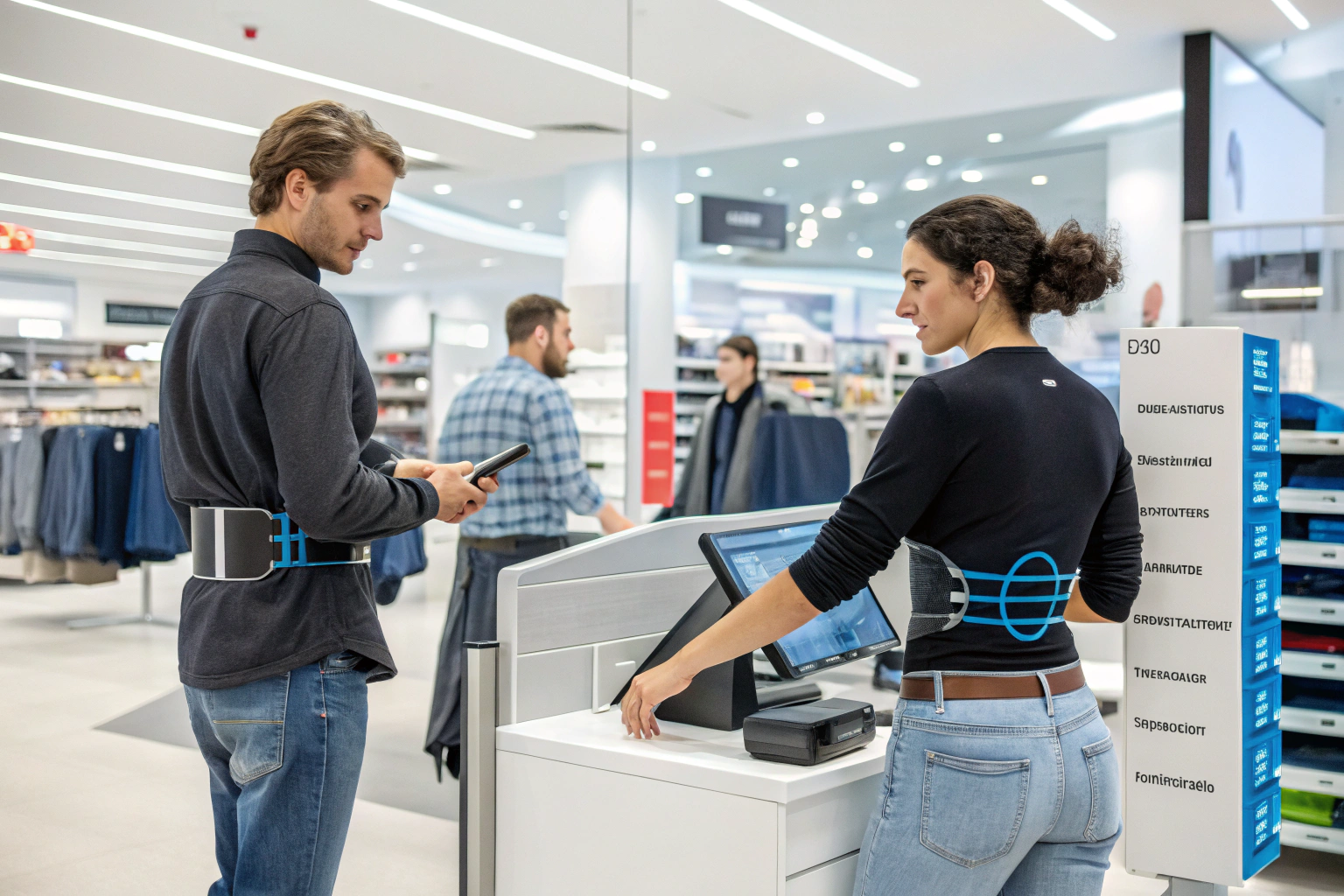
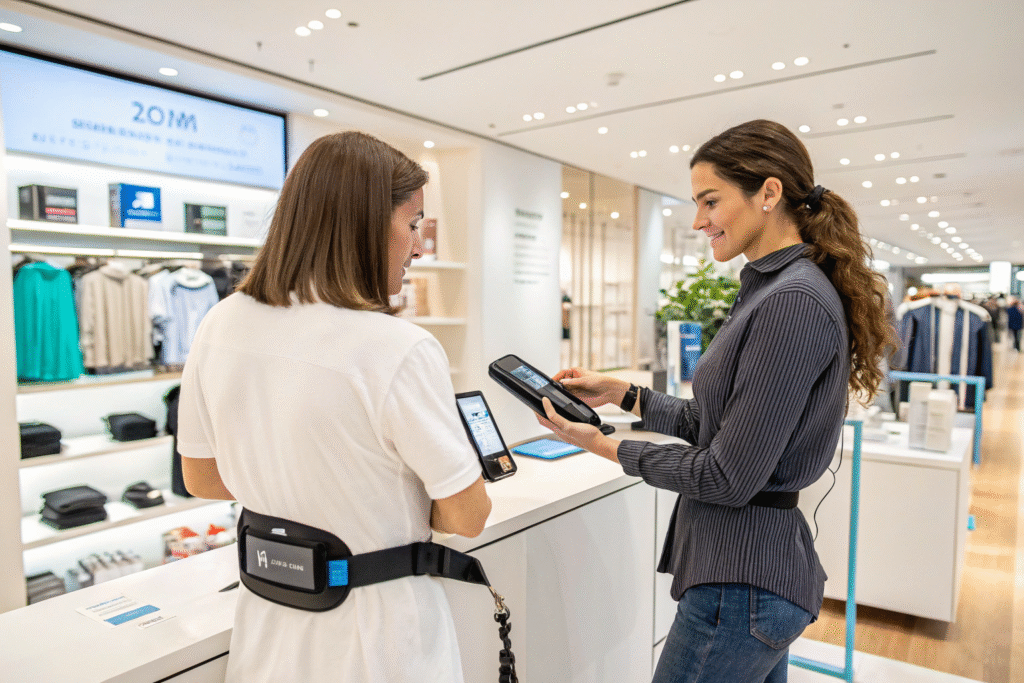
When customers inquire about products, staff wearing RFID-threaded belts can instantly access detailed information—including inventory levels, alternative colors, and complementary items—without leaving the customer's side. This connected customer service reduces wait times and provides a more knowledgeable shopping assistance experience. The immediate access to comprehensive product data helps customers make better purchasing decisions.
Can RFID-Threaded Belts Streamline the Checkout Process?
Mobile checkout solutions using RFID-threaded belts allow staff to process transactions anywhere in the store, eliminating checkout lines during peak periods. The RFID-enabled mobile checkout can scan entire baskets of merchandise simultaneously, reducing transaction time by up to 80% compared to traditional barcode scanning. This efficiency particularly benefits customers purchasing multiple items or those with limited time.
| RFID Application | Operational Benefit | Customer Impact |
|---|---|---|
| Automated Inventory | 90% faster counts, near-perfect accuracy | Better product availability, fewer disappointments |
| Intelligent Security | Reduced shrinkage, detailed theft analytics | Discreet protection, no false alarms |
| Mobile Checkout | Line reduction, staff flexibility | Faster transactions, convenient service |
| Product Information | Instant data access, cross-selling opportunities | Knowledgeable assistance, better decisions |
What Are the Implementation Considerations for Retailers?
Successful RFID integration requires careful planning around system compatibility, staff training, and cost justification. Understanding these implementation factors helps retailers avoid common pitfalls while maximizing return on investment.
Key considerations include reader infrastructure, data integration with existing systems, staff adoption strategies, and privacy compliance. Addressing these elements systematically ensures the technology delivers its promised benefits without creating new operational challenges.

How Does Reader Infrastructure Affect System Performance?
RFID systems require strategically placed readers throughout the retail environment to ensure comprehensive coverage. The infrastructure design must balance coverage with cost, considering factors like read range, interference, and integration with existing security and inventory systems. Proper placement ensures reliable performance without creating dead zones where tracking capabilities are lost.
What Training Ensures Staff Adoption and Proper Use?
Technology implementation fails without proper staff buy-in and understanding. Effective RFID training programs should emphasize time savings and customer service benefits rather than focusing solely on technical operation. Hands-on demonstrations showing how RFID-threaded belts simplify daily tasks help staff understand the personal benefits, encouraging enthusiastic adoption rather than resistance to change.
Conclusion
RFID-threaded belts represent a significant advancement in retail technology, offering substantial benefits in inventory management, security, and customer experience. By seamlessly integrating technology into a standard uniform component, retailers gain powerful data capabilities without compromising staff comfort or customer interactions. The technology addresses critical pain points while creating new opportunities for service innovation and operational efficiency.
Ready to explore how RFID-threaded belts can transform your retail operations? At StylishBelts, we specialize in integrating technology with fashion to create smart uniform solutions. Contact our Business Director Elaine today at elaine@fumaoclothing.com to discuss implementing RFID technology in your retail environment.